


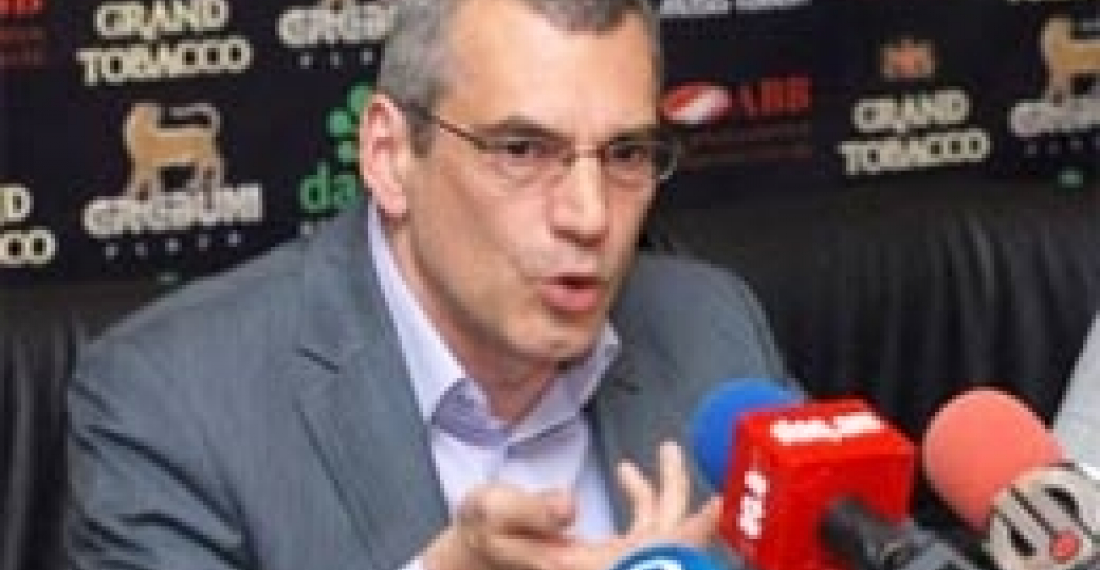
Ричард Киракосян: Война в зоне карабахского конфликта более чем реалистична

Признание независимости Нагорного Карабаха со стороны штата Массачусетс свидетельствует о степени той важности, которую Нагорный Карабах представляет для Вашингтона. Об этом на пресс-конференции заявил руководитель региональных исследований Ричард Киракосян.

Он напомнил, что в июне текущего года аналогичную резолюцию по Нагорному Карабаху принял также штат Род Айленд. <Две эти резолюции свидетельствуют о чрезмерной заинтересованности Вашингтона в карабахском вопросе>,- отметил эксперт, подчеркнув, что карабахский конфликт представляет для США больший интерес, чем другие замороженные конфликты.

Говоря о возможных процессах вокруг карабахского конфликта, эксперт подчеркнул, что милитаризм и агрессия Азербайджана, а также наращивание им своего военного потенциала создают в зоне конфликта дополнительную напряженность. <Это является сигналом как для Армении, так и для международной общественности>,- заметил Киракосян, добавив, что дополнительную напряженность ситуации в регионе придают ухудшившиеся в последнее время отношения между Анкарой и Баку. В контексте сложившейся ситуации эксперт посчитал более чем вероятной начало внезапных военных действий в зоне карабахского конфликта.

Что касается мирного урегулирования конфликта в рамках Минской Группы ОБСЕ, то эксперт посчитал этот формат тупиковым. По его словам, МГ ОБСЕ призвана лишь сохранять дипломатический аспект урегулирования проблемы и предотвращать возможное развязывание военных действий. При этом, подчеркнул он, несмотря на усилия МГ ОБСЕ, стороны конфликта продолжают сохранять собственные подходы по основополагающим составляющим карабахской проблемы.

Говоря о внутриполитической ситуации в Нагорном Карабахе, Киракосян подчеркнул, что несмотря на демократические президентские выборы 19 июля 2012 года, в НКР сохраняется сложная социально-экономическая ситуация и высокий уровень коррупции.


Related articles

Editor's choice
News
The British prime minister says Europe must "stand on its own two feet" when it comes to defence

The British prime minister says Europe must "stand on its own two feet" when it comes to defence

The UK will deploy a carrier strike group, led by the aircraft carrier HMS Prince of Wales to the Arctic and the High North as part of efforts to bolster security against Russian threats. British prime minister, Sir Keir Starmer announced the deployment in a speech on Saturday (14 February) at the Munich Security Conference. Europe must be ready to fight to protect its people, values, and way of life,  Sir Keir told the Conference. Starmer also called for deeper links and cooperation, including economic ties, between the UK and EU. The PM stressed the continent must "stand on its own two feet" when it comes to defence commitments. "We must build our hard power, because that is the currency of the age," he told the conference. (Click image to read the full story).

Popular

Editor's choice
Interview
Thursday Interview: Murad Muradov

Thursday Interview: Murad Muradov

Today, commonspace.eu starts a new regular weekly series. THURSDAY INTERVIEW, conducted by Lauri Nikulainen, will host  persons who are thinkers, opinion shapers, and implementors in their countries and spheres. We start the series with an interview with Murad Muradov, a leading person in Azerbaijan's think tank community. He is also the first co-chair of the Action Committee for a new Armenian-Azerbaijani Dialogue. Last September he made history by being the first Azerbaijani civil society activist to visit Armenia after the 44 day war, and the start of the peace process. Speaking about this visit Murad Muradov said: "My experience was largely positive. My negative expectations luckily didn’t play out. The discussions were respectful, the panel format bringing together experts from Armenia, Azerbaijan, and Turkey was particularly valuable during the NATO Rose-Roth Seminar in Yerevan, and media coverage, while varied in tone, remained largely constructive. Some media outlets though attempted to represent me as more of a government mouthpiece than an independent expert, which was totally misleading.  Overall, I see these initiatives as important steps in rebuilding trust and normalising professional engagement. The fact that soon a larger Azerbaijani civil society visits to Armenia followed, reinforces the sense that this process is moving in the right direction." (click the image to read the interview in full)

