


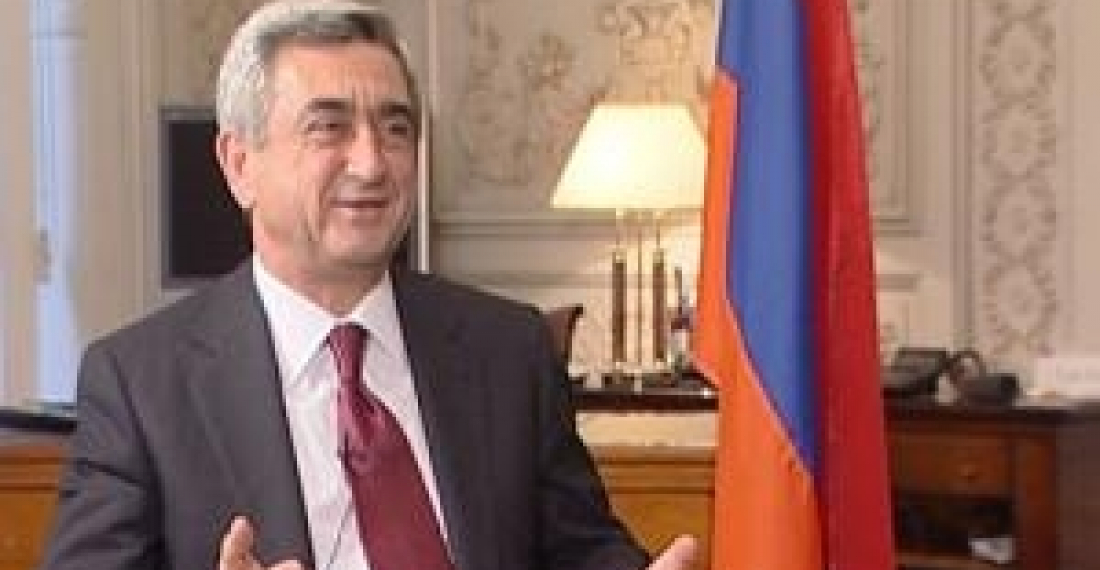
Президент Армении:

Азербайджан по-своему понимает значение принципов международного права. Об этом заявил президент Армении Серж Саргсян в интервью газете «Московские новости».

 “Минская группа предложила документ, который условно называют Мадридскими принципами. Он подразумевает решение вопроса на основе трех принципов: неприменение силы или угрозы силой, принцип территориальной целостности и право народов на самоопределение. Этот документ в основном дает возможность продолжать переговоры и приступить к разработке большого мирного договора, большого соглашения. Армения очень четко понимает, что означают эти три принципа», - отметил глава государства. 

По его словам, азербайджанцы после долгих размышлений тоже сказали «да», но почему-то понимают принципы своеобразно, по-своему. До сегодняшнего момента руководство Азербайджана на всех уровнях все время грозит возобновлением военных действий. Это нарушение первого принципа.

Саргсян отметил, что создается впечатление, что в Баку возвели принцип территориальной целостности в абсолютную догму вне контекста международного права.

“А вот право на самоопределение они понимают только лишь как самоопределение в рамках территориальной целостности Азербайджана. Такого самоопределения не бывает, это усеченное, примитивное самоопределение», - подчеркнул Саргсян. Он добавил, что до тех пор, пока Азербайджан не поймет смысла этого принципа, очень сложно будет идти к решению вопроса.
 
“Думаю, что мы действительно по-разному это понимаем. Но это принципы, которыми руководствуется мир. Эти принципы — и территориальной целостности, и право народов на самоопределение — позволили и Азербайджану, и Армении получить независимость. Каким же образом в одном случае это приемлемо, а во втором понимается иначе? Это нелогично. Принцип территориальной целостности не означает незыблемость границ. Иначе в мире не образовывались бы новые государства, а за последние 20–30 лет на карте мира появились десятки новых государств”, - подчеркнул глава армянского государства.
 

Related articles

Editor's choice
News
Russian attacks against Ukrainian civilians continue

Russian attacks against Ukrainian civilians continue

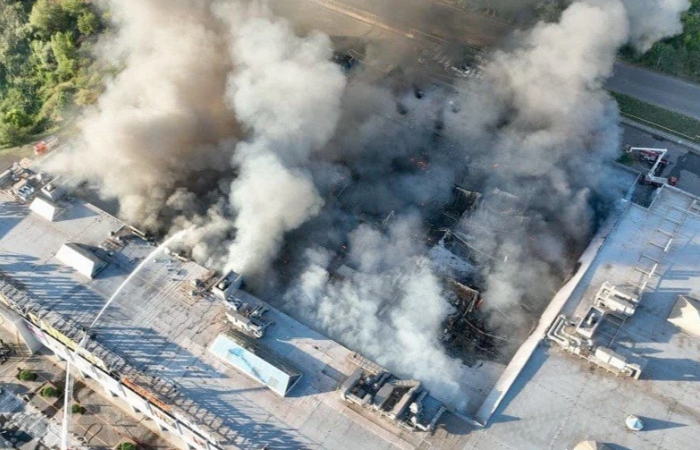
Rescuers in Ukraine are continuing their search for survivors in the wreckage of a big shopping centre hit by Russia on Friday. Sixteen people were killed and 130 injured when two drones hit the busy centre in Kryvyi Rih in quick succession in what is known as a double-tap strike. Four people are still missing. The search and rescue operation could last for another two days. President Volodymyr Zelensky condemned the "cynical and despicable" attack in which the second drone targeted emergency workers. The sides exchanged more fire overnight, with Ukrainian attacks said to have killed at least four people in Russia, including two children, and three people reported dead by Kyiv as a result of Russian strikes. The death toll from Friday's attack reached 16 after another body was retrieved from the rubble overnight, said Dnipropetrovsk regional head Oleksandr Hanzha. "We're doing everything possible to speed up... the search and rescue operation," he told Ukrainian TV on Saturday morning. (click image tio read more)

Popular

Editor's choice
Interview
Thursday Interview: Murad Muradov

Thursday Interview: Murad Muradov

Today, commonspace.eu starts a new regular weekly series. THURSDAY INTERVIEW, conducted by Lauri Nikulainen, will host  persons who are thinkers, opinion shapers, and implementors in their countries and spheres. We start the series with an interview with Murad Muradov, a leading person in Azerbaijan's think tank community. He is also the first co-chair of the Action Committee for a new Armenian-Azerbaijani Dialogue. Last September he made history by being the first Azerbaijani civil society activist to visit Armenia after the 44 day war, and the start of the peace process. Speaking about this visit Murad Muradov said: "My experience was largely positive. My negative expectations luckily didn’t play out. The discussions were respectful, the panel format bringing together experts from Armenia, Azerbaijan, and Turkey was particularly valuable during the NATO Rose-Roth Seminar in Yerevan, and media coverage, while varied in tone, remained largely constructive. Some media outlets though attempted to represent me as more of a government mouthpiece than an independent expert, which was totally misleading.  Overall, I see these initiatives as important steps in rebuilding trust and normalising professional engagement. The fact that soon a larger Azerbaijani civil society visits to Armenia followed, reinforces the sense that this process is moving in the right direction." (click the image to read the interview in full)

