


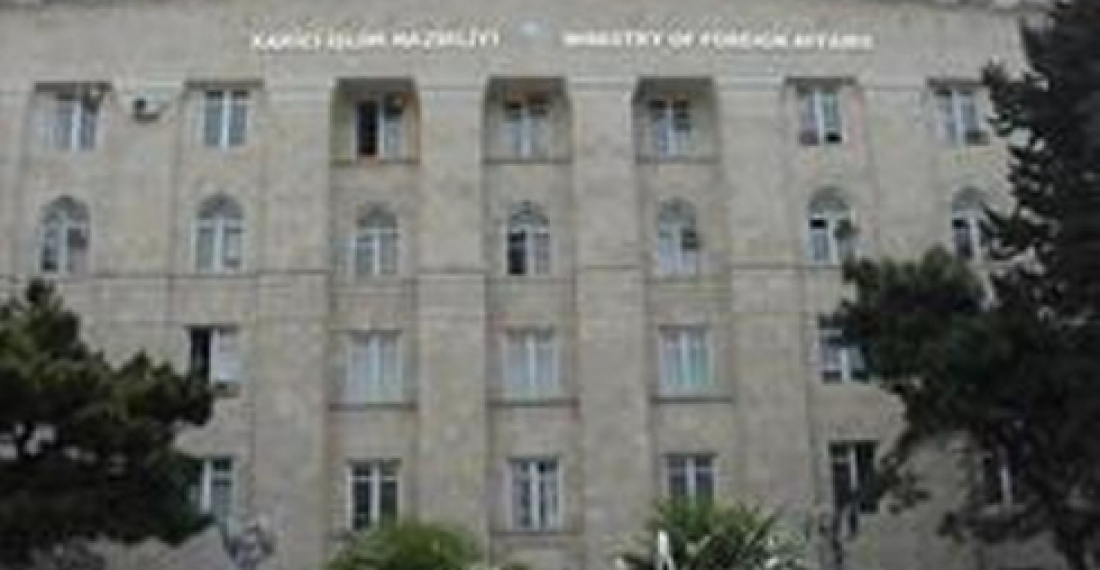
Послу России в МИД Азербайджана вручили ноту протеста. Заместитель министра иностранных дел Азербайджана Махмуд Мамедгулиев принял посла Российской Федерации в Азербайджане Владимира Дорохина.
Баку – АПА.

Заместитель министра иностранных дел Азербайджана Махмуд Мамедгулиев принял посла Российской Федерации в Азербайджане Владимира Дорохина.
Как сообщили АПА в пресс-службе МИД, во время встречи замминистра выразил недовольство и обеспокоенность азербайджанской стороны по поводу публикации 25 февраля накануне годовщины ходжалинского геноцида на интернет-странице Государственного информагентства России «РИА-Новости» статьи: «Нагорный Карабах за 25 лет научился быть непризнанным».

Замминистра довел до сведения посла, что антиазербайджанские публикации в последнее время получили широкое распространение в СМИ России. Было подчеркнуто, что размещение подобной информации именно на интернет-странице Государственного информагентства России вызывает особое чувство сожаления, и это бросает  тень на деятельность России в качестве сопредседателя Минской группы ОБСЕ по урегулированию армяно-азербайджанского конфликта.

Внимание посла России было обращено на то, что в статье не отражено реальное положение вещей, звучат призывы к сепаратизму и экстремизму, а также выражается неуважение к принципу территориальной целостности.

Официальный представитель Азербайджана напомнил о том, что в статье 5 «Договора о дружбе, сотрудничестве и взаимной безопасности», подписанного между Россией и Азербайджаном 3 июля 1997 года, осуждаются все проявления сепаратизма со стороны обоих государств и отражены обязательства, согласно которым не должны поддерживаться сепаратистские действия, запрещается и предотвращается создание организаций и групп на своей территории и деятельность отдельных лиц, направленные против суверенитета, независимости и территориальной целостности по отношению друг к другу. Отмечено, что опубликованная на интернет-странице российского государственного информагентства статья провокационного характера не соответствует духу дружбы и сотрудничества между Азербайджаном и Россией, наносит ущерб отношениям, сформировавшимся между нашими странами, противоречит сути и положениям вышеуказанного договора.

Замминистра Махмуд Мамедгулиев вручил послу России ноту протеста и выразил надежду на решение вопроса и принятие соответствующих мер. 

Related articles

Editor's choice
News
Uzbekistan strengthens its relations with China and US

Uzbekistan strengthens its relations with China and US

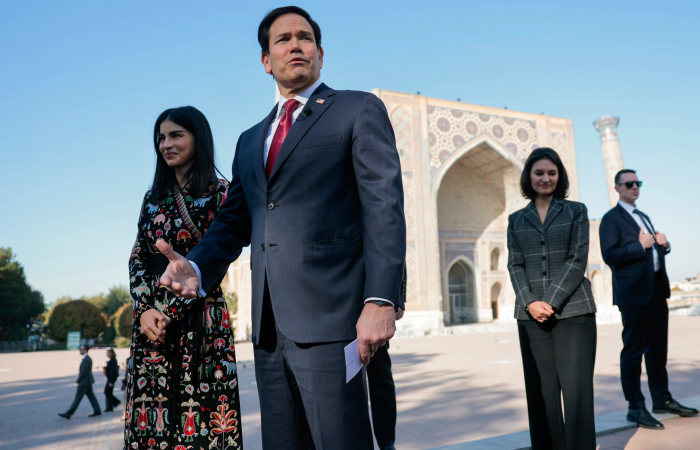
In recent days, Uzbekistan welcomed the Chinese and American governments in quick succession. During Chinese Premier Li Qiang’s visit on 17-18 October, the Uzbek presidential administration said that joint projects backed by firm agreements had reached nearly $60 billion. US Secretary of State Marco Rubio then arrived in Samarkand for C5+1 talks, accompanied at the time by American business leaders seeking contracts, particularly in critical minerals. During the visit, Uzbekistan announced 54 agreements covering trade, investment, and technology. The agreements are said to be worth a total of $12 billion, according to Uzbekistan’s Ministry of Investment, Industry and Trade. However, China still accounts for 23% of Uzbekistan’s foreign trade in January-August 2026, while US goods trade with Uzbekistan totalled at $1.05 billion in 2025, which is less than a fifteenth of the value of its trade with China. Rubio said Washington was not asking Central Asian countries to stop cooperating with other partners, but would instead compete for investment. Tashkent is likely to welcome investment from both sides, but the trade gap shows how challenging it will be if it were to decrease its dependence on Beijing. “Chinese Premier Li Qiang visited Uzbekistan on October 17–18, just ahead of United States Secretary of State Marco Rubio, who arrived in Samarkand on October 18 with a delegation of American business leaders seeking new contracts. While China already has a substantial presence in Uzbek manufacturing and energy, Washington is seeking to expand American involvement in critical minerals and technology. The visits highlight the growing competition between the world’s two largest economies for influence in Central Asia. On October 17, President Shavkat Mirziyoyev received Li Qiang. According to the Uzbek presidential administration, the portfolio of joint projects backed by firm agreements has reached nearly $60 billion. More than 6,000 joint ventures with Chinese participation have been established in Uzbekistan. (...) Construction of the China–Kyrgyzstan–Uzbekistan railway was another topic of discussion. Work officially began in December 2024. The route will cross mountainous areas of Kyrgyzstan and connect the railway networks of China and Uzbekistan. The 304-kilometer section through Kyrgyzstan alone is estimated to cost $4.7 billion and will require 50 bridges and 29 tunnels. (...) On October 19, Rubio attended talks in Samarkand under the C5+1 format, bringing together the U.S. and Kazakhstan, Kyrgyzstan, Tajikistan, Turkmenistan, and Uzbekistan. Rubio said nearly 300 American businesses were represented in Samarkand. Companies were discussing agreements potentially worth billions of dollars, with concrete announcements expected following the meetings. Among Washington’s priorities are critical minerals used in advanced technologies, including electronics and batteries.”

Popular

Editor's choice
Interview
Thursday Interview: Murad Muradov

Thursday Interview: Murad Muradov

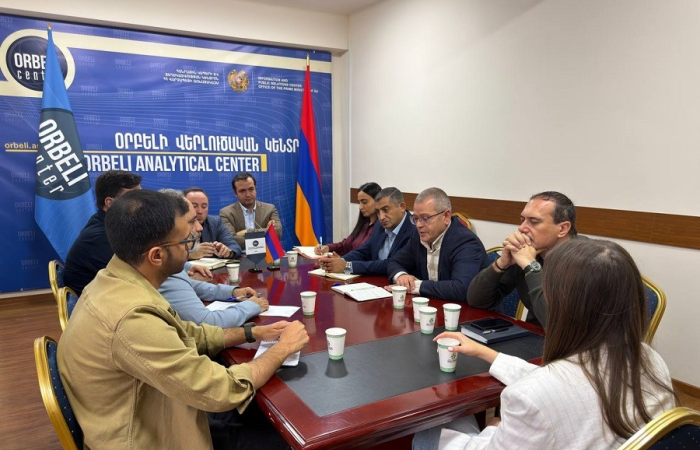
Today, commonspace.eu starts a new regular weekly series. THURSDAY INTERVIEW, conducted by Lauri Nikulainen, will host  persons who are thinkers, opinion shapers, and implementors in their countries and spheres. We start the series with an interview with Murad Muradov, a leading person in Azerbaijan's think tank community. He is also the first co-chair of the Action Committee for a new Armenian-Azerbaijani Dialogue. Last September he made history by being the first Azerbaijani civil society activist to visit Armenia after the 44 day war, and the start of the peace process. Speaking about this visit Murad Muradov said: "My experience was largely positive. My negative expectations luckily didn’t play out. The discussions were respectful, the panel format bringing together experts from Armenia, Azerbaijan, and Turkey was particularly valuable during the NATO Rose-Roth Seminar in Yerevan, and media coverage, while varied in tone, remained largely constructive. Some media outlets though attempted to represent me as more of a government mouthpiece than an independent expert, which was totally misleading.  Overall, I see these initiatives as important steps in rebuilding trust and normalising professional engagement. The fact that soon a larger Azerbaijani civil society visits to Armenia followed, reinforces the sense that this process is moving in the right direction." (click the image to read the interview in full)

