


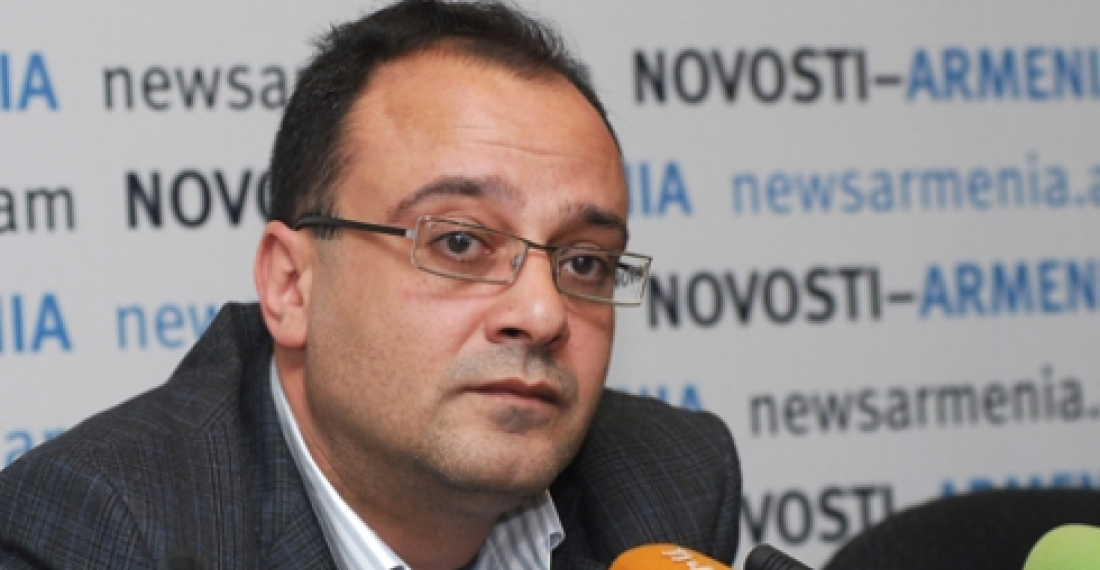
Политолог:

Принятие Сенатом Национальной Ассамблеи Франции законопроекта о криминализации отрицания Геноцида армян продемонстрировало, что европейское сообщество в лице Франции пересматривает свою позицию в отношении Анкары. Подобное мнение сегодня на пресс-конференции в Ереване выразил председатель общественной организации \"Европейская интеграция\", политолог Карен Бекарян.

По его словам, европейцы до сегодняшнего дня имели несколько туманное представление о сущности политики Турции, об этом косвенно свидетельствуют выступления некоторых французских депутатов в ходе обсуждений законопроекта, где красной нитью проходила мысль о том, какое отношение вообще имеет данный законопроект к Турции. \"Европейское сообщество, не имея активных контактов с Турцией, до сих пор не знало, что этот кандидат в члены ЕС в своей внешней политике опирается на шантаж и угрозы в отношении соседей, что Турция до сих пор не отказалась от своих агрессивных устремлений. Однако сегодня они постепенно начинают понимать всю опасность действий в угоду Анкары. В частности, то для чего в Армении дислоцируется российская военная база. Должен сказать, что к принятию законопроекта Францию, собственно, во многом подтолкнула сама Турция, своей истерикой и своими угрозами. Европейцы просто поняли, с кем имеют дело\", - отметил Бекарян.

23 января Сенат Национальной Ассамблеи Франции вынес решение о криминализации отрицания Геноцида армян. Согласно новому закону, отрицание Геноцида армян будет преследоваться в уголовном порядке. Закон, за принятие которого в Сенате проголосовало \"за\" 127, а \"против\" - 86  сенаторов, предусматривает наказание в виде года тюремного заключения и штрафа в размере 45 тысяч евро за отрицание Геноцидов, в том числе Геноцида армян. Автором законопроекта является депутат от правящей партии \"Союз за народное движение\" Валери Буайе.


Related articles

Editor's choice
News
The British prime minister says Europe must "stand on its own two feet" when it comes to defence

The British prime minister says Europe must "stand on its own two feet" when it comes to defence

The UK will deploy a carrier strike group, led by the aircraft carrier HMS Prince of Wales to the Arctic and the High North as part of efforts to bolster security against Russian threats. British prime minister, Sir Keir Starmer announced the deployment in a speech on Saturday (14 February) at the Munich Security Conference. Europe must be ready to fight to protect its people, values, and way of life,  Sir Keir told the Conference. Starmer also called for deeper links and cooperation, including economic ties, between the UK and EU. The PM stressed the continent must "stand on its own two feet" when it comes to defence commitments. "We must build our hard power, because that is the currency of the age," he told the conference. (Click image to read the full story).

Popular

Editor's choice
Interview
Thursday Interview: Murad Muradov

Thursday Interview: Murad Muradov

Today, commonspace.eu starts a new regular weekly series. THURSDAY INTERVIEW, conducted by Lauri Nikulainen, will host  persons who are thinkers, opinion shapers, and implementors in their countries and spheres. We start the series with an interview with Murad Muradov, a leading person in Azerbaijan's think tank community. He is also the first co-chair of the Action Committee for a new Armenian-Azerbaijani Dialogue. Last September he made history by being the first Azerbaijani civil society activist to visit Armenia after the 44 day war, and the start of the peace process. Speaking about this visit Murad Muradov said: "My experience was largely positive. My negative expectations luckily didn’t play out. The discussions were respectful, the panel format bringing together experts from Armenia, Azerbaijan, and Turkey was particularly valuable during the NATO Rose-Roth Seminar in Yerevan, and media coverage, while varied in tone, remained largely constructive. Some media outlets though attempted to represent me as more of a government mouthpiece than an independent expert, which was totally misleading.  Overall, I see these initiatives as important steps in rebuilding trust and normalising professional engagement. The fact that soon a larger Azerbaijani civil society visits to Armenia followed, reinforces the sense that this process is moving in the right direction." (click the image to read the interview in full)

