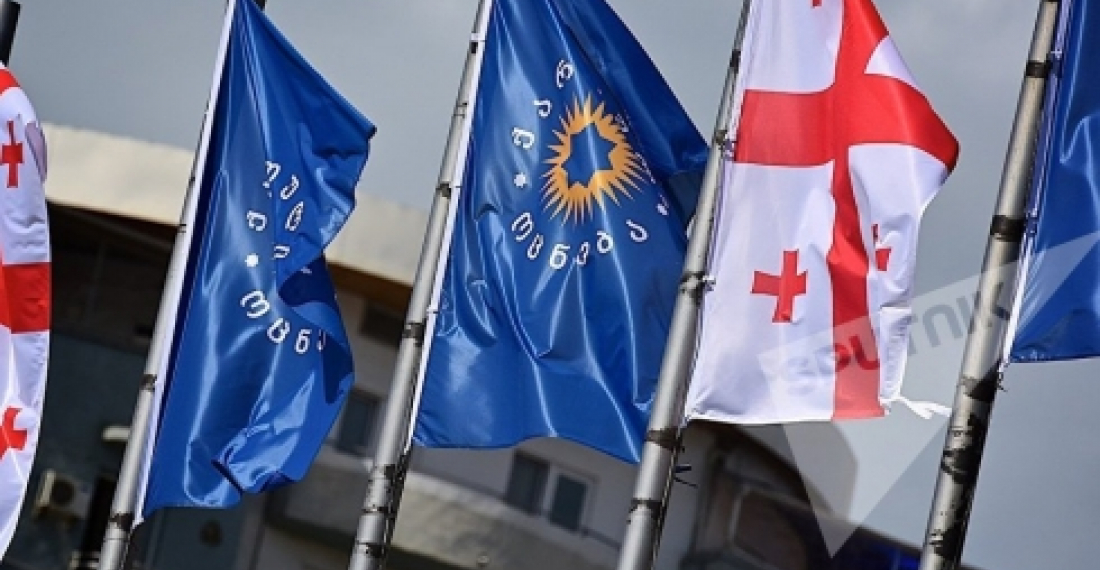
По предварительным результатам представители "Грузинской мечты" взяли 7 из 9 мажоритарных мандатов

Центральная Избирательная Комиссия (ЦИК) Грузии опубликовала предварительные результаты промежуточных выборов в муниципальные собрания, прошедшие 22 мая. Как сообщается, уже подсчитаны результаты со всех 45 участков.

По предварительным данным ЦИК, в 7 из 9 мажоритарных округах победил кандидат от «Грузинской мечты», в 2 оставшихся - кандидат от «Национального движения».

Выступая вчера на итоговом пресс-брифинге председатель ЦИК Грузии, Тамара Жвания, заявила, что в общей сложности выборы на всех 45-ти участках прошли в спокойной обстановке. По ее словам, всего поступило 16 жалоб. Жалобы в большинстве своем носят технический характер.

Касаясь инцидента в селе Корцхели, когда сторонниками "Грузинской мечты" были побиты представители "Национального движения", она заявила, что "расследование начато и я надеюсь, что оно завершится своевременно, виновные понесут наказание в соответствии с законом... В избирательном процессе нет места насилию и с этим должно быть покончено", - отметила Тамара Жвания.

Произошедший инцидент также осудили представители власти. Министр обороны Грузии, Тина Хидашели, на своей странице в facebook написала, что "Все те, у кого вчера в руках были палки, и те, кто махал кулаками, этими кулаками били нашу родину. Все те, кто оправдывает этот вандализм... мешают прогрессу и развитию нашей страны".

В "Грузинской мечте" всю ответсвенность возложили на представителей "Национального движения". Так, исполнительный секретарь партии Ираклий Кобахидзе обвинил одного из лидеров "Национального движения", Гигу Бокерия, в провокации сторонников "Грузинской мечты".

Посол США в Грузии Иен Келли назвал вчерашний инцидент тревожным и заявил, что такие факты не должны происходить в демократическом обществе. Посол также выразил удовлетворение тем, что правительство намерено провести полное расследование вчерашних событий.

Как сообщают в МДВ Грузии, на данный момент по данному инциденту не задержано ни одно лицо.

источник: commonspace.eu по материалам агентств
 

Related articles

Editor's choice
News
The British prime minister says Europe must "stand on its own two feet" when it comes to defence

The British prime minister says Europe must "stand on its own two feet" when it comes to defence

The UK will deploy a carrier strike group, led by the aircraft carrier HMS Prince of Wales to the Arctic and the High North as part of efforts to bolster security against Russian threats. British prime minister, Sir Keir Starmer announced the deployment in a speech on Saturday (14 February) at the Munich Security Conference. Europe must be ready to fight to protect its people, values, and way of life,  Sir Keir told the Conference. Starmer also called for deeper links and cooperation, including economic ties, between the UK and EU. The PM stressed the continent must "stand on its own two feet" when it comes to defence commitments. "We must build our hard power, because that is the currency of the age," he told the conference. (Click image to read the full story).

Popular

Editor's choice
Interview
Thursday Interview: Murad Muradov

Thursday Interview: Murad Muradov

Today, commonspace.eu starts a new regular weekly series. THURSDAY INTERVIEW, conducted by Lauri Nikulainen, will host  persons who are thinkers, opinion shapers, and implementors in their countries and spheres. We start the series with an interview with Murad Muradov, a leading person in Azerbaijan's think tank community. He is also the first co-chair of the Action Committee for a new Armenian-Azerbaijani Dialogue. Last September he made history by being the first Azerbaijani civil society activist to visit Armenia after the 44 day war, and the start of the peace process. Speaking about this visit Murad Muradov said: "My experience was largely positive. My negative expectations luckily didn’t play out. The discussions were respectful, the panel format bringing together experts from Armenia, Azerbaijan, and Turkey was particularly valuable during the NATO Rose-Roth Seminar in Yerevan, and media coverage, while varied in tone, remained largely constructive. Some media outlets though attempted to represent me as more of a government mouthpiece than an independent expert, which was totally misleading.  Overall, I see these initiatives as important steps in rebuilding trust and normalising professional engagement. The fact that soon a larger Azerbaijani civil society visits to Armenia followed, reinforces the sense that this process is moving in the right direction." (click the image to read the interview in full)