


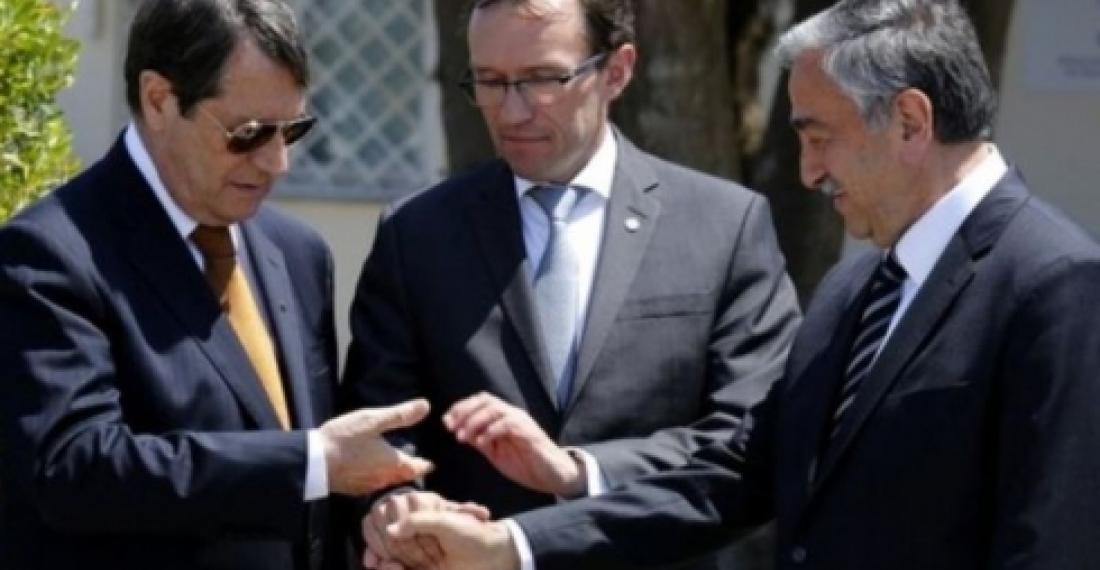
Оптимизм по итогам кипрских мирных переговоров.

Растут надежды вокруг возможного прорыва в длительных переговорах по урегулированию конфликта на Кипре. BBC сообщает, что лидеры разделенных греческих и турецких общин на острове возобновили мирные переговоры, что по мнению посредников ООН, создает "оптимистический климат".

Президент Республики Кипр Никос Анастасиадис и лидер турок-киприотов Мустафа Акинчи встретились в нейтральной зоне Никосии. Посланник ООН Эспен Барт Эйде сообщил, что они "поделились своим видениями объединенного Кипра".

Г-н Акинчи в прошлом месяце был избран президентом самопровозглашенной Турецкой Республики Северного Кипра. Контролируемый турками север Кипра отсоединился от остального острова в 1974 году после непродолжительного переворота, устроенного греками.

После турецкого военного вторжения в 1974 году остров был поделен, треть севера была заселена турками-киприотами, юг двумя третей греческими киприотами.

Мирные переговоры зашли в тупик после выхода из них в октябре прошлого года греков-киприотов в знак протеста против присутствия турецкого корабля, проводившего разведку природного газа на южном побережье острова.

BBC сообщает, что по словам корреспондентов, есть надежда, что г-н Акинчи, представитель умеренных левых, может продвинуть новый раунд переговоров.

"Переговоры проходили в очень позитивной атмосфере, и я считаю, что, работая в том же духе мы сможем надеяться на прогресс", цитирует господина Анастасиадиса Ассошиэйтед Пресс, после встречи при посредничестве ООН в пятницу.

В свою очередь, в качестве первого шага, власти турецкого Кипра договорились больше не требовать от греков-киприотов заполнять визовые формы в пунктах пропуска на Северном Кипре, заявил журналистам представитель ООН г-н Эйде.

Миротворческие силы ООН подсчитали, что около 165,000 греков-киприотов бежали или были изгнаны с севера острова, и 45,000 турок-киприотов с юга, хотя стороны в конфликте заявляют о цифрах выше.

Компенсация лицам, которые были перемещенны в результате конфликта, как ожидается, будет одним из самых сложных вопросов в переговорах.

Самопровозглашенная Турецкая Республика Северного Кипра признана только Турцией.

источник: commonspace.eu по материалам BBC News.

фото: Никос Анастасиадис (слева) и Мустафа Акинчи (справа) на переговорах при посредничестве ООН в пятницу, 15 мая 2015


 

Related articles

Editor's choice
News
The British prime minister says Europe must "stand on its own two feet" when it comes to defence

The British prime minister says Europe must "stand on its own two feet" when it comes to defence

The UK will deploy a carrier strike group, led by the aircraft carrier HMS Prince of Wales to the Arctic and the High North as part of efforts to bolster security against Russian threats. British prime minister, Sir Keir Starmer announced the deployment in a speech on Saturday (14 February) at the Munich Security Conference. Europe must be ready to fight to protect its people, values, and way of life,  Sir Keir told the Conference. Starmer also called for deeper links and cooperation, including economic ties, between the UK and EU. The PM stressed the continent must "stand on its own two feet" when it comes to defence commitments. "We must build our hard power, because that is the currency of the age," he told the conference. (Click image to read the full story).

Popular

Editor's choice
Interview
Thursday Interview: Murad Muradov

Thursday Interview: Murad Muradov

Today, commonspace.eu starts a new regular weekly series. THURSDAY INTERVIEW, conducted by Lauri Nikulainen, will host  persons who are thinkers, opinion shapers, and implementors in their countries and spheres. We start the series with an interview with Murad Muradov, a leading person in Azerbaijan's think tank community. He is also the first co-chair of the Action Committee for a new Armenian-Azerbaijani Dialogue. Last September he made history by being the first Azerbaijani civil society activist to visit Armenia after the 44 day war, and the start of the peace process. Speaking about this visit Murad Muradov said: "My experience was largely positive. My negative expectations luckily didn’t play out. The discussions were respectful, the panel format bringing together experts from Armenia, Azerbaijan, and Turkey was particularly valuable during the NATO Rose-Roth Seminar in Yerevan, and media coverage, while varied in tone, remained largely constructive. Some media outlets though attempted to represent me as more of a government mouthpiece than an independent expert, which was totally misleading.  Overall, I see these initiatives as important steps in rebuilding trust and normalising professional engagement. The fact that soon a larger Azerbaijani civil society visits to Armenia followed, reinforces the sense that this process is moving in the right direction." (click the image to read the interview in full)

