


Обращение СНГ к Грузии. Президент Беларуси выразил надежду на то, что Грузия вернется в состав СНГ после президентских выборов, но это маловероятно. Однако, участие в качестве наблюдателя возможно.
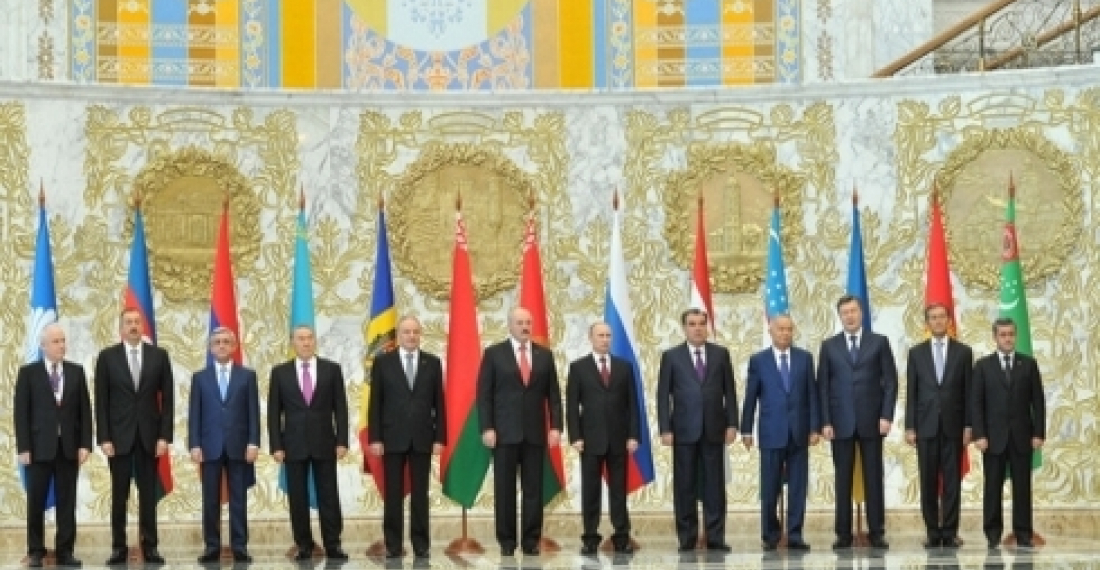

Саммит одиннадцати стран, которые составляют Содружество Независимых Государств (СНГ), состоялся в эту пятницу в Минске, столице Беларуси. Саммит продолжался несколько часов, в течение которых главы государств сначала встретились в частном порядке, и, затем в расширенном составе. Киргизия и Туркменистан были представлены первыми вице-премьерами.

На саммите было принято 14 соглашений, которые будут добавлены к сотням другим, принятыми СНГ за двадцать два года своего существования, многие из которых остаются только на бумаге.

В конце встречи президент Беларуси Александр Лукашенко заявил на пресс-конференции, что лидеры стран СНГ надеются, что Грузия сможет вернуться в состав организации. Грузия вышла из СНГ в 2009 году после войны между Грузией и Россией в августе 2008 года. В это воскресенье в Грузии запланированны президентские выборы, которые станут концом эпохи правления Саакашвили, которая охарактеризовалась враждебными отношениями между Грузией и Россией. Однако, маловероятно, что новый президент Грузии будет спешить к  воссоединению с СНГ. Предположения, что Грузия сможет участвовать в СНГ в качестве наблюдателя могут сформировать некоторые новые договоренности, как только политическая ситуация в Грузии успокоится после выборов.

Также сюрпризом в Минске стали президенты Армении и Азербайджана, Серж Саргсян и Ильхам Алиев. На их лице чувствовался дискомфорт, когда они сидели рядом друг с другом. О двусторонней встрече между ними не сообщалось, хотя на данный момент сопредседатели Минского процесса ОБСЕ предпринимают усилия для организации личной встречи до конца года.

По окончанию Минского саммита Украина взяла на себя председательство в Организации. Следующий саммит пройдет в Киеве.

Источник: commonspace.eu.

фото: официальная фотография глав государств СНГ в Минске 25 октября 2013 года.

Related articles

Editor's choice
News
The British prime minister says Europe must "stand on its own two feet" when it comes to defence

The British prime minister says Europe must "stand on its own two feet" when it comes to defence

The UK will deploy a carrier strike group, led by the aircraft carrier HMS Prince of Wales to the Arctic and the High North as part of efforts to bolster security against Russian threats. British prime minister, Sir Keir Starmer announced the deployment in a speech on Saturday (14 February) at the Munich Security Conference. Europe must be ready to fight to protect its people, values, and way of life,  Sir Keir told the Conference. Starmer also called for deeper links and cooperation, including economic ties, between the UK and EU. The PM stressed the continent must "stand on its own two feet" when it comes to defence commitments. "We must build our hard power, because that is the currency of the age," he told the conference. (Click image to read the full story).

Popular

Editor's choice
Interview
Thursday Interview: Murad Muradov

Thursday Interview: Murad Muradov

Today, commonspace.eu starts a new regular weekly series. THURSDAY INTERVIEW, conducted by Lauri Nikulainen, will host  persons who are thinkers, opinion shapers, and implementors in their countries and spheres. We start the series with an interview with Murad Muradov, a leading person in Azerbaijan's think tank community. He is also the first co-chair of the Action Committee for a new Armenian-Azerbaijani Dialogue. Last September he made history by being the first Azerbaijani civil society activist to visit Armenia after the 44 day war, and the start of the peace process. Speaking about this visit Murad Muradov said: "My experience was largely positive. My negative expectations luckily didn’t play out. The discussions were respectful, the panel format bringing together experts from Armenia, Azerbaijan, and Turkey was particularly valuable during the NATO Rose-Roth Seminar in Yerevan, and media coverage, while varied in tone, remained largely constructive. Some media outlets though attempted to represent me as more of a government mouthpiece than an independent expert, which was totally misleading.  Overall, I see these initiatives as important steps in rebuilding trust and normalising professional engagement. The fact that soon a larger Azerbaijani civil society visits to Armenia followed, reinforces the sense that this process is moving in the right direction." (click the image to read the interview in full)


