


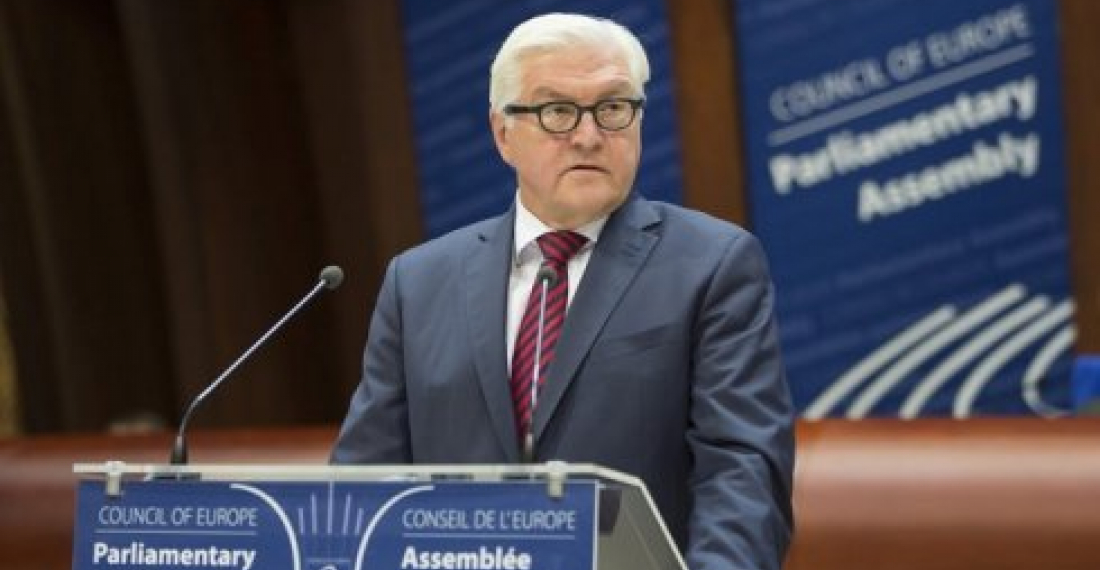
Выступление Штайнмайера на Парламентской ассамблее Совета Европы в Страсбурге

Министр иностранных дел Германии и нынешний председатель в Организации по безопасности и сотрудничеству в Европе (ОБСЕ), д-р Франк-Вальтер Штайнмайер, в четверг выступил в ходе заседания Парламентской Ассамблеи Совета Европы, которая проводит свою осеннюю сессию в Страсбурге. Касательно Абхазии, Южной Осетии, Приднестровья и Нагорного Карабаха немецкий министр сказал, что на европейском континенте не должно быть каких-либо слепых зон в плане контроля за соблюдением прав человека.

В своем выступлении министр иностранных дел Германии оживленно выступил в защиту прав человека и сказал, что Совет Европы обеспечивает правозащиту основных принципов во всех 47 государствах Совета Европы. Он не только хранитель стандартов, но на него также возложена определенная роль в период кризиса. Штайнмайер сказал, что он адвокат и реалист и он понимает, что правила нарушают. Но тот факт, что в Европейском суде по правам человека в настоящее время 76,000 дел это поражает.

В Европе есть места, где ценности и стандарты Совета Европы, права человека и верховенство закона, находятся под сильным давлением.

В некоторых государствах-членах пытаются обуздать свободу слова и свободу собраний: критиков из гражданского общества подвергают запугиванию и позору.

Касательно кризиса в Украине Штайнмайер сказал, что произошедшее там невозможно было представить. Германия вместе с Францией и Россией пытаются урегулировать кризис. Совет Европы сказал министр не может просто быть безучастным зрителем перед лицом серьезных нарушений, поэтому он приветствует вклад Совета Европы в демократическую трансформацию Украины.

Министр отметил, что Совет Европы пытается обеспечить доступ в Крым, чтобы следить за ситуацией с правами человека на месте. Это имеет важное значение и тоже самое касается и Южной Осетии, Абхазии, Приднестровья и Нагорного Карабаха. "На нашем континенте не должно быть каких-либо слепых зон в плане контроля за соблюдением прав человека," сказал министр.

источник: commonspace.eu

фото: министр иностранных дел Франк-Вальтер Штайнмайер на заседании Парламентской ассамблее Совета Европы


 

Related articles

Editor's choice
News
Borrell tells the European Parliament that the situation in Afghanistan was critical, but the EU will remain engaged

Borrell tells the European Parliament that the situation in Afghanistan was critical, but the EU will remain engaged

Borrell underlined that the European Union will make every effort to support the peace process and to remain a committed partner to the Afghan people. "Of course, we will have to take into account the evolving situation, but disengagement is not an option.  We are clear on that: there is no alternative to a negotiated political settlement, through inclusive peace talks.
Editor's choice
News
Germany accuses Russia of cyberattacks and disinformation campaign

Germany accuses Russia of cyberattacks and disinformation campaign

The German government holds Russia responsible for a cyberattack on German air traffic control, and for targeted disinformation campaigns before the last federal election. According to the German Foreign Office in Berlin, the incidents could be clearly attributed to the Russian military intelligence service, the GRU. In response, the Russian ambassador to Berlin was summoned to the Foreign Ministry. "We have been observing a massive increase in threatening hybrid activities by Russia for some time now," a spokesperson for the Foreign Ministry stated. These range from disinformation campaigns and espionage to cyberattacks and sabotage attempts. The aim is to divide society, sow distrust, and undermine confidence in democratic institutions. The spokesperson added that with these actions, Russia is "very concretely threatening our security, not only through its war of aggression against Ukraine, but also here in Germany."  The Foreign Ministry spokesperson explained that the cyberattack on air traffic control in August 2024 was clearly attributed to the hacker collective "APT28," known as "Fancy Bear," and to the responsibility of the Russian military intelligence service, the GRU. Furthermore, it could now be "conclusively stated" that Russia had attempted "to influence and destabilize both the last Federal election and the ongoing internal affairs of the Federal Republic of Germany." There was "absolutely irrefutable evidence" for this". The so-called "Storm 1516" campaign, which has been running since 2024, is allegedly backed by "reliable information" that the Moscow-based think tank "Center for Geopolitical Expertise" is behind it. The Center is also said to be supported by Russian military intelligence. Its primary aim is to influence democratic elections in the West. (Click the image to read more).

Popular

Editor's choice
News
Germany accuses Russia of cyberattacks and disinformation campaign

Germany accuses Russia of cyberattacks and disinformation campaign

The German government holds Russia responsible for a cyberattack on German air traffic control, and for targeted disinformation campaigns before the last federal election. According to the German Foreign Office in Berlin, the incidents could be clearly attributed to the Russian military intelligence service, the GRU. In response, the Russian ambassador to Berlin was summoned to the Foreign Ministry. "We have been observing a massive increase in threatening hybrid activities by Russia for some time now," a spokesperson for the Foreign Ministry stated. These range from disinformation campaigns and espionage to cyberattacks and sabotage attempts. The aim is to divide society, sow distrust, and undermine confidence in democratic institutions. The spokesperson added that with these actions, Russia is "very concretely threatening our security, not only through its war of aggression against Ukraine, but also here in Germany."  The Foreign Ministry spokesperson explained that the cyberattack on air traffic control in August 2024 was clearly attributed to the hacker collective "APT28," known as "Fancy Bear," and to the responsibility of the Russian military intelligence service, the GRU. Furthermore, it could now be "conclusively stated" that Russia had attempted "to influence and destabilize both the last Federal election and the ongoing internal affairs of the Federal Republic of Germany." There was "absolutely irrefutable evidence" for this". The so-called "Storm 1516" campaign, which has been running since 2024, is allegedly backed by "reliable information" that the Moscow-based think tank "Center for Geopolitical Expertise" is behind it. The Center is also said to be supported by Russian military intelligence. Its primary aim is to influence democratic elections in the West. (Click the image to read more).

