


В Тбилиси школьников-беженцев осведомили об опасности наземных мин

В рамках кампании Южный Кавказ Свободный от наземных мин проводится ряд мероприятий с участием школьников по всему региону с целью повышения их осведомленности о проблеме наземных мин. Кампания проходит с 4 по 10 апреля.

В пятницу (5 апреля) в Тбилиси была проведена акция по информированию о минной опасности в школе, где большинство учеников являются ВПЛ грузинских общин, перемещенных в результате конфликта в Абхазии и Южной Осетии. Мероприятие было организовано Центром Европа-Грузия в сотрудничестве с органами образования правительства Абхазской Автономной Республики.

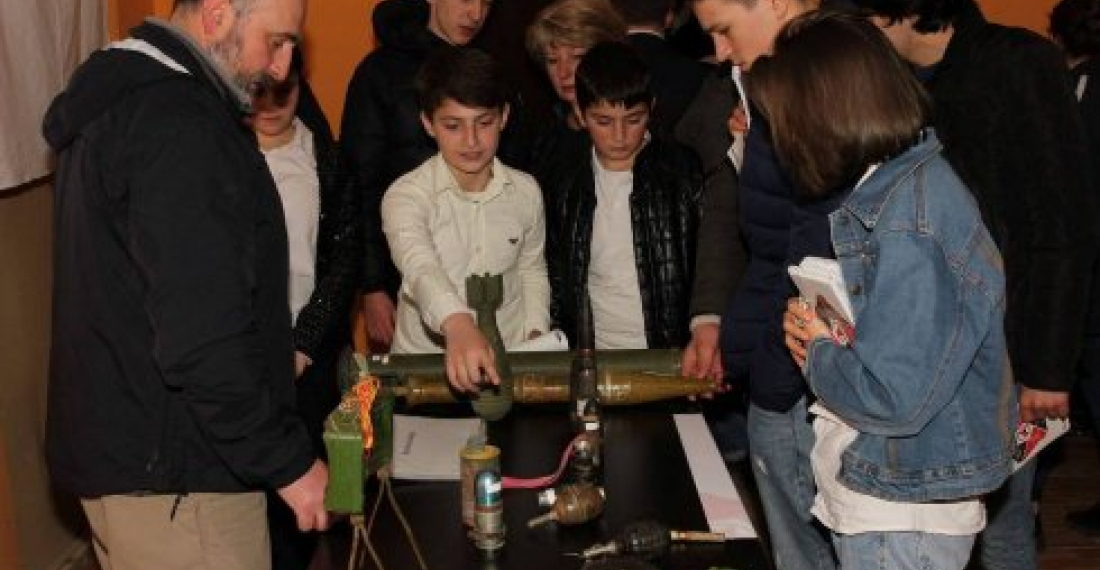
В ходе мероприятия Олег Гочашвили, эксперт из Агентства по гуманитарному разминированию правительства Грузии, объяснил опасность неразорвавшихся боеприпасов для присутствующих молодых людей. Был продемонстрирован ряд примеров того, как могут выглядеть неразорвавшиеся боеприпасы.

Выступая на этом мероприятии, г-н Вахтанг Колбая, председатель правительства Абхазской автономной республики, базирующегося в Тбилиси, сказал, что на Южном Кавказе в последние годы было много конфликтов, и это оставило в наследство мины и неразорвавшиеся боеприпасы во всем регионе. Он приветствовал усилия по очистке региона от этой проблемы и приветствовал кампанию по информированию людей об опасностях.

Выступая на мероприятии, д-р Деннис Саммут, директор LINKS, организации, которая координирует кампанию «Южный Кавказ свободный от наземных мин», сказал, что важно, чтобы послания этой кампании были доведены до сведения беженцев и ВПЛ. Беженцы, ВПЛ и люди, живущие в зонах конфликта, очень часто становятся жертвами наземных мин, сказал он.

Во время мероприятия были показаны различные видеоролики, подготовленные в рамках кампании. Кампания «Южный Кавказ свободный от наземных мин» проходит с 4 по 10 апреля и поддерживается Европейским Союзом.

#landminefreeSC

источник: commonspace.eu

фото: Эксперт Агентства по гуманитарному разминированию правительства Грузии Олег Гочашвили объясняет опасность неразорвавшихся боеприпасов молодежи в одной из школ в Тбилиси, 5 апреля 2019 года

Related articles

Editor's choice
News
The British prime minister says Europe must "stand on its own two feet" when it comes to defence

The British prime minister says Europe must "stand on its own two feet" when it comes to defence

The UK will deploy a carrier strike group, led by the aircraft carrier HMS Prince of Wales to the Arctic and the High North as part of efforts to bolster security against Russian threats. British prime minister, Sir Keir Starmer announced the deployment in a speech on Saturday (14 February) at the Munich Security Conference. Europe must be ready to fight to protect its people, values, and way of life,  Sir Keir told the Conference. Starmer also called for deeper links and cooperation, including economic ties, between the UK and EU. The PM stressed the continent must "stand on its own two feet" when it comes to defence commitments. "We must build our hard power, because that is the currency of the age," he told the conference. (Click image to read the full story).

Popular

Editor's choice
Interview
Thursday Interview: Murad Muradov

Thursday Interview: Murad Muradov

Today, commonspace.eu starts a new regular weekly series. THURSDAY INTERVIEW, conducted by Lauri Nikulainen, will host  persons who are thinkers, opinion shapers, and implementors in their countries and spheres. We start the series with an interview with Murad Muradov, a leading person in Azerbaijan's think tank community. He is also the first co-chair of the Action Committee for a new Armenian-Azerbaijani Dialogue. Last September he made history by being the first Azerbaijani civil society activist to visit Armenia after the 44 day war, and the start of the peace process. Speaking about this visit Murad Muradov said: "My experience was largely positive. My negative expectations luckily didn’t play out. The discussions were respectful, the panel format bringing together experts from Armenia, Azerbaijan, and Turkey was particularly valuable during the NATO Rose-Roth Seminar in Yerevan, and media coverage, while varied in tone, remained largely constructive. Some media outlets though attempted to represent me as more of a government mouthpiece than an independent expert, which was totally misleading.  Overall, I see these initiatives as important steps in rebuilding trust and normalising professional engagement. The fact that soon a larger Azerbaijani civil society visits to Armenia followed, reinforces the sense that this process is moving in the right direction." (click the image to read the interview in full)

