


Редакция: Беларусь пробуждается

Комментарий от редакции

Более двух десятилетий Беларусь, страна с населением в десять миллионов человек, окруженная Россией на востоке, Украиной на юге и странами-членами ЕС на севере и западе, была захолустной Европой - казалось, она оказалась в ловушке времени. Ее лидер Александр Лукашенко твердо правит страной с 1994 года. Хотя первоначально он был избран всенародным голосованием, он впоследствии подавил любую оппозицию своему правлению. Это была цена, которую белорусы были готовы заплатить в обмен на стабильность и предсказуемость, а также против потрясений и эксцессов, последовавших за распадом СССР в 1991 году. Более того, Лукашенко даже стремился как-то возродить Союз, когда он и его российский партнер согласились создать Союзное государство - проект, который так и не был реализован.

Но вместо стабильности белорусы закончили стагнацией. Страна становилась все более изолированной и застряла в советском прошлом. Экономика по-прежнему базировалась на производстве, контролируемом государственными предприятиями, и основные каналы СМИ были лояльны правительству. КГБ, сохранивший свое название из советского прошлого, оставался одним из самых сильных институтов государства.

Состоявшиеся неделю назад президентские выборы сначала рассматривались как очередное отрепетированное действие - одно из нескольких, проведенных за последние 26 лет, которые позволили Лукашенко остаться у власти. Но с самого начала стало ясно, что новое поколение белорусов не желает мириться с тем, что было раньше.

Несмотря на ограничения, наложенные правительством, оппозиционные кандидаты проводили агитацию и собирали тысячами своих сторонников. Им удалось вселить надежду. Таким образом, когда были объявлены официальные результаты, в результате которых Лукашенко получил более 80% голосов, неудивительно, что многие почувствовали себя обманутыми и захотели выразить протест.

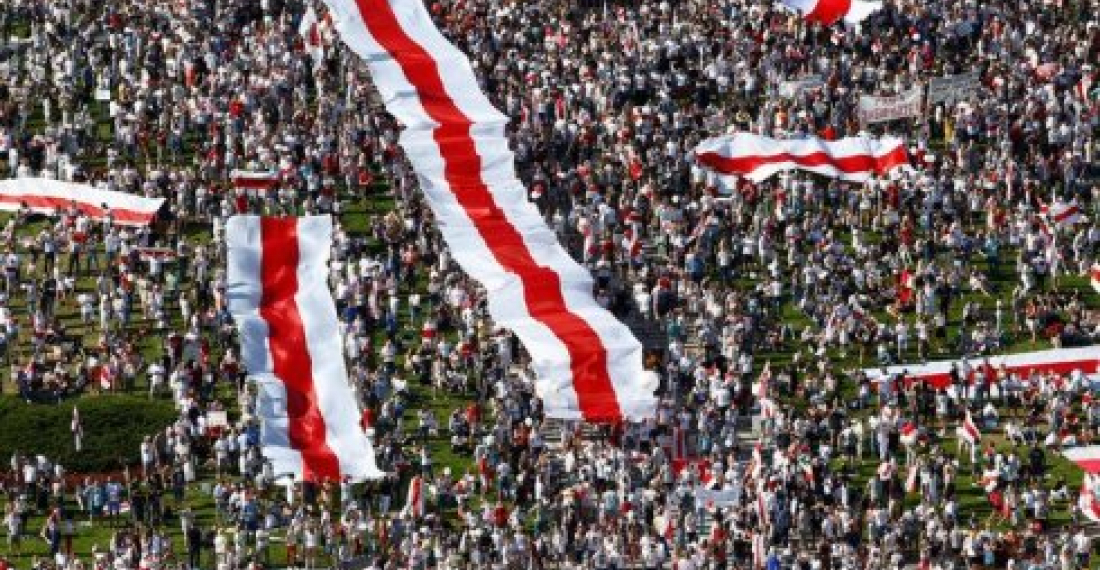
Жестокое подавление мирных протестующих и последующие сообщения об арестах и ​​избиениях тысяч людей обернулись против правительства. В воскресенье (16 августа) то, что было охарактеризовано как крупнейшая демонстрация в истории страны, ясно дало понять, что время перемен не может больше откладываться. Скромная явка на попытку Лукашенко провести контрдемонстрацию была явным признаком того, что любая популярная база, которую он мог иметь в прошлом, явно подорвана. Похоже, что чашу весов нарушили рабочие на крупных фабриках и промышленных предприятиях. В прошлом они были основой поддержки Лукашенко. Теперь же нет.

Лукашенко пока остается непокорным. Он пытался заручиться внутренней и внешней поддержкой, утверждая, что НАТО собирается вторгнуться в Беларусь - странное заявление, которое, однако, теперь кажется предлогом для президента Путина, чтобы прийти на помощь Лукашенко. Эти двое не самые лучшие друзья; их отношения в последние годы были непростыми. Путин считает Лукашенко очень неудобным союзником, в то время как Лукашенко часто создавал образ человека, который противостоит путинским (и российским) издевательствам. Кажется, что пока разногласия отложены, по крайней мере, на время.

Лукашенко нужен Путин, потому что он боится потерять контроль над своими силами правопорядка. Любой, кто думает предать его, теперь должен будет подумать, что им, возможно, придется иметь дело и с русскими.

Для Путина это шанс полностью вернуть Беларусь в свое лоно. Его помощь Лукашенко будет дорого стоить. Ожидайте, что люди, близкие к Кремлю, займут ключевые посты в правительстве, и положат конец антироссийской риторике Лукашенко.

Однако многие считают, что помощи Путина будет недостаточно, чтобы Лукашенко остался у власти. Преодолев страх и выйдя на улицы десятками тысяч белорусы теперь движимы надеждой на лучшие времена. Дни Лукашенко на посту президента сочтены.

Однако важен переход и то, как он происходит. Если Путину удастся убедить Лукашенко тихо уйти и передать дело лоялисту Кремля, это может ослабить непосредственный кризис, но не удовлетворит чаяний белорусского народа.

Временное правительство, пользующееся широким доверием населения, должно как можно скорее провести новые президентские выборы. Международное вмешательство должно быть сведено к минимуму, поскольку результат должен удовлетворять народ Беларуси, а не Москву, Вашингтон или Брюссель - ни также в этом случае Вильнюс или Варшаву. Но Европейский Союз будет играть важную роль в противовес российскому давлению, которое мы уже можем предвидеть. В пятницу министры иностранных дел 27 стран ЕС начали озвучивать свой ответ на ситуацию в Беларуси. Необходимо найти баланс между оказанием поддержки и солидарности белорусскому народу, не вмешиваясь напрямую в политический процесс, который должен идти своим чередом.

Мы наблюдаем пробуждение белорусского народа. Бросая вызов страху, они теперь видят надежду на будущее. Их чаяния необходимо уважать.

источник: Это редакционный комментарий, подготовленный редакцией commonspace.eu

фото: Протестующие против Лукашенко в Минске, 16 августа 2020 года призвали к отставке президента и новым выборам.

Комментарии редакции отражает позицию commonspace.eu. Он не обязательно отражают мнение наших партнеров.




Related articles

Editor's choice
News
Russia adds pressure on Armenia ahead of key elections; recalls Ambassador in Yerevan for consultations

Russia adds pressure on Armenia ahead of key elections; recalls Ambassador in Yerevan for consultations

Ahead of key parliamentary elections,scheduled to be held in Armenia on Sunday, 7 June, Russia continues to attempt to put pressure on the Armenian Government led by prime minister Nikol Pashinyan. On 30 May, Russia recalled its Ambassador to Yerevan for consultations. A terse statement, published on the website of the Russian Foreign Ministry, said, "The Ambassador of the Russian Federation to the Republic of Armenia , S.P. Kopyrkin, has been summoned to Moscow for consultations in connection with the steps taken by the Armenian leadership to move closer to the European Union, which are detrimental to cooperation within the EAEU." This followed a statement issued the day before, by the leaders of the Eurasian Economic Union (EAEU) that challenges the Armenian trajectory towards approximating to the European Union. Vladimir Putin is undertood to have personally pushed the other four EAEU leaders to issue the statement, which said: "Taking into account the significant risks to the economic security of the member states of the Eurasian Economic Union (hereinafter referred to as the Union) arising in connection with the preparation of the Republic of Armenia for accession to the European Union, as well as the need to prevent the associated damage to the member states of the Union: decided that the members of the Eurasian Intergovernmental Council from the Republic of Belarus, the Republic of Kazakhstan, the Kyrgyz Republic and the Russian Federation will report at the next meeting of the Supreme Eurasian Economic Council in December 2026 on the possible consequences of the suspension of the Treaty on the Eurasian Economic Union with respect to the Republic of Armenia. We share the position on the need to hold a national referendum in the Republic of Armenia as soon as possible on joining the European Union or continuing to be part of the Eurasian Economic Union."
Editor's choice
News
The leaders of the states of the Eurasian Economic Union issued a tough statement warning fellow-member state Armenia of the consequences of its desire to join the European Union.

The leaders of the states of the Eurasian Economic Union issued a tough statement warning fellow-member state Armenia of the consequences of its desire to join the European Union.

The leaders of the states of the Eurasian Economic Union (EEAS) issued a tough statement warning fellow-member state Armenia of the consequences of its desire to join the European Union. The stark, sharply worded,  warning, comes days before crucial parliamentary elections in Armenia, scheduled for 7 June. The full statement said, “We, the Presidents of the Republic of Belarus, the Republic of Kazakhstan, the Kyrgyz Republic and the Russian Federation, Taking into account the actions of the Republic of Armenia aimed at joining the European Union, including the approval in 2025 by the National Assembly of the Republic of Armenia and the signing by the President of the Republic of Armenia of the Law of the Republic of Armenia "On the Start of the Process of Accession of the Republic of Armenia to the European Union", as well as the confirmation by the European Union of the European aspirations of the Government of the Republic of Armenia, expressed in the joint declaration following the first Armenia-European Union summit, adopted on 5 May 2026, Taking into account the significant risks to the economic security of the member states of the Eurasian Economic Union (hereinafter referred to as the Union) arising in connection with the preparation of the Republic of Armenia for accession to the European Union, as well as the need to prevent the associated damage to the member states of the Union: decided that the members of the Eurasian Intergovernmental Council from the Republic of Belarus, the Republic of Kazakhstan, the Kyrgyz Republic and the Russian Federation will report at the next meeting of the Supreme Eurasian Economic Council in December 2026 on the possible consequences of the suspension of the Treaty on the Eurasian Economic Union with respect to the Republic of Armenia. We share the position on the need to hold a national referendum in the Republic of Armenia as soon as possible on joining the European Union or continuing to be part of the Eurasian Economic Union. Astana, May 29, 2026” A meeting of the Supreme Eurasian Economic Council was held in Astana, Kazakhstan, on May 29, 2026. The meeting of the Supreme Eurasian Economic Council in a restricted format was attended by Russian President Vladimir Putin, Belarusian President Alexander Lukashenko , Kazakh President Kassym-Jomart Tokayev , Kyrgyz President Sadyr Japarov , Armenian Deputy Prime Minister Mher Grigoryan, and Chairman of the Board of the Eurasian Economic Commission Bakytzhan Sagintayev. From the Russian side, the meeting was also attended by Deputy Prime Minister and member of the Council of the Eurasian Economic Commission Alexey Overchuk and Presidential Aide Yury Ushakov . The heads of delegations from EAEU observer states, including President of Uzbekistan Shavkat Mirziyoyev , Vice President of Cuba Salvador Valdés Mesa, Minister of Industry, Mines, and Trade of Iran Mohammad Atabak, and CIS Secretary General Sergei Lebedev, joined the expanded meeting . Following the meeting of the Supreme Eurasian Economic Council, a number of documents were signed .

Popular

Editor's choice
Interview
Thursday Interview: Murad Muradov

Thursday Interview: Murad Muradov

Today, commonspace.eu starts a new regular weekly series. THURSDAY INTERVIEW, conducted by Lauri Nikulainen, will host  persons who are thinkers, opinion shapers, and implementors in their countries and spheres. We start the series with an interview with Murad Muradov, a leading person in Azerbaijan's think tank community. He is also the first co-chair of the Action Committee for a new Armenian-Azerbaijani Dialogue. Last September he made history by being the first Azerbaijani civil society activist to visit Armenia after the 44 day war, and the start of the peace process. Speaking about this visit Murad Muradov said: "My experience was largely positive. My negative expectations luckily didn’t play out. The discussions were respectful, the panel format bringing together experts from Armenia, Azerbaijan, and Turkey was particularly valuable during the NATO Rose-Roth Seminar in Yerevan, and media coverage, while varied in tone, remained largely constructive. Some media outlets though attempted to represent me as more of a government mouthpiece than an independent expert, which was totally misleading.  Overall, I see these initiatives as important steps in rebuilding trust and normalising professional engagement. The fact that soon a larger Azerbaijani civil society visits to Armenia followed, reinforces the sense that this process is moving in the right direction." (click the image to read the interview in full)

