


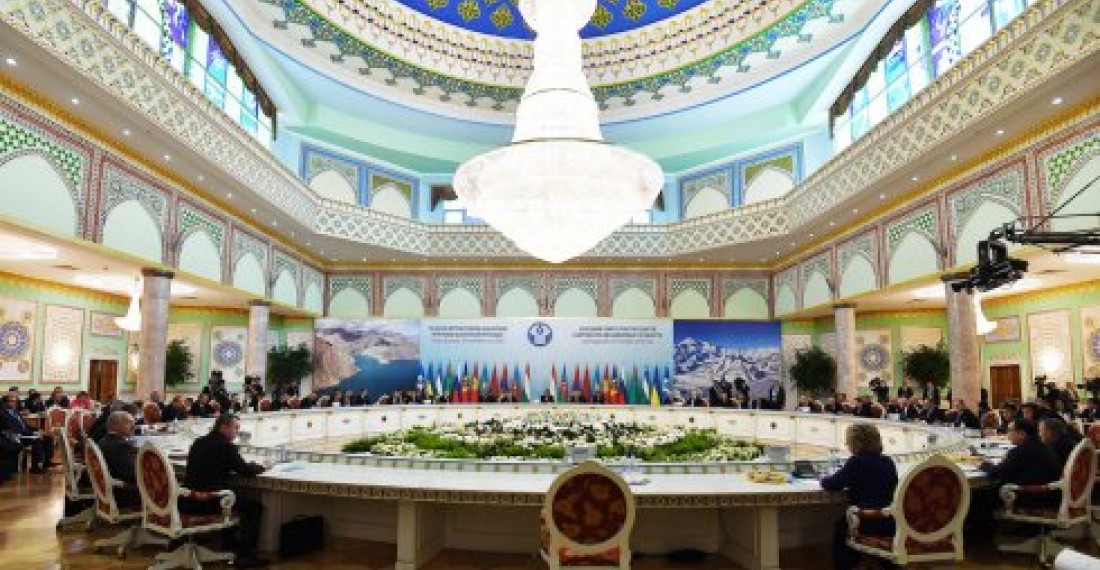
Реакция на переговоры Алиева-Пашиняна в Душанбе

После неофициальных внеплановых переговоров между президентом Азербайджана Ильхамом Алиевым и премьер-министром Армении Николо Пашиняном, состоявшихся в кулуарах саммита СНГ в Душамбе, в пятницу (28 сентября), был высказан ряд комментариев.

Обе стороны в минувшие выходные сообщили о прошедшей встрече, используя в целом одни и те же формулировки.

Подробнее: Алиев и Пашинян провели внеплановые неофициальные переговоры в Душанбе

Впоследствии были сделаны дальнейшие комментарии.

Азербайджан всегда готов к конструктивным переговорам и контактам, служащим урегулированию армяно-азербайджанского конфликта, сообщил в понедельник утром (1 октября) заместитель начальника управления внешней политики Администрации президента Азербайджана Хикмет Гаджиев. Разговор в Душамбе «начался по инициативе премьер-министра Армении», - сказал Гаджиев.

"Это еще раз показывает, что формат переговоров остается неизменным, а переговоры ведутся только между Арменией и Азербайджаном, которые являются сторонами конфликта. В рамках того же формата в сентябре во время Генеральной Ассамблеи ООН в Нью-Йорке и в июле в Брюсселе состоялись встречи между министрами иностранных дел Армении и Азербайджан. Мы оцениваем это позитивно, и Азербайджан всегда готов к конструктивным переговорам и контактам, служащим урегулированию армяно-азербайджанского конфликта. Это еще раз демонстрирует приверженность Азербайджана существующему формату", - сказал Гаджиев.

Он также прокомментировал укрепление режима прекращения огня на армяно-азербайджанской границе и линии соприкосновения войск.

"Азербайджанская сторона неоднократно заявляла, что главной причиной нарушения прекращения огня является незаконное присутствие армянских войск на оккупированных азербайджанских территориях и продолжение военной оккупации. Армянская сторона всегда несет ответственность за нарушение режима прекращения огня и обострение ситуации. Я хотел бы упомянуть о широкомасштабных военных учениях вооруженных сил Армении на оккупированных азербайджанских территориях после встречи глав государств в ноябре 2014 года в Париже, подстрекательство к известному инциденту с вертолетом, а также обстрел армянскими вооруженными силами тяжелыми вооружениями мирных жителей вдоль линии соприкосновения в апреле 2016 года, и умышленное обострение ситуации", - сказал Гаджиев.

"Таким образом, вывод армянских войск с оккупированных азербайджанских территорий в соответствии с требованиями резолюций Совета Безопасности ООН устранит не только военный риск, но также не будет необходимости в прекращении огня, и будут широкие возможности для политического решение конфликта, что обеспечит мир, стабильность и безопасность в регионе", - добавил он.

Ранее прозвучал еще один комментарий премьер-министра Армении Никола Пашиняна: президент Азербайджана Ильхам Алиев оставил впечатление образованного человека, сказал он армянским СМИ. "Он оставил положительное впечатление, у нас был нормальный, цивилизованный разговор", - цитирует слова Пашиняна армянские СМИ.

Премьер-министр сказал, что достигнута договоренность о регулярных контактах с Алиевым, но Пашинян не уверен, что руководство Азербайджана будет следовать этому соглашению. "Я не уверен, что соглашения будут реализованы", - сказал он.

Он добавил, что они планируют информировать сопредседателей Минской группы ОБСЕ о договоренностях, достигнутых между руководством Армении и Азербайджана по поддержке постоянных контактов между странами.

Обсуждался вопрос о возвращении Карабаха к переговорному столу. "Мы также обсудили этот вопрос. Конечно, у нас разные взгляды, я позвонил президенту Арцаха Бако Саакяну и проинформировал его о достигнутых соглашениях. Президент Арцаха отметил, что соглашение приемлемо и для них".

В то же время было высказано мнение де-факто властей самопровозглашенной Нагорно-Карабахской Республики: "Республика Арцах приветствует соглашение между премьер-министром Армении Николом Пашиняном и президентом Азербайджана Ильхамом Алиевым о деэскалации ситуации", сказал в беседе с корреспондентом «АРМЕНПРЕСС» пресс-секретарь де-факто властей Давид Бабаян.

"Это интересное и достойное похвалы развитие, если мы должны дать политическую оценку. Три момента, которые они согласовали, очень важны. Но здесь есть оговорка, что полностью доверяя Алиеву или вообще азербайджанскому руководству не правильно, потому что они могут нарушить какое-либо соглашение/.../, что показала практика. Тем не менее, будем надеяться, что на этот раз это соглашение даст какой-то положительный эффект", - сказал он.

Пресс-секретарь предостерег от каких-либо краткосрочных ожиданий. "Мы должны подождать. Мы должны рассматривать это соглашение не в течение двух часов или одного-двух дней, а в долгосрочной перспективе", - сказал он, заявив, что "согласие Алиева на соглашение может зависеть от давления со стороны разных уровней против руководства Азербайджана".

"Интересно, что до этого сопредседатели сделали очень строгие заявления. Конечно, это было в первую очередь адресовано Азербайджану, потому что именно эта сторона нарушает режим прекращения огня, и это интересное совпадение, что именно российский Президент [Путин] представил лидеров Армении и Азербайджана друг другу с формальной точки зрения. Принимая во внимание, что Россия является одной из стран-сопредседателей ОБСЕ, не исключено, что Алиев находится в очень уникальной ситуации, когда против него существует давление, и он нашел подходящий случай как узнать нового армянского лидера, так и продемонстрировать себя конструктивной стороной", - сказал Бабаян.

Тем не менее, Бабаян отметил, что ситуация на линии соприкосновения стабильна.

источник: commonspace.eu по материалам информационного агентства TREND Баку, Арменпресс (Ереван) и news.am (Ереван)

 

Related articles

Editor's choice
News
COP 17 in Armenia

COP 17 in Armenia

Armenia is currently hosting the COP17 conference of the Convention on Biological Diversity, which began earlier this week (19 October) and will run until 30 October, bringing around 15,000 participants from 196 different countries to Yerevan. At a leaders' summit held as part of COP17, Prime Minister Nikol Pashinyan expressed realistic ambitions: “We are halfway towards achieving these goals (Kunming-Montreal Global Biodiversity Framework), and we must honestly acknowledge that we are not yet moving in the right direction. Our task now is not to make new promises, but to fulfil the commitments we have already made.” Pashinyan pointed towards Armenia's own records, noting that the whitefish stock in Lake Sevan has increased substantially in the last ten years. Iranian President Masoud Pezeshkian and Georgian Prime Minister Irakli Kobakhidze also addressed the summit, with Turkiye sending its agriculture minister. However, there were no reports of Azerbaijani representatives attending. The conference has given Yerevan a valuable international platform, yet the absence of Azerbaijan is likely to be read as a sign that the peace process in the South Caucasus has not yet been translated into wider regional cooperation. The leaders' summit was opened by Armenian Prime Minister Nikol Pashinyan, who stressed that hosting the conference was a great honour for Armenia. He expressed hope that it would 'be productive and contribute to protecting our planet's biodiversity'. 'We – the citizens of Armenia, the government, state authorities and local governments – owe a debt to our nature,' the prime minister said. He noted that the international community had already developed the concept of 'living in harmony with nature’ and adopted the Kunming-Montreal Global Biodiversity Framework in 2022, setting out goals and specific targets to be achieved by 2030. 'We are halfway towards achieving these goals, and we must honestly acknowledge that we are not yet moving in the right direction. Our task now is not to make new promises, but to fulfil the commitments we have already made,' Nikol Pashinyan said. The COP17 conference is expected to adopt a declaration at leaders' level. More than 30 documents are scheduled for discussion. If approved, the commitments set out in them will become legally binding on countries that are parties to the Convention on Biological Diversity.”
Editor's choice
News
Landmines present to the European Union both a contradiction and a dilemma

Landmines present to the European Union both a contradiction and a dilemma

Finland’s decision to buy one million landmines creates a serious contradiction in the policy of the European Union, and is symbolic of a bigger dilemma facing European countries as they get used to the need to acquire “hard” power to face an increasing threat from Russia. Finland is seeking to acquire one million anti-personnel mines at a cost of 100 million euros. Finland, together with Poland, Latvia, Lithuania and Estonia last year abandoned the Ottawa agreement, the international framework that bans the use of anti-personnel mines, which the EU had been instrumental in establishing and supporting. All five countries cite the threat from Moscow as the reason. Colonel Riku Mikkonen of the Army Command told Finland’s national news agency STT that officials are now gathering information from suppliers regarding the deal, the AFP news agency reports. Helsinki would like domestic manufacturers to supply the mines, with contracts signed by the end of 2027 and production up and running by 2028. “It would be useful in many ways if Finnish companies produced the anti-personnel mines in Finland,” Mikkonen said. About half a dozen Finnish firms qualify, he told STT. “However, at this stage, buying the mines from abroad is not totally ruled out,” he added. LANDMINES PROVIDE THE EU WITH BOTH A CONTRADICTION, AND A DILEMMA Eliminating landmine contamination worldwide is one of the EU’s main soft power postures, and it basks in its record as the biggest funder of anti-landmine action in the world. But the fact that 5 of its 27 member states  have now left the Ottawa Treaty dents the EU moral high ground. It is a contradiction that is too big and important to be ignored. It also presents the European Union with a deeper dilemma. The threat from Russia is changing what the EU has stood for decades, namely a force for good able to mobilise its considerable soft power for the greater good of humanity. How the Union will implement this change will define its future. In the meantime landmines have not become any less lethal, benign, or unimportant. They remain in many parts of the world a major threat to life, an impediment to prosperity, and a potential trigger to further conflict. The 22 EU members states that still adhere to the Ottawa treaty must regroup, and be more assertive in their quest against anti-personnel land mines. All the reasons why they supported the Ottawa treaty in the first place still exist. The message must be clear: NO TO LANDMINES!

Popular

Editor's choice
Interview
Thursday Interview: Murad Muradov

Thursday Interview: Murad Muradov

Today, commonspace.eu starts a new regular weekly series. THURSDAY INTERVIEW, conducted by Lauri Nikulainen, will host  persons who are thinkers, opinion shapers, and implementors in their countries and spheres. We start the series with an interview with Murad Muradov, a leading person in Azerbaijan's think tank community. He is also the first co-chair of the Action Committee for a new Armenian-Azerbaijani Dialogue. Last September he made history by being the first Azerbaijani civil society activist to visit Armenia after the 44 day war, and the start of the peace process. Speaking about this visit Murad Muradov said: "My experience was largely positive. My negative expectations luckily didn’t play out. The discussions were respectful, the panel format bringing together experts from Armenia, Azerbaijan, and Turkey was particularly valuable during the NATO Rose-Roth Seminar in Yerevan, and media coverage, while varied in tone, remained largely constructive. Some media outlets though attempted to represent me as more of a government mouthpiece than an independent expert, which was totally misleading.  Overall, I see these initiatives as important steps in rebuilding trust and normalising professional engagement. The fact that soon a larger Azerbaijani civil society visits to Armenia followed, reinforces the sense that this process is moving in the right direction." (click the image to read the interview in full)

