


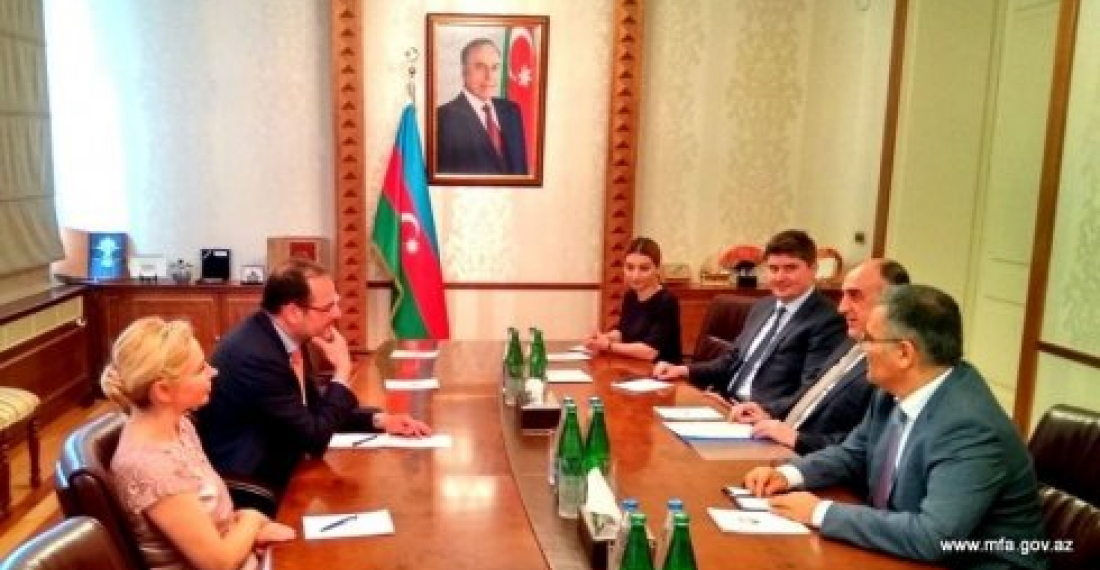
Прогресс в переговорах ЕС-Азербайджан

В Баку на этой неделе состоялся очередной раунд переговоров между Азербайджаном и Европейским Союзом по новому партнерскому соглашению между двумя сторонами. После переговоров глава делегации Европейского Союза, Люк Девинь, директор Европейской службы внешних действий по вопросам Европы и Центральной Азии, России, Восточного партнёрства, Центральной Азии, регионального сотрудничества и ОБСЕ провел встречу с министром иностранных дел Азербайджана, Эльмаром Мамедъяровым.

В заявлении на сайте МИД Азербайджана говорится, что "стороны выразили удовлетворение конструктивными и интенсивными темпами переговоров по проекту соглашения о партнерстве. Было отмечено, что в этом раунде переговоров основное внимание было уделено политическим и торговым вопросам".

"Они выразили надежду, что в результате переговоров, проведенных в атмосфере взаимопонимания, проект соглашения о партнерстве будет завершен к Встрече на высшем уровне стран Восточного партнерства Европейского Союза, которая состоится в конце этого года. Стороны также обменялись мнениями о текущем состоянии отношений и перспективнах развития сотрудничества между Азербайджаном и ЕС. Было отмечено, что недавно состоявшийся Бизнес-форум Азербайджан-ЕС открыл новые возможности для дальнейшего развития взаимовыгодного экономического, торгового и инвестиционного сотрудничества".

В заявлении говорится, что в ходе встречи обсуждались также региональные вопросы. "Министр Мамедъяров подчеркнул важность единого подхода ЕС к урегулированию затяжных конфликтов на основе принципов уважения территориальной целостности и суверенитета государства в международно признанных границах, как это закреплено в Глобальной стратегии ЕС", - говорится в заявлении МИД.

Как сообщает азербайджанское информационное агентство АПА, по словам высокопоставленного чиновника из делегации ЕС, Дениса Данилидиса, переговоры были "успешными" и "обе стороны привержены к скорейшему достижению соглашения".

Тем временем было подтверждено, что Комиссар Европейского Союза по вопросам европейской политики соседства и переговоров по расширению Йоханнес Хан 16 июня посетит Баку. Как ожидается, переговоры будут сосредоточены на различных аспектах сотрудничества между ЕС и Азербайджаном, "уделяя особое внимание вопросам транспорта, торговли и коммуникации", сообщают азербайджанские источники. Последние статистические данные, опубликованные на этой неделе, показывают, что Европейский Союз остается крупнейшим торговым партнером Азербайджана, с чуть менее 40% от общего торгового оборота. Для сравнения, торговый оборот с Россией и другими странами СНГ составил 12% от общего торгового оборота.

Источник: commonspace.eu

Фото: Официальный представитель Европейской службы внешних действий Люк Девинь и посол ЕС в Баку, Малания Мард, с министром иностранных дел Азербайджана, Эльмаром Мамедъяровым, в Баку, 14 июня 2017 года (фото предоставлено пресс-службой Министерства иностранных дел Азербайджана).


Related articles

Editor's choice
News
Borrell tells the European Parliament that the situation in Afghanistan was critical, but the EU will remain engaged

Borrell tells the European Parliament that the situation in Afghanistan was critical, but the EU will remain engaged

Borrell underlined that the European Union will make every effort to support the peace process and to remain a committed partner to the Afghan people. "Of course, we will have to take into account the evolving situation, but disengagement is not an option.  We are clear on that: there is no alternative to a negotiated political settlement, through inclusive peace talks.
Editor's choice
News
Germany accuses Russia of cyberattacks and disinformation campaign

Germany accuses Russia of cyberattacks and disinformation campaign

The German government holds Russia responsible for a cyberattack on German air traffic control, and for targeted disinformation campaigns before the last federal election. According to the German Foreign Office in Berlin, the incidents could be clearly attributed to the Russian military intelligence service, the GRU. In response, the Russian ambassador to Berlin was summoned to the Foreign Ministry. "We have been observing a massive increase in threatening hybrid activities by Russia for some time now," a spokesperson for the Foreign Ministry stated. These range from disinformation campaigns and espionage to cyberattacks and sabotage attempts. The aim is to divide society, sow distrust, and undermine confidence in democratic institutions. The spokesperson added that with these actions, Russia is "very concretely threatening our security, not only through its war of aggression against Ukraine, but also here in Germany."  The Foreign Ministry spokesperson explained that the cyberattack on air traffic control in August 2024 was clearly attributed to the hacker collective "APT28," known as "Fancy Bear," and to the responsibility of the Russian military intelligence service, the GRU. Furthermore, it could now be "conclusively stated" that Russia had attempted "to influence and destabilize both the last Federal election and the ongoing internal affairs of the Federal Republic of Germany." There was "absolutely irrefutable evidence" for this". The so-called "Storm 1516" campaign, which has been running since 2024, is allegedly backed by "reliable information" that the Moscow-based think tank "Center for Geopolitical Expertise" is behind it. The Center is also said to be supported by Russian military intelligence. Its primary aim is to influence democratic elections in the West. (Click the image to read more).

Popular

Editor's choice
News
Germany accuses Russia of cyberattacks and disinformation campaign

Germany accuses Russia of cyberattacks and disinformation campaign

The German government holds Russia responsible for a cyberattack on German air traffic control, and for targeted disinformation campaigns before the last federal election. According to the German Foreign Office in Berlin, the incidents could be clearly attributed to the Russian military intelligence service, the GRU. In response, the Russian ambassador to Berlin was summoned to the Foreign Ministry. "We have been observing a massive increase in threatening hybrid activities by Russia for some time now," a spokesperson for the Foreign Ministry stated. These range from disinformation campaigns and espionage to cyberattacks and sabotage attempts. The aim is to divide society, sow distrust, and undermine confidence in democratic institutions. The spokesperson added that with these actions, Russia is "very concretely threatening our security, not only through its war of aggression against Ukraine, but also here in Germany."  The Foreign Ministry spokesperson explained that the cyberattack on air traffic control in August 2024 was clearly attributed to the hacker collective "APT28," known as "Fancy Bear," and to the responsibility of the Russian military intelligence service, the GRU. Furthermore, it could now be "conclusively stated" that Russia had attempted "to influence and destabilize both the last Federal election and the ongoing internal affairs of the Federal Republic of Germany." There was "absolutely irrefutable evidence" for this". The so-called "Storm 1516" campaign, which has been running since 2024, is allegedly backed by "reliable information" that the Moscow-based think tank "Center for Geopolitical Expertise" is behind it. The Center is also said to be supported by Russian military intelligence. Its primary aim is to influence democratic elections in the West. (Click the image to read more).

