


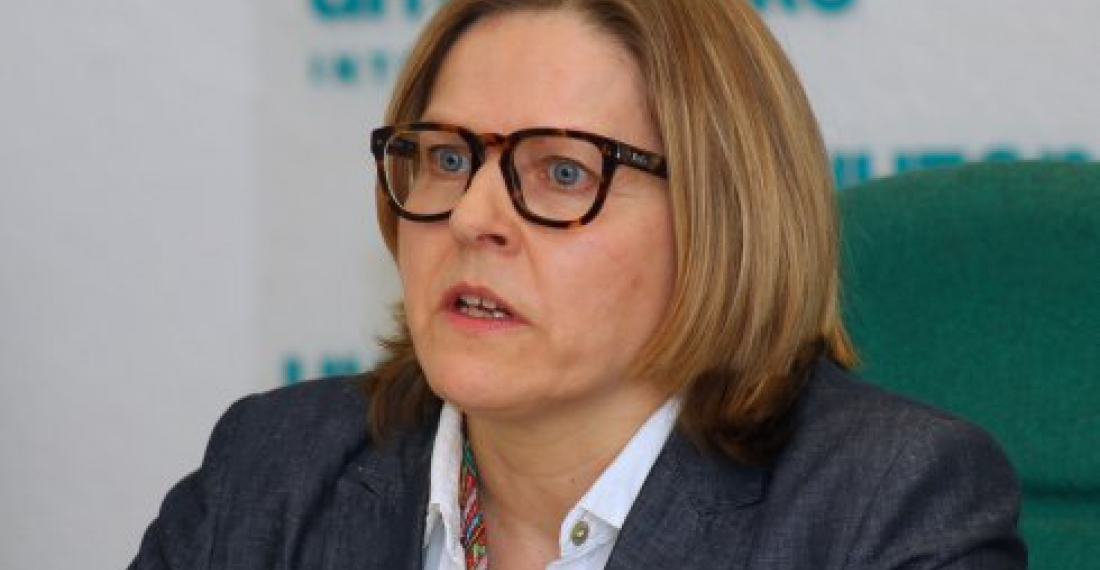
"Политическая воля в Грузии в осуществлении реформ, достойна восхищения и подражания" - Хейди Хатула

Во вторник (27 сентября ) в Европейском парламенте в ходе состоявшегося политического диалога более ста членов Европейского парламента, представители Европейской комиссии, НАТО, Европейской службы внешних действий, представители миссий государств-членов ЕС, а также представители гражданского общества и бизнес-сообщества обсудили Грузию.

Выступившая в ходе обсуждений финский депутат Европарламента и председатель Парламентской Ассамблеи Евронест, Хейди Хатула, похвалила Грузию за выполненные обязательства и требования в рамках Соглашения об ассоциации, которое страна подписала с Европейским союзом, отметив, что данное соглашение является мощным инструментом, который должен работать на благо грузинского народа. "Политическая воля в Грузии в осуществлении реформ, достойна восхищения и подражания", сказала Хейди Хаутала. Она высоко оценила привлечение грузинских организаций гражданского общества, а также рассказала о своей роли мониторинга ("watchdogs").

Обращаясь к ЕС, Хаутала сказала, что Европейский парламент пытается дать практическую поддержку процессу европейской интеграции Грузии. По её словам, к несчастью, вопрос о либерализации визового режима для Грузии стал заложником внутренней политики между государствами-членами, и отметила, что Европейский парламент должен добиться скорейшего разрешения этого вопроса.

Хаутала вместе с другими выступающими предостерегла как Грузию так и ЕС от самодовольства, и отметила, что Грузия нуждается в мирном политическом климате для того, чтобы она смогла начать пожинать плоды своих усилий в реформах.

Обсуждения по вопросам политики на тему «Грузия: Признание достижений, консолидация реформ и решение будущих задач и стремлений» был организован Центром европейской политики и LINKS (Диалог, анализ и исследованиz) под патронажем Группы S и D в Европейском парламенте. Председателем мероприятия был Андрей Мамикинс, депутат из Латвии.

источник: commonspace.eu

фото: Хейди Хатула

 

Related articles

Editor's choice
News
The British prime minister says Europe must "stand on its own two feet" when it comes to defence

The British prime minister says Europe must "stand on its own two feet" when it comes to defence

The UK will deploy a carrier strike group, led by the aircraft carrier HMS Prince of Wales to the Arctic and the High North as part of efforts to bolster security against Russian threats. British prime minister, Sir Keir Starmer announced the deployment in a speech on Saturday (14 February) at the Munich Security Conference. Europe must be ready to fight to protect its people, values, and way of life,  Sir Keir told the Conference. Starmer also called for deeper links and cooperation, including economic ties, between the UK and EU. The PM stressed the continent must "stand on its own two feet" when it comes to defence commitments. "We must build our hard power, because that is the currency of the age," he told the conference. (Click image to read the full story).

Popular

Editor's choice
Interview
Thursday Interview: Murad Muradov

Thursday Interview: Murad Muradov

Today, commonspace.eu starts a new regular weekly series. THURSDAY INTERVIEW, conducted by Lauri Nikulainen, will host  persons who are thinkers, opinion shapers, and implementors in their countries and spheres. We start the series with an interview with Murad Muradov, a leading person in Azerbaijan's think tank community. He is also the first co-chair of the Action Committee for a new Armenian-Azerbaijani Dialogue. Last September he made history by being the first Azerbaijani civil society activist to visit Armenia after the 44 day war, and the start of the peace process. Speaking about this visit Murad Muradov said: "My experience was largely positive. My negative expectations luckily didn’t play out. The discussions were respectful, the panel format bringing together experts from Armenia, Azerbaijan, and Turkey was particularly valuable during the NATO Rose-Roth Seminar in Yerevan, and media coverage, while varied in tone, remained largely constructive. Some media outlets though attempted to represent me as more of a government mouthpiece than an independent expert, which was totally misleading.  Overall, I see these initiatives as important steps in rebuilding trust and normalising professional engagement. The fact that soon a larger Azerbaijani civil society visits to Armenia followed, reinforces the sense that this process is moving in the right direction." (click the image to read the interview in full)


