Лидеры стран Южного Кавказа были оптимистичны в своих новогодних обращениях

Лидеры Армении, Азербайджана и Грузии в ходе традиционного предновогоднего обращения к своим гражданам по телевидению приветствовали достижения 2017 года и с оптимизмом говорили о предстоящем годе.

Президент Армении Серж Саргсян приветствовал проведение парламентских выборов в 2017 году. "Политическая борьба была острой, однако атмосфера была конструктивной. Мы избежали вражды и разделения противостоящих лагерей. Это важнее, чем то, кто сколько процентов набрал", - сказал он, добавив, что "взаимное уважение, терпимость и солидарность отныне должны быть постоянными проводниками политической жизни Армении".

Касаясь вопроса конституционных изменений, которые вступят в силу в конце срока полномочий президента в апреле 2018 года, президент Саргсян сказал: "В наступающем году мы доведём до завершения нашу работу по переходу к новой системе управления."

"По примечательному совпадению в 2018 году мы будем праздновать 100-летие основания Республики Армения. С уверенностью можем утверждать, что подходим к этому юбилею с более прочными и состоявшимися государственно-общественными структурами. Вместе мы вернём в Армению наших покинувших страну родственников. Они вернутся, поскольку на Родине - в Армении увидят ещё большую область для работы и самореализации. Цель нашей работы одна: открыть новые горизонты и возможности, создать широкое поле деятельности для каждого гражданина Армении."

В речи президента Армении практически не упоминалось о Нагорном Карабахе, за исключением общего заявления "продолжать неуклонно отстаивать права и интересы Арцаха". В заключение президент Армении заявил: "Пусть в 2018 году продолжит укрепляться триединство Армения-Арцах-Диаспора, будут неприступны наши границы и гостеприимны наши очаги!"

В своем более длинном и обширном обращении президент Азербайджана Ильхам Алиев рассказал об экономике Азербайджана и успехе правительства в поддержании стабильности в стране. Он рассказал о достижениях во внешней политике и рассказал о 20 официальных визитах, которые он провел в другие страны в 2017 году. Президент посвятил значительную часть своего выступления карабахской проблеме.

Он сказал, что ключевым вопросом внешней политики Азербайджана является справедливое урегулирование армяно-азербайджанского конфликта вокруг Нагорного Карабаха, добавив, что "весь мир считает Нагорный Карабах неотъемлемой частью Азербайджана. И это естественно, потому что Нагорный Карабах является нашей исконной исторической землей. Азербайджанский народ веками жил, творил, строил на этих землях. Просто коварные соседи уничтожили наши исторические, религиозные памятники, и эти земли уже много лет находятся под оккупацией." Президент Алиев сказал, что "Армения безоговорочно присоединилась к переговорам, несмотря на то, что выдвигала условия. Ни одно условие, выдвинутое Арменией после апрельского поражения, не было принято Азербайджаном. Переговоры были безоговорочно возобновлены. Надеюсь, что в результате переговоров мы можем добиться решения этого вопроса. Конечно, мощный экономический и военный потенциал еще более укрепляет нашу позицию на переговорах. После апрельского поражения Армения все еще не смогла прийти в себя. Считаю, что это поражение должно послужить им хорошим уроком, еще раз показать всему миру, что азербайджанский народ никогда не смирится с оккупацией."

Президент Азербайджана отметил возможности вооруженных сил его страны. "Наш военный потенциал и в этом году находился в центре внимания. Все, что необходимо нашей армии, мы решили. Сегодня все международные рейтинги показывают, что Азербайджанская армия входит в число сильных армий не только в регионе, но и в мировом масштабе."

Азербайджанский лидер также приветствовал успехи его страны в сфере экономики в 2017 году. По его словам, валютные резервы страны увеличились более чем на 4,5 миллиарда долларов. "Это - наш стратегический запас, один из факторов, предоставляющих нам как экономическую, так и политическую независимость, укрепляющих их."

В своем обращении президент Грузии Георгий Маргвелашвили и премьер-министр Георгий Квирикашвили обратились к жителям Абхазии и Южной Осетии. "Наша главная цель - объединить Грузию с абхазским и осетинским народами", - сказал президент Грузии Георгий Маргвелашвили, адресуя свои пожелания всем в своем новогоднем послании. Премьер-министр Квирикашвили поздравил абхазский и осетинский народ с новым годом. "Я действительно верю, что мы можем восстановить доверие, и вместе мы будем строить совместное будущее для себя и своих детей", - сказал он. Президент Грузии и премьер-министр упомянули и то, что Грузия в 2018 году отметит 100-летие со дня образования первой Грузинской Республики.


источник: commonspace.eu по материалам агентств

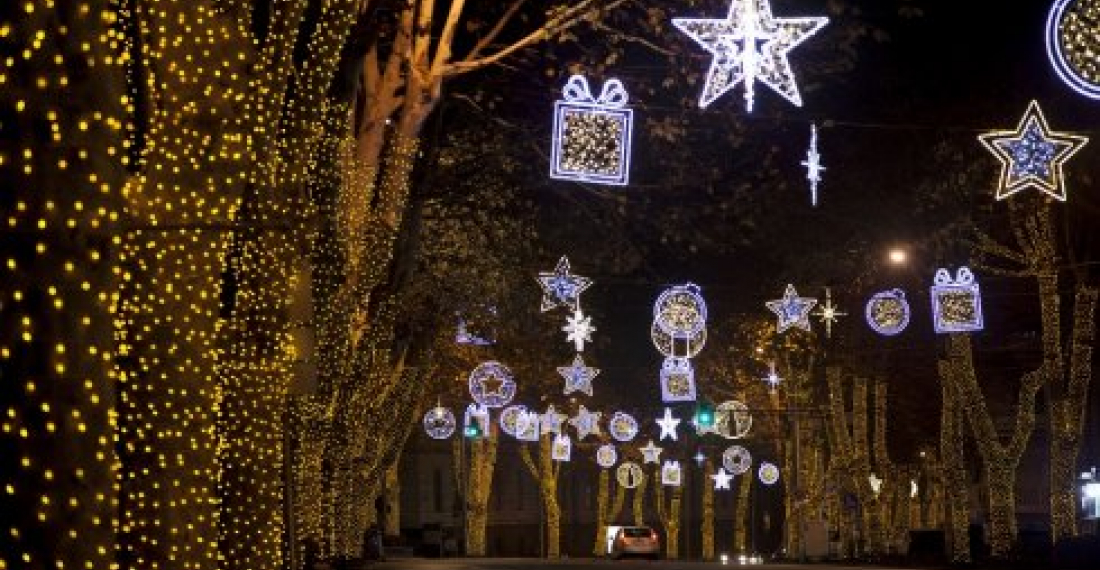
фото: Праздничный Тбилиси (фото Agenda.ge)

Related articles

Editor's choice
News
COP 17 in Armenia

COP 17 in Armenia

Armenia is currently hosting the COP17 conference of the Convention on Biological Diversity, which began earlier this week (19 October) and will run until 30 October, bringing around 15,000 participants from 196 different countries to Yerevan. At a leaders' summit held as part of COP17, Prime Minister Nikol Pashinyan expressed realistic ambitions: “We are halfway towards achieving these goals (Kunming-Montreal Global Biodiversity Framework), and we must honestly acknowledge that we are not yet moving in the right direction. Our task now is not to make new promises, but to fulfil the commitments we have already made.” Pashinyan pointed towards Armenia's own records, noting that the whitefish stock in Lake Sevan has increased substantially in the last ten years. Iranian President Masoud Pezeshkian and Georgian Prime Minister Irakli Kobakhidze also addressed the summit, with Turkiye sending its agriculture minister. However, there were no reports of Azerbaijani representatives attending. The conference has given Yerevan a valuable international platform, yet the absence of Azerbaijan is likely to be read as a sign that the peace process in the South Caucasus has not yet been translated into wider regional cooperation. The leaders' summit was opened by Armenian Prime Minister Nikol Pashinyan, who stressed that hosting the conference was a great honour for Armenia. He expressed hope that it would 'be productive and contribute to protecting our planet's biodiversity'. 'We – the citizens of Armenia, the government, state authorities and local governments – owe a debt to our nature,' the prime minister said. He noted that the international community had already developed the concept of 'living in harmony with nature’ and adopted the Kunming-Montreal Global Biodiversity Framework in 2022, setting out goals and specific targets to be achieved by 2030. 'We are halfway towards achieving these goals, and we must honestly acknowledge that we are not yet moving in the right direction. Our task now is not to make new promises, but to fulfil the commitments we have already made,' Nikol Pashinyan said. The COP17 conference is expected to adopt a declaration at leaders' level. More than 30 documents are scheduled for discussion. If approved, the commitments set out in them will become legally binding on countries that are parties to the Convention on Biological Diversity.”
Editor's choice
News
Landmines present to the European Union both a contradiction and a dilemma

Landmines present to the European Union both a contradiction and a dilemma

Finland’s decision to buy one million landmines creates a serious contradiction in the policy of the European Union, and is symbolic of a bigger dilemma facing European countries as they get used to the need to acquire “hard” power to face an increasing threat from Russia. Finland is seeking to acquire one million anti-personnel mines at a cost of 100 million euros. Finland, together with Poland, Latvia, Lithuania and Estonia last year abandoned the Ottawa agreement, the international framework that bans the use of anti-personnel mines, which the EU had been instrumental in establishing and supporting. All five countries cite the threat from Moscow as the reason. Colonel Riku Mikkonen of the Army Command told Finland’s national news agency STT that officials are now gathering information from suppliers regarding the deal, the AFP news agency reports. Helsinki would like domestic manufacturers to supply the mines, with contracts signed by the end of 2027 and production up and running by 2028. “It would be useful in many ways if Finnish companies produced the anti-personnel mines in Finland,” Mikkonen said. About half a dozen Finnish firms qualify, he told STT. “However, at this stage, buying the mines from abroad is not totally ruled out,” he added. LANDMINES PROVIDE THE EU WITH BOTH A CONTRADICTION, AND A DILEMMA Eliminating landmine contamination worldwide is one of the EU’s main soft power postures, and it basks in its record as the biggest funder of anti-landmine action in the world. But the fact that 5 of its 27 member states  have now left the Ottawa Treaty dents the EU moral high ground. It is a contradiction that is too big and important to be ignored. It also presents the European Union with a deeper dilemma. The threat from Russia is changing what the EU has stood for decades, namely a force for good able to mobilise its considerable soft power for the greater good of humanity. How the Union will implement this change will define its future. In the meantime landmines have not become any less lethal, benign, or unimportant. They remain in many parts of the world a major threat to life, an impediment to prosperity, and a potential trigger to further conflict. The 22 EU members states that still adhere to the Ottawa treaty must regroup, and be more assertive in their quest against anti-personnel land mines. All the reasons why they supported the Ottawa treaty in the first place still exist. The message must be clear: NO TO LANDMINES!

Popular

Editor's choice
Interview
Thursday Interview: Murad Muradov

Thursday Interview: Murad Muradov

Today, commonspace.eu starts a new regular weekly series. THURSDAY INTERVIEW, conducted by Lauri Nikulainen, will host  persons who are thinkers, opinion shapers, and implementors in their countries and spheres. We start the series with an interview with Murad Muradov, a leading person in Azerbaijan's think tank community. He is also the first co-chair of the Action Committee for a new Armenian-Azerbaijani Dialogue. Last September he made history by being the first Azerbaijani civil society activist to visit Armenia after the 44 day war, and the start of the peace process. Speaking about this visit Murad Muradov said: "My experience was largely positive. My negative expectations luckily didn’t play out. The discussions were respectful, the panel format bringing together experts from Armenia, Azerbaijan, and Turkey was particularly valuable during the NATO Rose-Roth Seminar in Yerevan, and media coverage, while varied in tone, remained largely constructive. Some media outlets though attempted to represent me as more of a government mouthpiece than an independent expert, which was totally misleading.  Overall, I see these initiatives as important steps in rebuilding trust and normalising professional engagement. The fact that soon a larger Azerbaijani civil society visits to Armenia followed, reinforces the sense that this process is moving in the right direction." (click the image to read the interview in full)