


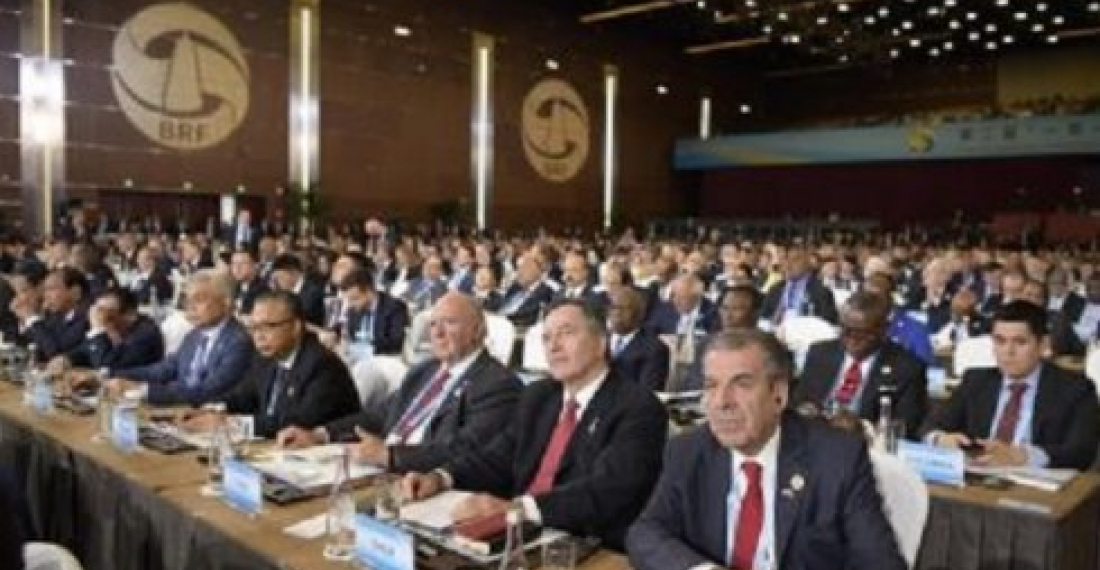
Китай заявляет, что инициатива «Один пояс, одна дорога» должна быть экологической и устойчивой

Президент Китая Си Цзиньпин в пятницу призвал участников Инициативы «Один пояс, одна дорога» постоянно продвигать инициативу по пути качественного развития.

Си выступил с заявлением в своей программной речи на церемонии открытия Второго форума по международному сотрудничеству в Пекине.

По его словам, следует поддерживать принцип обширных консультаций, совместного вклада и общих выгод. Он добавил, что следует придерживаться открытого, экологического и чистого подхода.

По словам Си, должны быть достигнуты цели высокого стандарта, улучшения условий жизни и устойчивого развития. Инициатива «Один пояс, одна дорога» также откроет возможности для развития Китая, так как сам Китай еще больше открывает свои рынки для мира, сказал Си.

"В соответствии с необходимостью дальнейшего раскрытия (мы) будем совершенствовать законы и нормативные акты, регулировать поведение правительства на всех уровнях административного лицензирования, надзора за рынком и в других областях, а также очищать и отменять необоснованные нормативные акты, субсидии и методы, которые препятствуют добросовестной конкуренции и искажают рынок", - сказал он.

Си пообещал значительно сократить отрицательный список для иностранных инвестиций и позволить иностранным компаниям приобрести контрольный пакет акций или создать компании, находящиеся в полной собственности, в большем количестве секторов.

Тарифы будут ниже, а нетарифные барьеры будут устранены, добавил Си.

Китай также стремится импортировать больше услуг и товаров и готов импортировать конкурентоспособную сельскохозяйственную продукцию и услуги для достижения торгового баланса.

"Китай усилит координацию макроэкономической политики с крупнейшими экономиками мира и будет стремиться к созданию положительных побочных эффектов, способствующих сильному, устойчивому, сбалансированному и всестороннему росту мировой экономики", - сказал Си.

источник: commonspace.eu

фото: Открытие Второго форума по вопросам автомобильного транспорта и международного сотрудничества в Пекине в пятницу, 26 апреля 2019 года. (фото любезно предоставлено агентством Синьхуа)


Related articles

Editor's choice
News
The British prime minister says Europe must "stand on its own two feet" when it comes to defence

The British prime minister says Europe must "stand on its own two feet" when it comes to defence

The UK will deploy a carrier strike group, led by the aircraft carrier HMS Prince of Wales to the Arctic and the High North as part of efforts to bolster security against Russian threats. British prime minister, Sir Keir Starmer announced the deployment in a speech on Saturday (14 February) at the Munich Security Conference. Europe must be ready to fight to protect its people, values, and way of life,  Sir Keir told the Conference. Starmer also called for deeper links and cooperation, including economic ties, between the UK and EU. The PM stressed the continent must "stand on its own two feet" when it comes to defence commitments. "We must build our hard power, because that is the currency of the age," he told the conference. (Click image to read the full story).

Popular

Editor's choice
Interview
Thursday Interview: Murad Muradov

Thursday Interview: Murad Muradov

Today, commonspace.eu starts a new regular weekly series. THURSDAY INTERVIEW, conducted by Lauri Nikulainen, will host  persons who are thinkers, opinion shapers, and implementors in their countries and spheres. We start the series with an interview with Murad Muradov, a leading person in Azerbaijan's think tank community. He is also the first co-chair of the Action Committee for a new Armenian-Azerbaijani Dialogue. Last September he made history by being the first Azerbaijani civil society activist to visit Armenia after the 44 day war, and the start of the peace process. Speaking about this visit Murad Muradov said: "My experience was largely positive. My negative expectations luckily didn’t play out. The discussions were respectful, the panel format bringing together experts from Armenia, Azerbaijan, and Turkey was particularly valuable during the NATO Rose-Roth Seminar in Yerevan, and media coverage, while varied in tone, remained largely constructive. Some media outlets though attempted to represent me as more of a government mouthpiece than an independent expert, which was totally misleading.  Overall, I see these initiatives as important steps in rebuilding trust and normalising professional engagement. The fact that soon a larger Azerbaijani civil society visits to Armenia followed, reinforces the sense that this process is moving in the right direction." (click the image to read the interview in full)

