


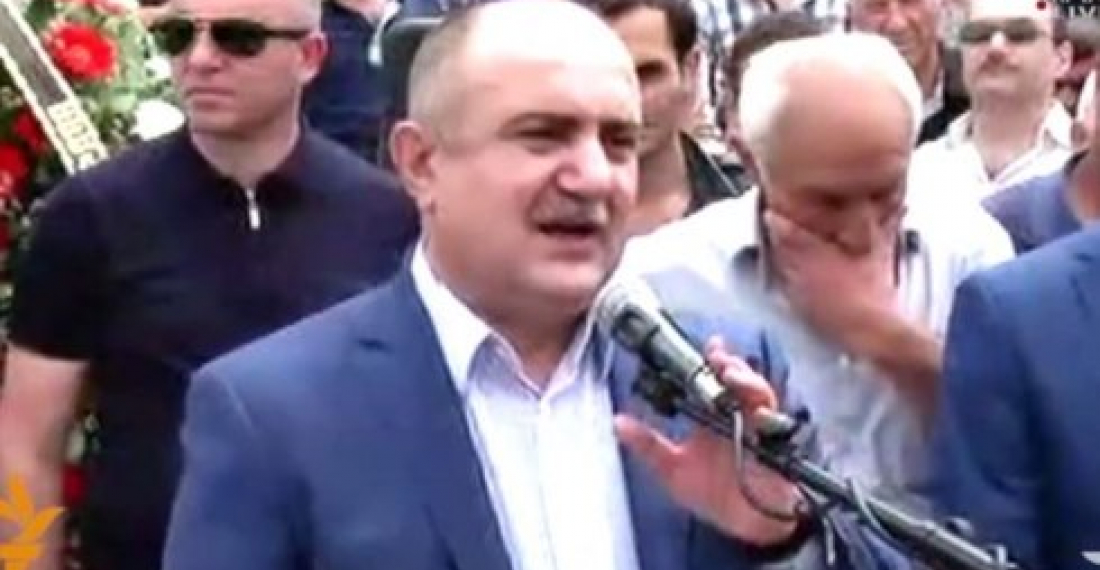
Дело Самвела Бабаяна продолжает бросать тень на выборы в Армении

Суд административных районов Кентрон и Норк-Мараш города Еревана избрал меру пресечения в виде заключения под стражу сроком на два месяца в отношении Самвела Бабаяна, бывшего министра обороны Нагорного Карабаха, и союзника блока ОРО, одной из главных политических сил, участвующих в парламентских выборах, запланированных в Армении на 2 апреля.

Как ранее сообщала Служба национальной безопасности Армении, Бабаян и двое других были задержаны по подозрению ввоза в Армению ПЗРК "Игла". Служба безопасности сообщает, что двое неназванных лиц действовали по указанию Бабаяна и, что они пытались ввести систему через сухопутную границу с Грузией. Однако, Министерство внутренних дел Грузии опровергло все данные об этом инциденте, и сам Бабаян также отверг свою причастность к данному делу.

Данное дело бросает тень на текущую избирательную кампанию парламентских выборов в Армении. Бабаян считается союзником блока Оганян-Раффи-Осканян (ОРО), возглавляемого тремя бывшими министрами. Руководители блока поспешили на защиту Бабаяна. После первого заявления, опубликованного вскоре после ареста Бабаяна (читайте здесь), в четверг ОРО выступил с еще одним жестким заявлением его самого видного лидера Сейрана Оганяна, который до недавнего времени был министром обороны Армении, заявившим, что арест Бабаяна является попыткой оказать давление на блок:

"Не понимают, что он наш боевой товарищ, наш друг-единомышленник. Самвел Бабаян вместе со своими друзьями обеспечил победу в Арцахской войне. Он герой Арцаха. Я хочу сказать, мы будем стоять до конца на защите прав Самвела Бабаяна, и мы не допустим, чтобы эти власти своей напускной деятельностью добились своей цели," - заявил Оганян.

Сам Оганян в последние дни избирательной кампании стал главной мишенью для проправительственных СМИ. Ссылаясь на этот факт, другой лидер блока ОРО, бывший министр иностранных дел Раффи Ованнисян сказал: "Уверен, что Сейрана Оганяна сейчас преследуют соответствующие структуры, а также близкие к власти СМИ, также как и Самвела Бабаяна. И у меня и моей семьи был такой опыт, и любой может станет их мишенью, независимо от того являются ли они фермерами или национальными героями. Какая им разница? Я говорю не от имени г-на Оганяна, а просто делюсь с вами своим мнением как гражданин", - добавил Ованнисян.

По его словам, блок представляет угрозу для властей, и поэтому против него были предприняты превентивные меры с задержаниями. Говоря о возможности задержания Сейрана Оганяна, Ованнисян сказал: "Пусть только рискнут".

Другие политические лидеры также прокомментировали дело Бабаяна. Пресс-секретарь правящей Республиканской партии Армении (РПА) Эдуард Шармазанов заявил, что политические спекуляции по этому делу неприемлемы. Говоря о заявлениях блока ОРО, Шармазанов сказал, что попытка политизировать любой судебный процесс для повышения и без того низкого рейтинга блока - не самый лучший вариант. На просьбу прокомментировать это дело и заявления лидеров Блока ОРО премьер-министр Карен Карапетян сказал, что он предпочитает сосредоточиться на более идеологических вопросах.

Это дело также привлекло внимание международного сообщества. Глава делегации ЕС в Армении посол Петр Свитский в пятницу сообщил журналистам, что все процессы, направленные на предотвращение насилия в Армении, должны быть прозрачными.

"Мы считаем, что все разногласия и недовольства должны решаться в судах и должны быть урегулированы мирным путем. Для Европейского союза вопрос предотвращения насилия очень важен. Мы считаем, что главная ответственность за предотвращение насилия лежит на правоохранительных органах. Эти процедуры должны быть очень прозрачными. Если есть подозрение, что что-то не так, то мы считаем, что правоохранительные органы должны действовать в условиях полной прозрачности, чтобы у избирателей была уверенность, что это делается не в политических целях, и не ради запугивания других, а это делается в рамках верховенства закона," - сказал посол.

Вопросы, связанные с карабахским конфликтом, продолжают занимать видное место в избирательной кампании.

В пятницу на предвыборном митинге в административном округе Малатия-Себастия один из лидеров оппозиционного Армянского национального конгресса Левон Зурабян заявил, что победа в Карабахе была достигнута благодаря руководству тогдашнего президента и главнокомандующего Левону Тер-Петросяну.

"Когда мы выиграли войну в Карабахе в 1994 году, мы в первую очередь победили благодаря главнокомандующему Левону Тер-Петросяну, люди, солдаты и командиры могут быть героями, но победа была бы невозможна, если бы организация войны, ведение дипломатической работы и экономической поддержки военных действий, были бы организованны не правильно. Просто Тер-Петросян хотел достичь этой победы и сделать ее необратимой", - сказал Зурабян.

Зурабян также добавил, что режим прекращение огня не может бать гарантией мира.

Похожие новости:

Арестован бывший министр обороны Карабаха Самвел Бабаян

Возвращение Самвела Бабаяна в Нагорный Карабах

Источник: commonspace.eu по материалам агентств

Фото: Самвел Бабаян (фото из архива) Раннее была опубликована фотография другого человека с тем же именем. Мы приносим извинения нашим читателям за это.

Related articles

Editor's choice
News
Israeli parliament votes to bring back the death penalty, but only for Palestinians

Israeli parliament votes to bring back the death penalty, but only for Palestinians

srael’s parliament approved a bill on Monday that would allow the execution of Palestinians convicted on terror charges for deadly attacks, a move that has been criticized as discriminatory and immediately drew a court challenge. Sixty-two lawmakers, including Prime Minister Benjamin Netanyahu, voted in favor and 48 against the bill, championed by far-right National Security Minister Itamar Ben Gvir. There was one abstention and the rest of the lawmakers were not present. Ben Gvir in the run-up to the vote had worn a lapel pin in the shape of a noose, symbolising his support for the legislation. “We made history!!! We promised. We delivered,” he posted on X after the vote. The bill would make the death penalty the default punishment for Palestinians in the Israeli-occupied West Bank found guilty of intentionally carrying out deadly attacks deemed “acts of terrorism” by an Israeli military court. The bill says that the sentence may be reduced to life imprisonment under “special circumstances.” Palestinians in the West Bank are automatically tried in Israeli military courts. Meanwhile, under the bill, in Israeli criminal courts anyone “who intentionally causes the death of a person with the aim of harming an Israeli citizen or resident out of an intention to put an end to the existence of the State of Israel shall be sentenced to death or life imprisonment.” Criminal courts try Israeli nationals, including Palestinian citizens and residents of east Jerusalem. The bill sets the execution method as hanging, adding that it should be carried out within 90 days of the sentencing, with a possible postponement of up to 180 days. - ‘Parallel tracks’ - The bill appears to conflict with Israel’s Basic Laws, which prohibit arbitrary discrimination, and shortly after it was passed, a leading human rights group announced that it had filed a petition with the Supreme Court demanding the legislation’s annulment. “The law creates two parallel tracks, both designed to apply to Palestinians,” the Association for Civil Rights in Israel said in a statement. “In military courts — which have jurisdiction over West Bank Palestinians — it establishes a near-mandatory death sentence,” the rights group said. In civilian courts, the law’s stipulation that defendants must have acted “with the aim of negating the existence” of Israel “structurally excludes Jewish perpetrators,” the group added. The association argued the law should be annulled on both jurisdictional and constitutional grounds. During the debate in parliament, opposition lawmaker and former deputy Mossad director, Ram Ben Barak, expressed outrage at the legislation. “Do you understand what it means that there is one law for Arabs in Judea and Samaria, and a different law for the general public for which the State of Israel is responsible?” he asked fellow parliamentarians, using the Israeli name for the West Bank. “It says that Hamas has defeated us. It has defeated us because we have lost all our values.” - ‘Discriminatory application’ - Lawmaker Limor Son Har-Melech from Ben Gvir’s party, who years ago survived an attack by Palestinian militants in which her husband was killed, urged fellow parliamentarians to approve the bill. “For years, we endured a cruel cycle of terror, imprisonment, release in reckless deals, and the return of these human monsters to murder Jews again ... And today, my friends, this cycle has come full circle.” The Palestinian Authority condemned the law’s adoption, saying that “Israel has no sovereignty over Palestinian land.” “This law once again reveals the nature of the Israeli colonial system, which seeks to legitimize extrajudicial killing under legislative cover,” it added. In February, Amnesty International had urged Israeli lawmakers to reject the legislation, citing its “discriminatory application against Palestinians.” On Sunday, Britain, France, Germany and Italy expressed “deep concern” over the bill, which they said risked “undermining Israel’s commitments with regards to democratic principles.” While the death penalty exists for a small number of crimes in Israel, it has become a de facto abolitionist country — the Nazi Holocaust perpetrator Adolf Eichmann was the last person to be executed in 1962. Israel has occupied the West Bank since 1967 and violence there has soared since Hamas’s October 7, 2023 attack on Israel triggered the Gaza war. (read more by clicking the image above).

Popular

Editor's choice
Interview
Thursday Interview: Murad Muradov

Thursday Interview: Murad Muradov

Today, commonspace.eu starts a new regular weekly series. THURSDAY INTERVIEW, conducted by Lauri Nikulainen, will host  persons who are thinkers, opinion shapers, and implementors in their countries and spheres. We start the series with an interview with Murad Muradov, a leading person in Azerbaijan's think tank community. He is also the first co-chair of the Action Committee for a new Armenian-Azerbaijani Dialogue. Last September he made history by being the first Azerbaijani civil society activist to visit Armenia after the 44 day war, and the start of the peace process. Speaking about this visit Murad Muradov said: "My experience was largely positive. My negative expectations luckily didn’t play out. The discussions were respectful, the panel format bringing together experts from Armenia, Azerbaijan, and Turkey was particularly valuable during the NATO Rose-Roth Seminar in Yerevan, and media coverage, while varied in tone, remained largely constructive. Some media outlets though attempted to represent me as more of a government mouthpiece than an independent expert, which was totally misleading.  Overall, I see these initiatives as important steps in rebuilding trust and normalising professional engagement. The fact that soon a larger Azerbaijani civil society visits to Armenia followed, reinforces the sense that this process is moving in the right direction." (click the image to read the interview in full)

