


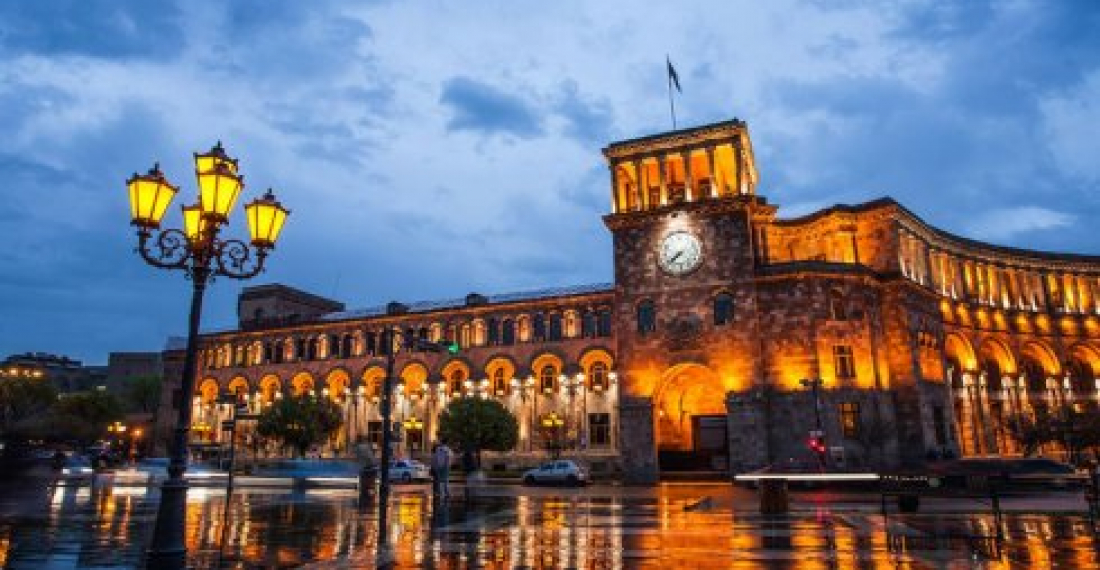
COVID-19: Армения заменяет чрезвычайное положение на карантинный режим до января 2021 года

Чрезвычайное положение, действовавшее в Армении с марта из-за пандемии COVID-19, теперь отменено и заменено режимом карантина, который продлится до 11 января 2021 года.

В заявлении Министерства иностранных дел Армении говорится, что негражданам Республики Армения запрещен въезд в Республику Армения через пункты пропуска через сухопутную границу, за исключением членов семей граждан Республики Армения и лиц, проживающих на законных основаниях в Республике Армения; а также представители дипломатических миссий, консульских учреждений, международных организаций и члены их семей.

Также сюда включаются лица, прибывшие на похороны и поминальные службы, если они являются близкими родственниками умершего (родитель, супруга, ребенок, сестра, брат), водители межгосударственных грузовых перевозок, грузовых поездов (в том числе выезжающие с территории Республики Армении после разгрузки).

В особых случаях, когда командующий пограничными войсками с учетом срочности и необходимости въезда, а также с учетом эпидемической ситуации в странах (территориях) посетителей, может предоставить разрешение на въезд на территорию Республики Армения.

При въезде на территорию Республики Армения лица подвергаются немедленному медицинскому осмотру Инспекцией здравоохранения и труда на предмет наличия инфекции или симптомов инфекции.

По результатам обследования, человек госпитализируется, если присутствуют соответствующие симптомы, или ему предписывается самоизоляция на срок 14 дней, в течение которых у него может произойти полимеразная цепная реакция (COVID-19) и диагностический тест (PCR). В случае отрицательного результата теста PCR человек может выйти из самоизоляции.

В МИД Армении напомнили, что гражданам иностранных государств разрешен въезд в Армению путем авиасообщения.

Источник: commonspace.eu по материалам пресс-службы МИД Армении

Related articles

Editor's choice
News
The British prime minister says Europe must "stand on its own two feet" when it comes to defence

The British prime minister says Europe must "stand on its own two feet" when it comes to defence

The UK will deploy a carrier strike group, led by the aircraft carrier HMS Prince of Wales to the Arctic and the High North as part of efforts to bolster security against Russian threats. British prime minister, Sir Keir Starmer announced the deployment in a speech on Saturday (14 February) at the Munich Security Conference. Europe must be ready to fight to protect its people, values, and way of life,  Sir Keir told the Conference. Starmer also called for deeper links and cooperation, including economic ties, between the UK and EU. The PM stressed the continent must "stand on its own two feet" when it comes to defence commitments. "We must build our hard power, because that is the currency of the age," he told the conference. (Click image to read the full story).

Popular

Editor's choice
Interview
Thursday Interview: Murad Muradov

Thursday Interview: Murad Muradov

Today, commonspace.eu starts a new regular weekly series. THURSDAY INTERVIEW, conducted by Lauri Nikulainen, will host  persons who are thinkers, opinion shapers, and implementors in their countries and spheres. We start the series with an interview with Murad Muradov, a leading person in Azerbaijan's think tank community. He is also the first co-chair of the Action Committee for a new Armenian-Azerbaijani Dialogue. Last September he made history by being the first Azerbaijani civil society activist to visit Armenia after the 44 day war, and the start of the peace process. Speaking about this visit Murad Muradov said: "My experience was largely positive. My negative expectations luckily didn’t play out. The discussions were respectful, the panel format bringing together experts from Armenia, Azerbaijan, and Turkey was particularly valuable during the NATO Rose-Roth Seminar in Yerevan, and media coverage, while varied in tone, remained largely constructive. Some media outlets though attempted to represent me as more of a government mouthpiece than an independent expert, which was totally misleading.  Overall, I see these initiatives as important steps in rebuilding trust and normalising professional engagement. The fact that soon a larger Azerbaijani civil society visits to Armenia followed, reinforces the sense that this process is moving in the right direction." (click the image to read the interview in full)


