


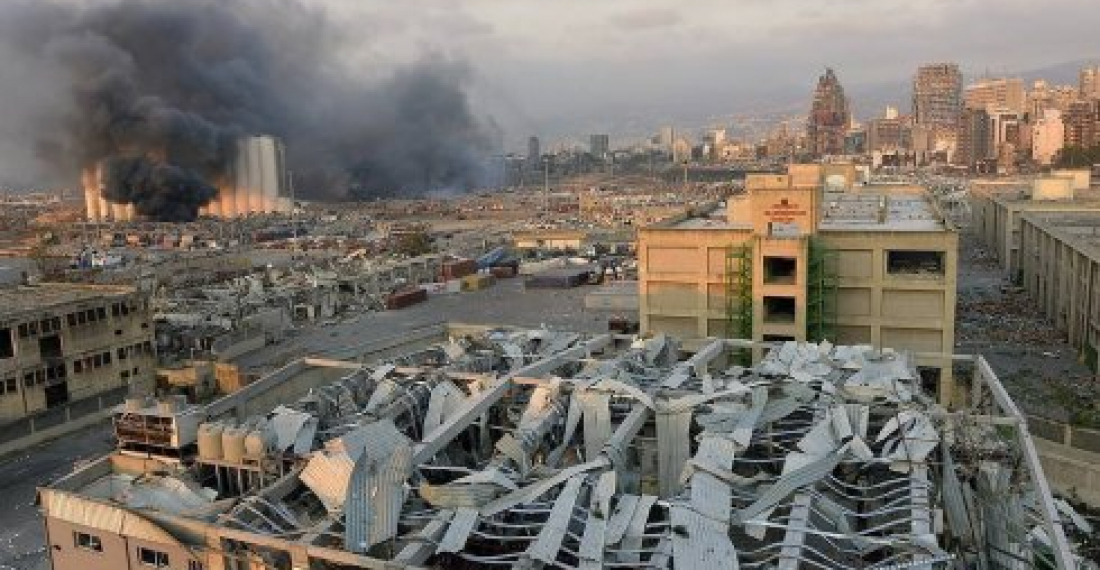
Более сотни погибших в результате взрыва в Бейруте (Обновлено)

Обновлено

Число погибших в результате сильнейшего взрыва в порту Бейрута во вторник (4 августа) превысило сотню и, как ожидается, это число будет расти, поскольку, есть сообщения о пропавших без вести. Более четырех тысяч человек получили ранения.

Среди пострадавших групп - большая армянская община Ливана. По данным МИД Армении, в результате инцидента погибли шесть армян. Пресс-секретарь МИД Армении Анна Нагдалян написала на своей странице в Facebook:

"В МИДе была создана рабочая группа для координации - с кризисной структурой Ливана - оказания адресной помощи Ливану. Посольство РА в Ливане находится в постоянном контакте с соответствующими местными властями для совместной оценки потребностей ливанской стороны и объема необходимлй помощи.

Параллельно поддерживается связь с армянскими общественными структурами [в Бейруте] для оценки [их] потребностей.

Посольство в Ливане работает в аварийном режиме; открыта горячая линия "


______________

Столица Ливана Бейрут сегодня была местом опустошения после большого взрыва в районе городского порта.

По предварительным данным, число погибших составляет более пятидесяти человек, более двух тысяч получили ранения.

Говорят о том, что больницы переполнены и были разрушены многие здания.

Глава службы внутренней безопасности Ливана сказал, что взрыв произошел в районе, где находились взрывоопасные материалы.

Среди пострадавших армянская община города. Представитель МИД Армении заявил, что по меньшей мере один человек армянского происхождения погиб, а несколько других получили ранения. Также было повреждено посольство Армении в столице Ливана.

источник: commonspace.eu по материалам агентств

фото: Разрушения в районе порта Бейрута после мощного взрыва, 4 августа 2020 года (фото любезно предоставлено информационным агентством ТАСС, Москва)


 

Related articles

Editor's choice
News
Aden under curfew, as problem in Yemen's south deepens

Aden under curfew, as problem in Yemen's south deepens

The port city of Aden, in Yemen's south, has been put under curfew, as the rift in the country between  the Saudi led coalition which  backs Yemen's presidential governing council, and the southern forces led by the Southern Transitional Council (STC), deepens. Abdul Rahman al-Mahrami, a member of the Yemeni Presidential Governing Council and commander of the al-Amalik brigades, has ordered a curfew in the temporary capital, Aden, "to maintain security". "A curfew has been imposed throughout Aden Governorate from 9:00 p.m. to 6:00 a.m., in accordance with the instructions of Commander Abdul Rahman al-Mahrami, a member of the Presidential Management Council," the statement said. It states that only security and military personnel, as well as medical and technical teams with approved permits, will be allowed to move in the area during these hours. Yemen's presidential council, which is backed by Saudi Arabia and which already is in a struggle with the Houthi Movement in the north of the country who also occupy the capital Sanaa, two days ago issued an order for the arrest of the head of the Southern Transitional Council (STC),, Aidarous al Zubaidi. The STC have wide support among people in the South, and advocate that South Yemen restores its independence. The coalition warned of further escalation in Aden, long regarded as an STC stronghold, as the Presidential Leadership Council (PLC) chief accused STC leader Aidarous Al Zubaidi of “high treason” and announced the revocation of his membership in the governing body. The moves mark a sharp escalation in tensions within the anti-Houthi camp, despite National Shield Forces, rivals of the STC and former allies, having recently retaken control of Hadhramaut and Mahra from southern fighters. The STC’s takeover of the two regions last month angered Saudi Arabia and contributed to igniting the current internal conflict. (click the picture to read more)

Popular

Editor's choice
Analysis
Analysis: Why what happens in Greenland matters

Analysis: Why what happens in Greenland matters

The snap elections for the parliament of Greenland last Tuesday (6 April 2021) attracted unusual interest from major powers who have been watching the political and economic impact of the election results on their interests in the Arctic region. Among them, the Chinese, who have invested in the Kvanefjeld mine on the island. Maximiliaan van Lange analyses the background to the recent Greenlandic general elections, and the Island's geostrategic position in the Arctic in this article for commonspace.eu.

