Азербайджан отмечает 27 годовщину Черного января

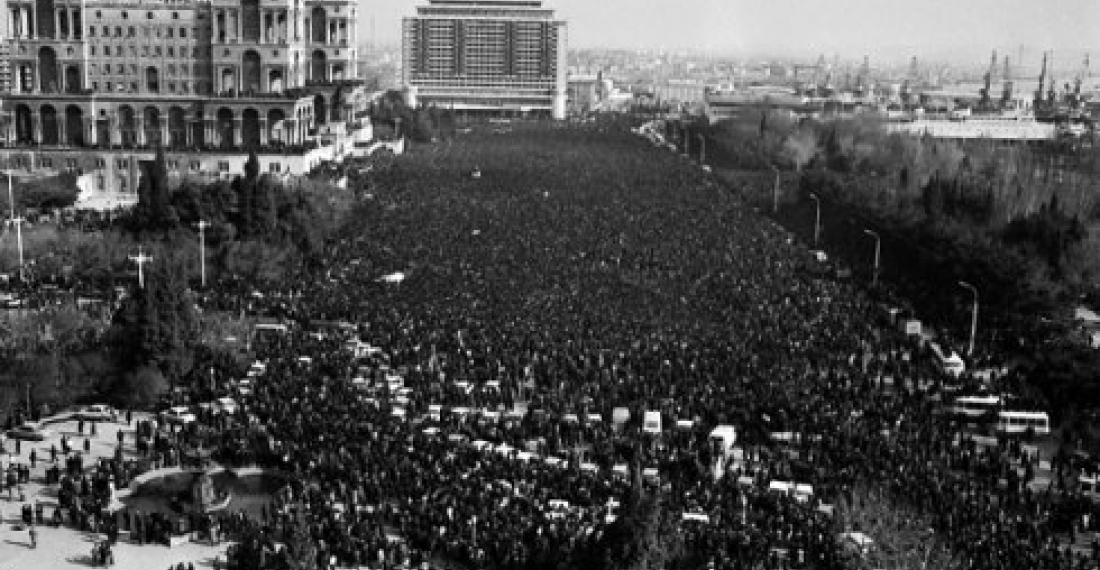
Сегодня Азербайджан отмечает 27-ю годовщину Черного января.

В ответ на массовые протесты общественности во главе с национальным движением за независимость, 19 января 1920 года советское руководство объявило чрезвычайное положение в Баку. В ночь с 19 на 20 января 1990 года советские войска вошли в Баку и поубивав безоружных мирных азербайджанцев. 26,000 солдат, снаряженных тяжелой военной техникой, такими как танки, ворвались в город. Деспотичные репрессии привели к массовым убийствам 137 гражданских лиц, более 800 получили ранения и многие пропали без вести. (По некоторым данным, число погибших было на самом деле гораздо выше). Советская армия также напала на здание государственного телевидения, отрезав от электричества в попытке предотвратить распространение новостей международному сообществу.

20 января стал определяющим моментом в стремлении Азербайджана к государственности и независимости. Этот день встряхнул советскую власть в Азербайджане, и привел к восстановлению независимости 18 октября 1991 года.

В своем тогдашнем докладе организация Human Rights Watch сообщила, что "настолько непропорциональная сила, примененная Советской Армией в ночь с 19 на 20 января, в ответ на сопротивление азербайджанцев представляло собой упражнение по коллективному наказанию.. ..такие наказания в Баку советскими солдатами, возможно, являлись предупреждением для националистов, и не только в Азербайджане, но и в других республиках Советского Союза".

The Wall Street Journal 4 января 1995 года сообщила, что тогдашний советский лидер Горбачев решил использовать насилие против "стремящегося к независимости Азербайджана". Позже, в 1995 году, Горбачев извинился перед Азербайджаном, заявив: "Введение чрезвычайного положения в Баку было самой большой ошибкой моей политической карьеры".

источник: commonspace.eu
Related articles

Editor's choice
News
The British prime minister says Europe must "stand on its own two feet" when it comes to defence

The British prime minister says Europe must "stand on its own two feet" when it comes to defence

The UK will deploy a carrier strike group, led by the aircraft carrier HMS Prince of Wales to the Arctic and the High North as part of efforts to bolster security against Russian threats. British prime minister, Sir Keir Starmer announced the deployment in a speech on Saturday (14 February) at the Munich Security Conference. Europe must be ready to fight to protect its people, values, and way of life,  Sir Keir told the Conference. Starmer also called for deeper links and cooperation, including economic ties, between the UK and EU. The PM stressed the continent must "stand on its own two feet" when it comes to defence commitments. "We must build our hard power, because that is the currency of the age," he told the conference. (Click image to read the full story).

Popular

Editor's choice
Interview
Thursday Interview: Murad Muradov

Thursday Interview: Murad Muradov

Today, commonspace.eu starts a new regular weekly series. THURSDAY INTERVIEW, conducted by Lauri Nikulainen, will host  persons who are thinkers, opinion shapers, and implementors in their countries and spheres. We start the series with an interview with Murad Muradov, a leading person in Azerbaijan's think tank community. He is also the first co-chair of the Action Committee for a new Armenian-Azerbaijani Dialogue. Last September he made history by being the first Azerbaijani civil society activist to visit Armenia after the 44 day war, and the start of the peace process. Speaking about this visit Murad Muradov said: "My experience was largely positive. My negative expectations luckily didn’t play out. The discussions were respectful, the panel format bringing together experts from Armenia, Azerbaijan, and Turkey was particularly valuable during the NATO Rose-Roth Seminar in Yerevan, and media coverage, while varied in tone, remained largely constructive. Some media outlets though attempted to represent me as more of a government mouthpiece than an independent expert, which was totally misleading.  Overall, I see these initiatives as important steps in rebuilding trust and normalising professional engagement. The fact that soon a larger Azerbaijani civil society visits to Armenia followed, reinforces the sense that this process is moving in the right direction." (click the image to read the interview in full)