Армения сообщила о гибели солдата в результате обстрела с азербайджанской стороны

Обновлено

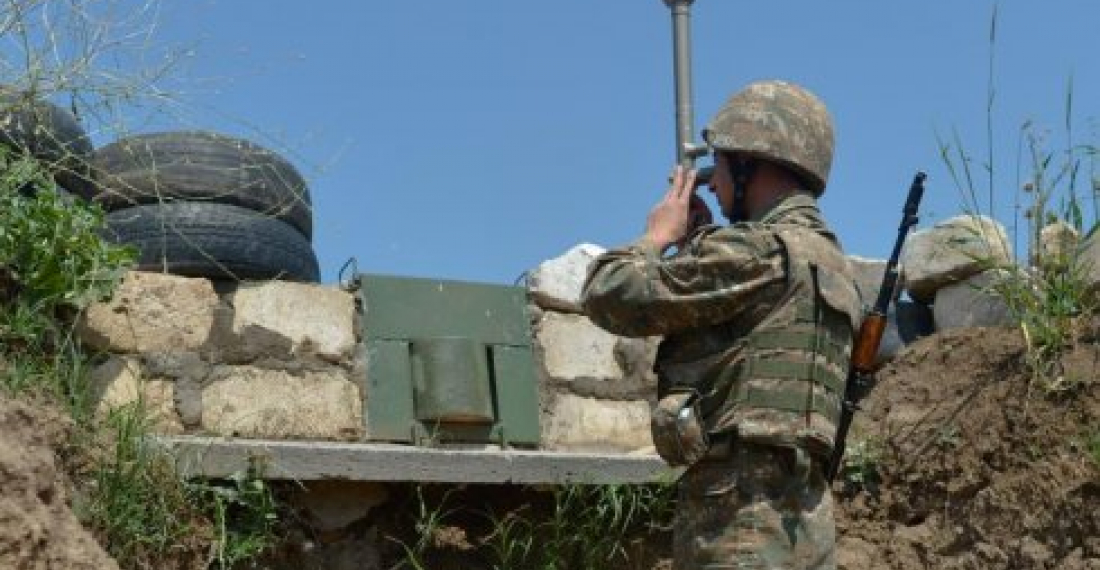
Источник в министерстве обороны Армении заявили, что один из ее солдат был убит в воскресенье в результате обстрела с азербайджанской стороны в северо-восточном секторе международной границы между двумя странами.

Покойного солдата звали Арман Булгадарян. Ему было 24 года. Армянские СМИ сообщают, что солдат был из города Ванадзор и недавно вернулся из России.

В субботу Армения заявила, что еще один ее солдат был ранен в результате обстрела азербайджанцев в районе тавушского участка границы. Азербайджанская сторона еще не прокомментировала этот инцидент напрямую, но азербайджанские СМИ сообщают, что в воскресенье (28 июля) «Армения» перебила перестрелку, открыв огонь по позициям Азербайджана.

Следует отметить, что эти инциденты произошли в северном секторе международной границы между Арменией и Азербайджаном. Недавно обе стороны заменили регулярные армейские подразделения пограничниками (в случае Азербайджана) и войсками МВД (в случае Армении). Шаг, который был расценен как позитивное развитие.

источник: commonspace.eu по материалам агентств
Related articles

Popular

Editor's choice
Interview
Thursday Interview: Murad Muradov

Thursday Interview: Murad Muradov

Today, commonspace.eu starts a new regular weekly series. THURSDAY INTERVIEW, conducted by Lauri Nikulainen, will host  persons who are thinkers, opinion shapers, and implementors in their countries and spheres. We start the series with an interview with Murad Muradov, a leading person in Azerbaijan's think tank community. He is also the first co-chair of the Action Committee for a new Armenian-Azerbaijani Dialogue. Last September he made history by being the first Azerbaijani civil society activist to visit Armenia after the 44 day war, and the start of the peace process. Speaking about this visit Murad Muradov said: "My experience was largely positive. My negative expectations luckily didn’t play out. The discussions were respectful, the panel format bringing together experts from Armenia, Azerbaijan, and Turkey was particularly valuable during the NATO Rose-Roth Seminar in Yerevan, and media coverage, while varied in tone, remained largely constructive. Some media outlets though attempted to represent me as more of a government mouthpiece than an independent expert, which was totally misleading.  Overall, I see these initiatives as important steps in rebuilding trust and normalising professional engagement. The fact that soon a larger Azerbaijani civil society visits to Armenia followed, reinforces the sense that this process is moving in the right direction." (click the image to read the interview in full)