


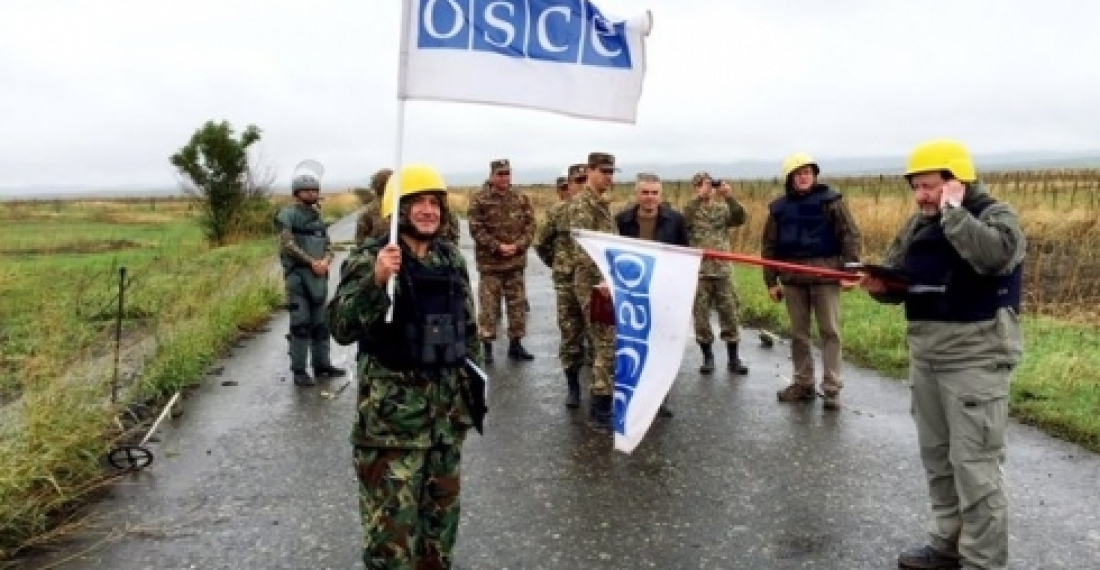
Нарушение режима прекращения огня в зоне конфликта вынудило сопредседателей укрыться во время мониторинга.

В напряженной ситуации на линии соприкосновения в зоне нагорно-карабахского конфликта сегодня лично убедились дипломаты из Франции, России и Соединенных Штатов, когда им пришлось укрыться из-за сильной стрельбы в то время, когда они проводили мониторинг ситуации в Тертерском районе. Трое сопредседателей Минской группы ОБСЕ в настоящее время находятся в регионе с целью продвинуть переговоры по урегулированию конфликта.

Поступают противоречивые сообщения относительно того, произошла ли перестрелка во время мониторинга или нет. Обе стороны обвиняют друг друга в открытии огня. Первые сообщения о происшествии пришли с азербайджанской стороны, которая обвинила армянскую в открытии огня, в результате чего сопредседателям пришлось укрыться. Позже силы обороны самопровозглашенной Нагорно-Карабахской Республики опубликовали встречное заявление, отрицая открытие огня, и, напротив, обвиняя в этом азербайджанскую сторону. Сопредседатель Минской группы от США, посол Уорлик, подтвердил стрельбу и написал, что "Это неприемлемо". Однако, он не указал какая сторона первой открыла огонь. В то же время, как сообщается, дипломаты находились на линии соприкосновения в Тертерском районе с азербайджанской стороны.

Сопредседатели Минского процесса ОБСЕ, посол Игорь Попов от России, Пьер Андриё от Франции и Джеймс Уорлик от США, в понедельник (26 октября) провели в Ереване встречу с президентом Армении Сержем Саргсяном. Во вторник они отправились в Степанакерт, где встретились с президентом самопровозглашенной Нагорно-Карабахской Республики, перед поездкой вдоль линии соприкосновения. Как ожидается, в среду, 28 октября, они проведут в Баку встречу с президентом Азербайджана Ильхамом Алиевым.

источник: commonspace.eu по материалам агентств

фото: сопредседатели Минской группы ОБСЕ во время мониторинга вдоль линии соприкосновения в зоне нагорно-карабахского конфликта во вторник, 27 октября 2015 (фото любезно предоставлено послом Джеймсом Уорликом)

 

Related articles

Editor's choice
News
The British prime minister says Europe must "stand on its own two feet" when it comes to defence

The British prime minister says Europe must "stand on its own two feet" when it comes to defence

The UK will deploy a carrier strike group, led by the aircraft carrier HMS Prince of Wales to the Arctic and the High North as part of efforts to bolster security against Russian threats. British prime minister, Sir Keir Starmer announced the deployment in a speech on Saturday (14 February) at the Munich Security Conference. Europe must be ready to fight to protect its people, values, and way of life,  Sir Keir told the Conference. Starmer also called for deeper links and cooperation, including economic ties, between the UK and EU. The PM stressed the continent must "stand on its own two feet" when it comes to defence commitments. "We must build our hard power, because that is the currency of the age," he told the conference. (Click image to read the full story).

Popular

Editor's choice
Interview
Thursday Interview: Murad Muradov

Thursday Interview: Murad Muradov

Today, commonspace.eu starts a new regular weekly series. THURSDAY INTERVIEW, conducted by Lauri Nikulainen, will host  persons who are thinkers, opinion shapers, and implementors in their countries and spheres. We start the series with an interview with Murad Muradov, a leading person in Azerbaijan's think tank community. He is also the first co-chair of the Action Committee for a new Armenian-Azerbaijani Dialogue. Last September he made history by being the first Azerbaijani civil society activist to visit Armenia after the 44 day war, and the start of the peace process. Speaking about this visit Murad Muradov said: "My experience was largely positive. My negative expectations luckily didn’t play out. The discussions were respectful, the panel format bringing together experts from Armenia, Azerbaijan, and Turkey was particularly valuable during the NATO Rose-Roth Seminar in Yerevan, and media coverage, while varied in tone, remained largely constructive. Some media outlets though attempted to represent me as more of a government mouthpiece than an independent expert, which was totally misleading.  Overall, I see these initiatives as important steps in rebuilding trust and normalising professional engagement. The fact that soon a larger Azerbaijani civil society visits to Armenia followed, reinforces the sense that this process is moving in the right direction." (click the image to read the interview in full)

