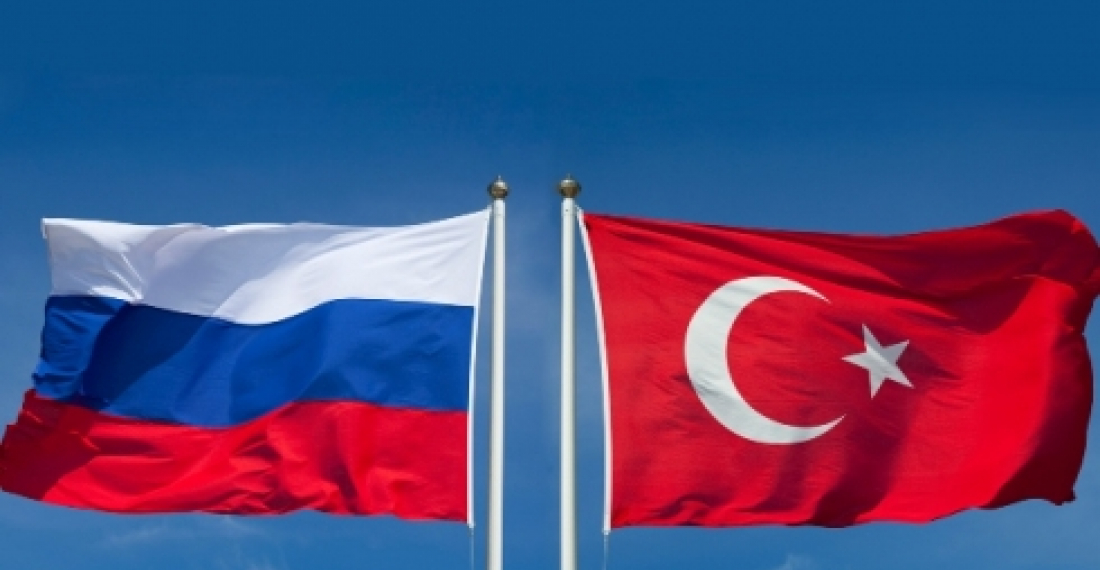
Напряженность в российско-турецких отношениях несет в себе негативное воздействие на регион

Рост напряженности в отношениях между Россией и Турцией, последовавший за инцидентом со сбитым российским военным воздушным судном ВВС Турции в среду (25 ноября) вызывает серьезное беспокойство на Южном Кавказе, где, как считается, такой ход событий представляет серьезное негативное влияние на безопасность в регионе.

Турция утверждает, что самолет был сбит после того, как он нарушил воздушное пространство страны и после игнорирования нескольких предупреждений. Россия резко отреагировала на сбитый её самолет, и ввела санкций против Турции. В течение последних дней президент Турции Эрдоган и президент России Путин обменялись резкими заявлениями касательно инцидента.

В пятницу (27 ноября), Россия приостановила безвизовый режим с Турцией, а российским туристическим агентствам было приказано прекратить продажу туристических путевок в направлении Турции. Также запретили полеты чартерных рейсов между двумя странами. Кроме того, Россия ограничит импорт некоторых турецких товаров, кроме товаров ввозимых для личного пользования в объеме, разрешенном правилами Евразийского экономического союза (ЕврАзЭС). Деятельность турецких организаций в России также будет ограничена и российским работодателям начиная с 1 января 2016 года будет запрещено нанимать на работу граждан Турции.

Выступая перед журналистами сразу же после появления новости о сбитом российском самолете, президент Путин обвинил Турцию в нанесении удара ножом в спину России, но эти слова были опровергнуты президентом Эрдоганом. "Этот народ никогда никому не наносил удара в спину и хорошо может сражаться лицом к лицу", заявил турецкий лидер. "Это был не первый раз, когда российские истребители нарушили воздушное пространство Турции. 4 октября я позвонил Путину и сказал, что все это не хорошо. У нас также состоялся разговор во время саммита G-20. Затем утром 24 ноября военный самолет нарушил наше воздушное пространство, не обращая внимание на предупреждения. В результате он был сбит нашими F-16," сообщил Эрдоган в пятницу в своем выступлении в провинции Турции, в Байбурте.

Инцидент несет в себе серьезные последствия для Южного Кавказа, который и гео-стратегически и политически зажат между двумя более крупными региональными державами.

Данная проблема острее стоит перед Азербайджаном, который пытался, особенно в последние годы, поддерживать особые отношения как с Турцией, так и с Россией. Выступая в пятницу на встрече с министром иностранных дел Турции Мевлютом Чавушоглу, президент Азербайджана Ильхам Алиев выразил обеспокоенность своей страны по этому вопросу. Азербайджанское агентство АПА сообщило, что "коснувшись возникшей напряженности между Турцией и Россией, отметил, что Азербайджан исторически поддерживает тесные связи с обеими странами, сожалеет и обеспокоен в связи с этой напряженностью. Президент Ильхам Алиев отметил, что азербайджанская сторона готова приложить усилия к снижению и устранению напряженности в отношениях Турции с Россией.

Спор между Россией и Турцией еще больше выкручивает и так сложные отношения между главным союзником России на Южном Кавказе - Арменией и Турцией. Армения недавно также обвиняла турецкую сторону в нарушении своего воздушного пространства. Граница Армении с Турцией по-прежнему контролируется российскими пограничниками, и в планах объединение систем ПВО Армении и России. Наблюдатели считают, что рост напряженности в российско-турецких отношениях еще больше осложняет Армении и Турции разрешение своих текущих разногласий и продвижение в направлении установления дипломатических отношений. Также ситуация значительно увеличивает опасность роста пограничных инцидентов, нежелательное развитие событий для Армении, которая уже и так повязла в ежедневных стычках на границе с другим своим соседом, Азербайджаном.

Для Грузии также нежелательны разногласия между Россией и Турцией, так как они приведут к росту напряженности в регионе. Хотя у Грузии в настоящее время и нет дипломатических отношений с Россией, она все же пытается развивать постоянный диалог с большим соседом на севере. У нее отличные отношения с Турцией, и по её запросу, получила поддержку Турции на её членство в НАТО. Не в интересах Грузии быть затянутой в споре между его двумя большими соседями.

Ситуация еще больше неудобная для сепаратистского региона Грузии, самопровозглашенной республики Абхазии, несмотря на то, что она уже давно заперта в крепких объятиях с Россией. Большая абхазская диаспора, проживающая в Турции, обеспечивает важную связь между Абхазией и нерусским миром, и это то, что скорее всего осложнится, учитывая последние события.

Помимо всех этих гео-стратегических и политических соображений новая ситуация имеет непосредственное негативное влияние на тысячи людей, чьи средства к существованию зависят от возможности передвижения между странами и стабильности в безопасности. Учитывая то, что развитие региона уже серьезно затруднено в результате продолжающихся конфликтов в Грузии, и между Арменией и Азербайджаном, эти последние события являются наиболее нежелательным, и поэтому страны Южного Кавказа должны надеяться на скорейшую деэскалацию ситуации.

Данный обзор был подготовлен редакцией commonspace.eu по материалам агентств

 

Related articles

Editor's choice
News
COP 17 in Armenia

COP 17 in Armenia

Armenia is currently hosting the COP17 conference of the Convention on Biological Diversity, which began earlier this week (19 October) and will run until 30 October, bringing around 15,000 participants from 196 different countries to Yerevan. At a leaders' summit held as part of COP17, Prime Minister Nikol Pashinyan expressed realistic ambitions: “We are halfway towards achieving these goals (Kunming-Montreal Global Biodiversity Framework), and we must honestly acknowledge that we are not yet moving in the right direction. Our task now is not to make new promises, but to fulfil the commitments we have already made.” Pashinyan pointed towards Armenia's own records, noting that the whitefish stock in Lake Sevan has increased substantially in the last ten years. Iranian President Masoud Pezeshkian and Georgian Prime Minister Irakli Kobakhidze also addressed the summit, with Turkiye sending its agriculture minister. However, there were no reports of Azerbaijani representatives attending. The conference has given Yerevan a valuable international platform, yet the absence of Azerbaijan is likely to be read as a sign that the peace process in the South Caucasus has not yet been translated into wider regional cooperation. The leaders' summit was opened by Armenian Prime Minister Nikol Pashinyan, who stressed that hosting the conference was a great honour for Armenia. He expressed hope that it would 'be productive and contribute to protecting our planet's biodiversity'. 'We – the citizens of Armenia, the government, state authorities and local governments – owe a debt to our nature,' the prime minister said. He noted that the international community had already developed the concept of 'living in harmony with nature’ and adopted the Kunming-Montreal Global Biodiversity Framework in 2022, setting out goals and specific targets to be achieved by 2030. 'We are halfway towards achieving these goals, and we must honestly acknowledge that we are not yet moving in the right direction. Our task now is not to make new promises, but to fulfil the commitments we have already made,' Nikol Pashinyan said. The COP17 conference is expected to adopt a declaration at leaders' level. More than 30 documents are scheduled for discussion. If approved, the commitments set out in them will become legally binding on countries that are parties to the Convention on Biological Diversity.”
Editor's choice
News
Landmines present to the European Union both a contradiction and a dilemma

Landmines present to the European Union both a contradiction and a dilemma

Finland’s decision to buy one million landmines creates a serious contradiction in the policy of the European Union, and is symbolic of a bigger dilemma facing European countries as they get used to the need to acquire “hard” power to face an increasing threat from Russia. Finland is seeking to acquire one million anti-personnel mines at a cost of 100 million euros. Finland, together with Poland, Latvia, Lithuania and Estonia last year abandoned the Ottawa agreement, the international framework that bans the use of anti-personnel mines, which the EU had been instrumental in establishing and supporting. All five countries cite the threat from Moscow as the reason. Colonel Riku Mikkonen of the Army Command told Finland’s national news agency STT that officials are now gathering information from suppliers regarding the deal, the AFP news agency reports. Helsinki would like domestic manufacturers to supply the mines, with contracts signed by the end of 2027 and production up and running by 2028. “It would be useful in many ways if Finnish companies produced the anti-personnel mines in Finland,” Mikkonen said. About half a dozen Finnish firms qualify, he told STT. “However, at this stage, buying the mines from abroad is not totally ruled out,” he added. LANDMINES PROVIDE THE EU WITH BOTH A CONTRADICTION, AND A DILEMMA Eliminating landmine contamination worldwide is one of the EU’s main soft power postures, and it basks in its record as the biggest funder of anti-landmine action in the world. But the fact that 5 of its 27 member states  have now left the Ottawa Treaty dents the EU moral high ground. It is a contradiction that is too big and important to be ignored. It also presents the European Union with a deeper dilemma. The threat from Russia is changing what the EU has stood for decades, namely a force for good able to mobilise its considerable soft power for the greater good of humanity. How the Union will implement this change will define its future. In the meantime landmines have not become any less lethal, benign, or unimportant. They remain in many parts of the world a major threat to life, an impediment to prosperity, and a potential trigger to further conflict. The 22 EU members states that still adhere to the Ottawa treaty must regroup, and be more assertive in their quest against anti-personnel land mines. All the reasons why they supported the Ottawa treaty in the first place still exist. The message must be clear: NO TO LANDMINES!

Popular

Editor's choice
Interview
Thursday Interview: Murad Muradov

Thursday Interview: Murad Muradov

Today, commonspace.eu starts a new regular weekly series. THURSDAY INTERVIEW, conducted by Lauri Nikulainen, will host  persons who are thinkers, opinion shapers, and implementors in their countries and spheres. We start the series with an interview with Murad Muradov, a leading person in Azerbaijan's think tank community. He is also the first co-chair of the Action Committee for a new Armenian-Azerbaijani Dialogue. Last September he made history by being the first Azerbaijani civil society activist to visit Armenia after the 44 day war, and the start of the peace process. Speaking about this visit Murad Muradov said: "My experience was largely positive. My negative expectations luckily didn’t play out. The discussions were respectful, the panel format bringing together experts from Armenia, Azerbaijan, and Turkey was particularly valuable during the NATO Rose-Roth Seminar in Yerevan, and media coverage, while varied in tone, remained largely constructive. Some media outlets though attempted to represent me as more of a government mouthpiece than an independent expert, which was totally misleading.  Overall, I see these initiatives as important steps in rebuilding trust and normalising professional engagement. The fact that soon a larger Azerbaijani civil society visits to Armenia followed, reinforces the sense that this process is moving in the right direction." (click the image to read the interview in full)