


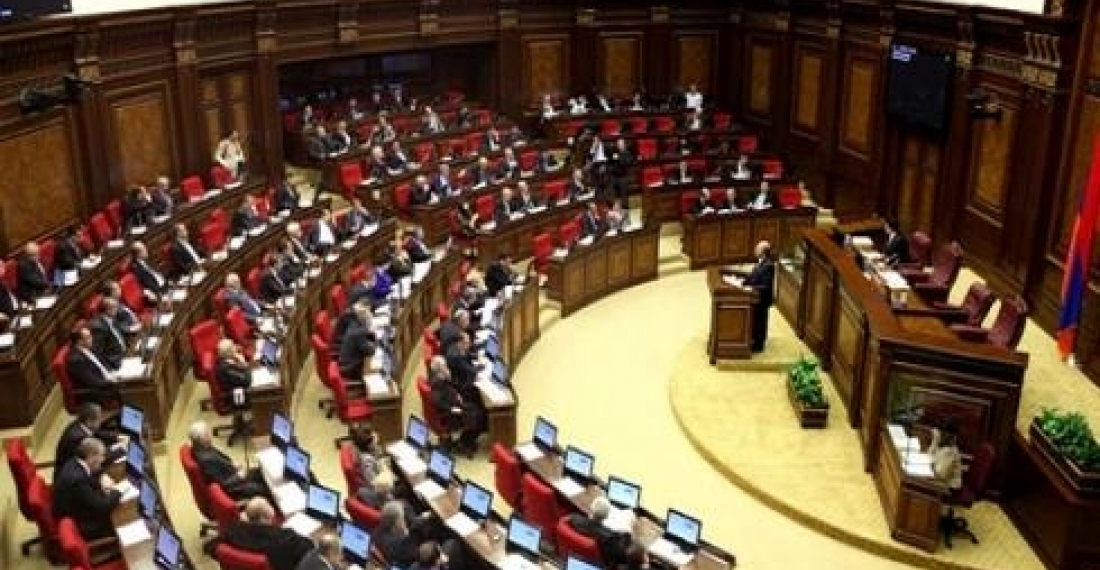
Напряженная атмосфера повисла над Южным Кавказом из-за освобождения Рамиля Сафарова. Парламент Армении соберется на чрезвычайную сессию.

Парламент Армении на этой неделе соберется на чрезвучайную сессию для рассмотрения дальнейших действий, которые Армения может предпринять из-за освобождения Рамиля Сафарова, азербайджанского офицера, осужденного за убийство в 2004 году армянского коллеги во время участия в языковых курсах, организованных НАТО в Будапеште. Сафаров  в пятницу был передан в юрисдикцию Азербайджана, где, по данным венгерского правительства, он должен был продолжить отбывать свое пожизненное заключение. Однако Президент Азербайджана по прибытию Сафарова в Баку помиловал его.

В дальнейшем Сафаров в субботу был принят министром обороны Азербайджана, который способствовал повышению Сафарова в звании до майора и наградил его квартирой.

Армения в пятницу разорвала дипломатические отношения с Венгрией. Разгневанный президент Армении Серж Саргсян заявил иностранным дипломатам в Ереване, что его страна никогда не забудет и не простит этого акта. Саргсян позже встретился с советом по национальной безопасности, где была рассмотрена данная ситуация. Понятно, что армянские силы были приведены в состояние повышенной боевой готовности.

Ряд международных субьектов выразили удивление поворотом событий. Президент США Барак Обама попросил разъяснений от Венгрии по ее решение освободить Сафарова. Пока еще не поступило официальной реакции со стороны Европейского Союза.

Генеральный секретарь НАТО, как ожидается, прибудет в регион в ближайшие дни по ранее объявленному визиту. Пока еще не ясно, состоится ли визит, так как он, безусловно, будет омрачен последними событиями.

В СМИ в Армении и Азербайджане в последние дни были сказаны резские слова. Напряженная атмосфера повисла над регионом. В пятницу хакеры взломали сайт президента Азербайджана и некоторые другие азербайджанские сайты. Были также сообщения о нарушении режима прекращения огня на линии соприкосновения, разделяющей армянские и азербайджанские силы вокруг нагорно-карабахского конфликта.

Источник: commonspace.eu

Related articles

Editor's choice
News
The British prime minister says Europe must "stand on its own two feet" when it comes to defence

The British prime minister says Europe must "stand on its own two feet" when it comes to defence

The UK will deploy a carrier strike group, led by the aircraft carrier HMS Prince of Wales to the Arctic and the High North as part of efforts to bolster security against Russian threats. British prime minister, Sir Keir Starmer announced the deployment in a speech on Saturday (14 February) at the Munich Security Conference. Europe must be ready to fight to protect its people, values, and way of life,  Sir Keir told the Conference. Starmer also called for deeper links and cooperation, including economic ties, between the UK and EU. The PM stressed the continent must "stand on its own two feet" when it comes to defence commitments. "We must build our hard power, because that is the currency of the age," he told the conference. (Click image to read the full story).

Popular

Editor's choice
Interview
Thursday Interview: Murad Muradov

Thursday Interview: Murad Muradov

Today, commonspace.eu starts a new regular weekly series. THURSDAY INTERVIEW, conducted by Lauri Nikulainen, will host  persons who are thinkers, opinion shapers, and implementors in their countries and spheres. We start the series with an interview with Murad Muradov, a leading person in Azerbaijan's think tank community. He is also the first co-chair of the Action Committee for a new Armenian-Azerbaijani Dialogue. Last September he made history by being the first Azerbaijani civil society activist to visit Armenia after the 44 day war, and the start of the peace process. Speaking about this visit Murad Muradov said: "My experience was largely positive. My negative expectations luckily didn’t play out. The discussions were respectful, the panel format bringing together experts from Armenia, Azerbaijan, and Turkey was particularly valuable during the NATO Rose-Roth Seminar in Yerevan, and media coverage, while varied in tone, remained largely constructive. Some media outlets though attempted to represent me as more of a government mouthpiece than an independent expert, which was totally misleading.  Overall, I see these initiatives as important steps in rebuilding trust and normalising professional engagement. The fact that soon a larger Azerbaijani civil society visits to Armenia followed, reinforces the sense that this process is moving in the right direction." (click the image to read the interview in full)


