На Кавказе празднуют День победы

Лидеры стран бывшего Советского Союза сегодня празднуют "День Победы", день когда советские войска одержали победу над фашистской Германией в 1945 году после пяти лет войны.

Власти самопровозглашенной Нагорно-Карабахской Республики решили праздновать эту дату с меньшим размахом, чем обычно из-за траура по погибшим в результате недавних ожесточенных столкновений между Арменией и Азербайджаном.

"Обычно, 9 мая мы празднуем с большим размахом, но в этом году мероприятия будут специфическими без концертов, фейерверков и салютов, так как принято решение воздержаться от подобных развлекательных программ", об этом сообщил Давид Бабаян, представитель Нагорного Карабаха в интервью АрмИнфо.

"Еще не прошли 40 дней со дня гибели армянских военнослужащих, героически погибших во время апрельской войны при защите Арцаха от азербайджанской агрессии."

Сегодня в Баку президент Азербайджана, Ильхам Алиев, принял участие в параде. В своем послании, адресованном руководителям других 14 бывших советских республик, президент России Владимир Путин призвал предотвращать попытки искажения общей истории и заботиться о ветеранах войны.

"День Победы является священным праздником, который навсегда останется символом героизма и единения народов, отстоявших в кровопролитных сражениях родную землю и спасших мир от фашизма", говорится в его заявлении в воскресенье.

Президент Армении Серж Саргсян в своей речи по случаю праздника провел параллели с конфликтом вокруг Карабаха. 9 мая 1992 Шуши (Шуша) была отбита армянскими силами у азербайджанцев.

"Освобождение Шуши было вопросом нашей жизни и смерти, и мы в тот же день 9 мая повторили подвиг наших отцов и дедов, переломив ход войны", сказал Серж Саргсян.

На всем пространстве бывшего Советского Союза, праздник будут отмечать военными парадами и другими торжественными мероприятиями с участием немногих оставшихся в живых ветеранов.

День победы в Европе отмечается на день раньше, 8 мая. Акт о капитуляции был подписан 8 мая в Реймсе, Франция, но капитуляция была принята Советами в Берлине к концу дня 8-го мая, когда по московскому времени было уже 9 мая.

источник: commonspace.eu по материалам агентств

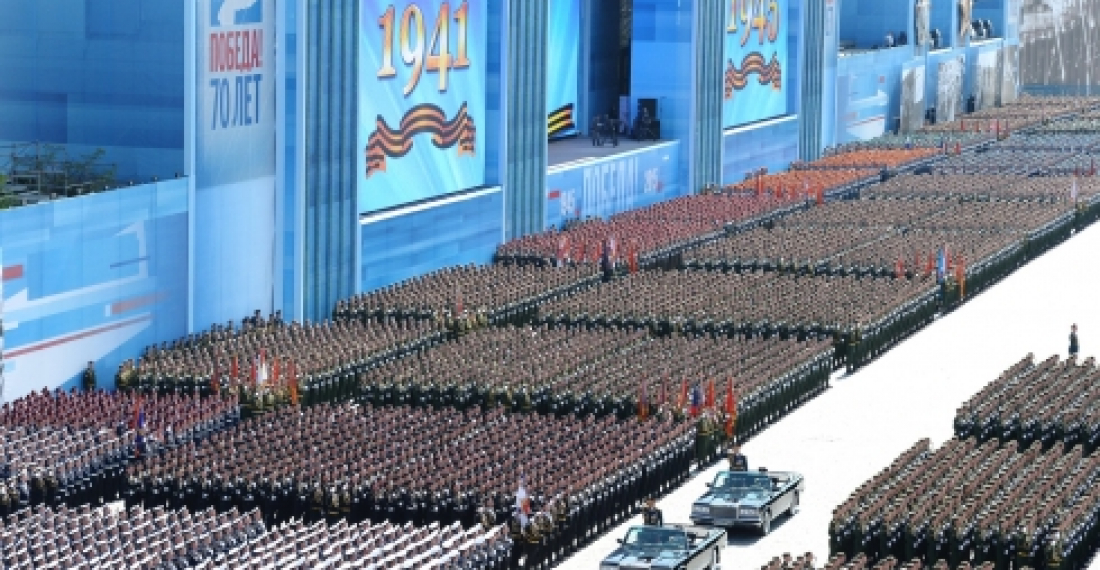
фото: Парад в честь Дня победы в Москве, 2015 год

 

Related articles

Editor's choice
News
The British prime minister says Europe must "stand on its own two feet" when it comes to defence

The British prime minister says Europe must "stand on its own two feet" when it comes to defence

The UK will deploy a carrier strike group, led by the aircraft carrier HMS Prince of Wales to the Arctic and the High North as part of efforts to bolster security against Russian threats. British prime minister, Sir Keir Starmer announced the deployment in a speech on Saturday (14 February) at the Munich Security Conference. Europe must be ready to fight to protect its people, values, and way of life,  Sir Keir told the Conference. Starmer also called for deeper links and cooperation, including economic ties, between the UK and EU. The PM stressed the continent must "stand on its own two feet" when it comes to defence commitments. "We must build our hard power, because that is the currency of the age," he told the conference. (Click image to read the full story).

Popular

Editor's choice
Interview
Thursday Interview: Murad Muradov

Thursday Interview: Murad Muradov

Today, commonspace.eu starts a new regular weekly series. THURSDAY INTERVIEW, conducted by Lauri Nikulainen, will host  persons who are thinkers, opinion shapers, and implementors in their countries and spheres. We start the series with an interview with Murad Muradov, a leading person in Azerbaijan's think tank community. He is also the first co-chair of the Action Committee for a new Armenian-Azerbaijani Dialogue. Last September he made history by being the first Azerbaijani civil society activist to visit Armenia after the 44 day war, and the start of the peace process. Speaking about this visit Murad Muradov said: "My experience was largely positive. My negative expectations luckily didn’t play out. The discussions were respectful, the panel format bringing together experts from Armenia, Azerbaijan, and Turkey was particularly valuable during the NATO Rose-Roth Seminar in Yerevan, and media coverage, while varied in tone, remained largely constructive. Some media outlets though attempted to represent me as more of a government mouthpiece than an independent expert, which was totally misleading.  Overall, I see these initiatives as important steps in rebuilding trust and normalising professional engagement. The fact that soon a larger Azerbaijani civil society visits to Armenia followed, reinforces the sense that this process is moving in the right direction." (click the image to read the interview in full)