


Медведев заявляет, что СНГ "является важным фактором стабильности на постсоветском пространстве"
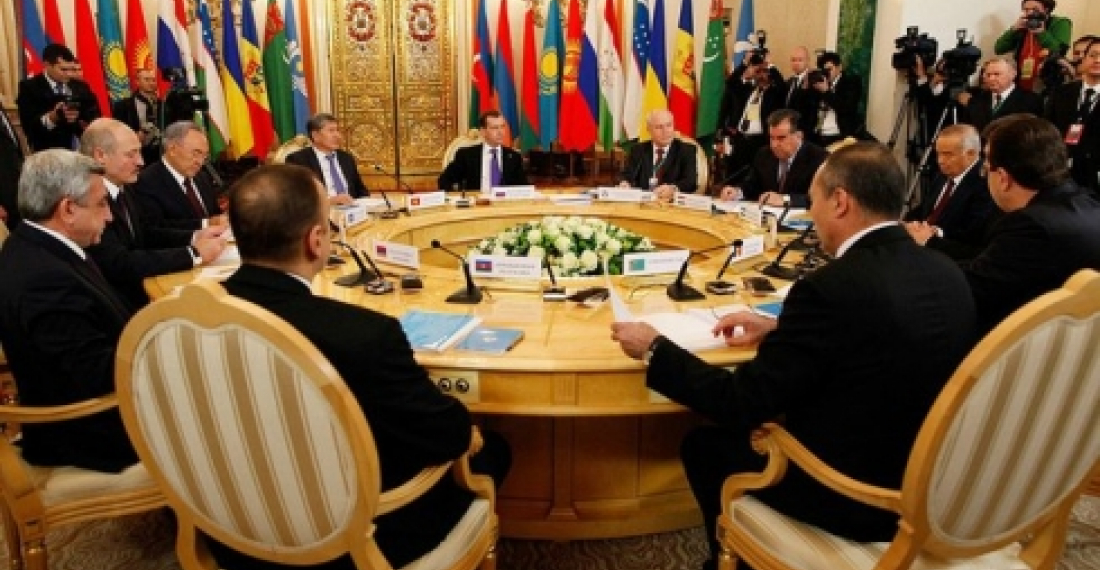
Лидеры одиннадцати стран СНГ на этой неделе собрались в Москве, чтобы отметить 20-летие создания Содружества Независимых Государств, которое заменило СССР в декабре 1991 года. Это встреча была возможность для размышления, а также немного для ностальгии. Президент России Дмитрий Медведев напомнил о своих собственных воспоминаниях того дня. "Так получилось, что я улетел из одной страны, которая называлась Союз Советских Социалистических Республик, улетел в Германию, а когда я вернулся – я вернулся в ситуацию принципиально другую, когда нашего общего государства не стало."

Российский лидер добавил: "Не скрою, это тоже создало тогда у меня очень сложные эмоции, но самое главное, что сегодня мы сидим за этим столом, что мы друзья и что мы готовы развивать наши добросердечные отношения."

"Мы про СНГ много чего говорим, за 20 лет очевидно, что Содружество прошло очень непростой путь развития, стороны с разными экономическими условиями, близкой и в то же время отличной культурой доказали, что они не только могут друг друга отлично понимать, но и эффективно сотрудничать на добровольной, равноправной и взаимовыгодной основе."

"СНГ стало важным фактором стабильности, стабильности на постсоветском пространстве, и на самом деле стало влиятельным региональным объединением, даже несмотря на те издержки, которые мы всегда видели и которые на сегодняшний день сохраняются. Вместе нам удалось сделать достаточно много."

Медведев добавил, что СНГ поможет на долгие годы вперед в решении самых разнообразных задач.

Политический редактор Commonspace.eu в своем комментарии говорит, что за двадцать лет своего существования у СНГ немного есть того, что можно показать , и она часто подвергалось критике, как организация, которая создаёт большое количество различных соглашений, и только некоторые из которых когда-нибудь реализовываются. Возможно, её самая большая неудача была неспособность предотвратить войну между Грузией и Россией в августе 2008 года. Признание Россией независимости Абхазии и Южной Осетии впоследствии получило негативную оценку другими странами СНГ, а Грузия покинула организацию вскоре после этого. Однако, СНГ продолжает служить форумом для большинства бывших советских республик, чтобы встретиться и обменяться мнениями, и её роль постепенно перешла в руки других организаций, таких как ОДКБ и ЕврАзЭС, хотя некоторые члены СНГ ясно дали понять, что они не хотят участвовать в этих организациях

Источник: commonspace.eu по материалам www.kremlin.ru

Фото: Лидеры 11 стран СНГ провели встречу в Москве 20 декабря 2011 года (фотография любезно предоставлена пресс-службой Президента России)

Related articles

Editor's choice
News
Germany accuses Russia of cyberattacks and disinformation campaign

Germany accuses Russia of cyberattacks and disinformation campaign

The German government holds Russia responsible for a cyberattack on German air traffic control, and for targeted disinformation campaigns before the last federal election. According to the German Foreign Office in Berlin, the incidents could be clearly attributed to the Russian military intelligence service, the GRU. In response, the Russian ambassador to Berlin was summoned to the Foreign Ministry. "We have been observing a massive increase in threatening hybrid activities by Russia for some time now," a spokesperson for the Foreign Ministry stated. These range from disinformation campaigns and espionage to cyberattacks and sabotage attempts. The aim is to divide society, sow distrust, and undermine confidence in democratic institutions. The spokesperson added that with these actions, Russia is "very concretely threatening our security, not only through its war of aggression against Ukraine, but also here in Germany."  The Foreign Ministry spokesperson explained that the cyberattack on air traffic control in August 2024 was clearly attributed to the hacker collective "APT28," known as "Fancy Bear," and to the responsibility of the Russian military intelligence service, the GRU. Furthermore, it could now be "conclusively stated" that Russia had attempted "to influence and destabilize both the last Federal election and the ongoing internal affairs of the Federal Republic of Germany." There was "absolutely irrefutable evidence" for this". The so-called "Storm 1516" campaign, which has been running since 2024, is allegedly backed by "reliable information" that the Moscow-based think tank "Center for Geopolitical Expertise" is behind it. The Center is also said to be supported by Russian military intelligence. Its primary aim is to influence democratic elections in the West. (Click the image to read more).
Editor's choice
News
NATO Chief says war is on Europe's doorstep, and warns against complacency

NATO Chief says war is on Europe's doorstep, and warns against complacency

Russia could attack a NATO country within the next five years, the Secretary General of NATO, Mark Rutte, said in a stark new warning. "NATO's own defences can hold for now," Rutte warned in Berlin, but conflict was "next door" to Europe, and he feared "too many are quietly complacent, and too many don't feel the urgency, too many believe that time is on our side. "Russia is already escalating its covert campaign against our societies," Rutte said in a speech in Germany. "We must be prepared for the scale of war our grandparents or great-grandparents endured." Earlier this month, Russia's President Vladimir Putin said his country was not planning to go to war with Europe, but it was ready "right now" if Europe wanted to - or started a war. But similar reassurances were given by Moscow in 2022, just before 200,000 Russian troops crossed the border and invaded Ukraine. Putin has accused European countries of hindering US efforts to bring peace in Ukraine - a reference to the role Ukraine's European allies have recently played in trying to change a US peace plan to end the war, whose initial draft was seen as favouring Russia. But Putin was not sincere, Nato's secretary-general said in the German capital, Berlin. Supporting Ukraine, he added, was a guarantee for European security. "Just imagine if Putin got his way; Ukraine under the boot of Russian occupation, his forces pressing against a longer border with Nato, and the significantly increased risk of an armed attack against us." Russia's economy has been on a war footing for more than three years now - its factories churn out ever more supplies of drones, missiles and artillery shells. According to a recent report by the Kiel Institute for the World Economy, Russia has been producing each month around 150 tanks, 550 infantry fighting vehicles, 120 Lancet drones and more than 50 artillery pieces. The UK, and most of its Western allies, are simply not anywhere near this point. Analysts say it would take years for Western Europe's factories to come close to matching Russia's mass-production of weapons. "Allied defence spending and production must rise rapidly, our armed forces must have what they need to keep us safe," the Nato chief said.

Popular

Editor's choice
News
Germany accuses Russia of cyberattacks and disinformation campaign

Germany accuses Russia of cyberattacks and disinformation campaign

The German government holds Russia responsible for a cyberattack on German air traffic control, and for targeted disinformation campaigns before the last federal election. According to the German Foreign Office in Berlin, the incidents could be clearly attributed to the Russian military intelligence service, the GRU. In response, the Russian ambassador to Berlin was summoned to the Foreign Ministry. "We have been observing a massive increase in threatening hybrid activities by Russia for some time now," a spokesperson for the Foreign Ministry stated. These range from disinformation campaigns and espionage to cyberattacks and sabotage attempts. The aim is to divide society, sow distrust, and undermine confidence in democratic institutions. The spokesperson added that with these actions, Russia is "very concretely threatening our security, not only through its war of aggression against Ukraine, but also here in Germany."  The Foreign Ministry spokesperson explained that the cyberattack on air traffic control in August 2024 was clearly attributed to the hacker collective "APT28," known as "Fancy Bear," and to the responsibility of the Russian military intelligence service, the GRU. Furthermore, it could now be "conclusively stated" that Russia had attempted "to influence and destabilize both the last Federal election and the ongoing internal affairs of the Federal Republic of Germany." There was "absolutely irrefutable evidence" for this". The so-called "Storm 1516" campaign, which has been running since 2024, is allegedly backed by "reliable information" that the Moscow-based think tank "Center for Geopolitical Expertise" is behind it. The Center is also said to be supported by Russian military intelligence. Its primary aim is to influence democratic elections in the West. (Click the image to read more).



