


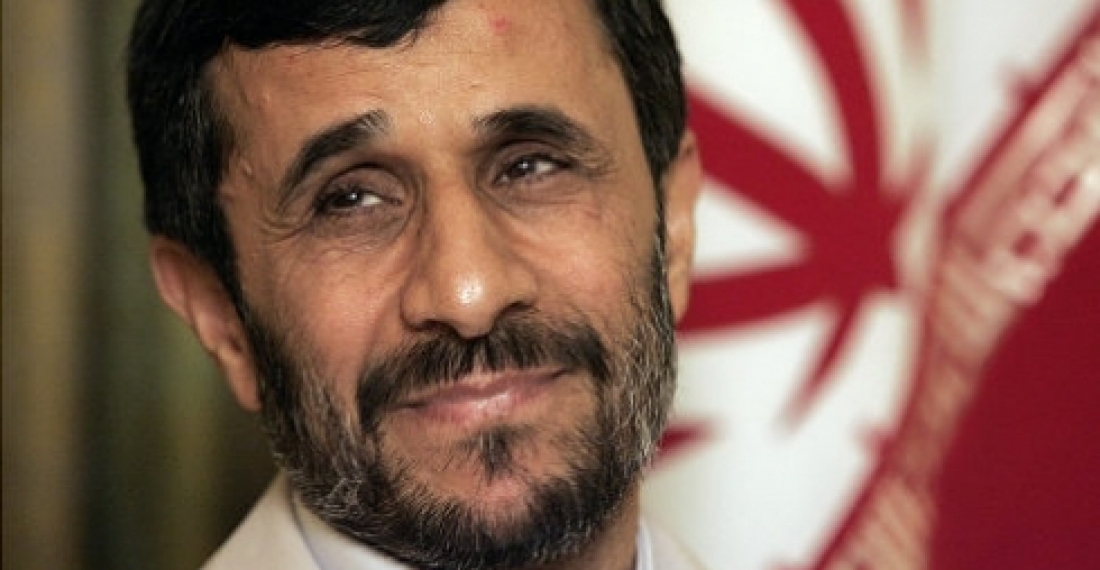
Махмуд Ахмадинежад:


Президент Ирана Махмуд Ахмадинежад заявил на встрече с министром иностранных дел Армении Эдвардом Налбандяным в субботу вечером, что улучшенные торговые отношения между Тегераном и Ереваном на пользу региональной безопасности и мира.

Как сообщает Tehran times, глава исламской республики Иран указал на огромный потенциал двух стран для улучшение отношений, подчеркнув, что торговые отношения с соседями - это всегда лучшая сфера, которая помогает укрепить безопасность и установить мир в регионе.

Ахмадинежад указал на то, что между странами дружественные и <сердечные> отношения, подчеркнув, что не существует препятствий для развития связей между странами во всех сферах.

"Мы можем в три раза расширить наши отношения", - добавил президент Ирана.

Он указал на конструктивное сотрудничество по планам, которые стоят на повестке встреч между Ираном и Арменией, заявив, что эти планы укрепят двусторонние связи.

Ахмадинежад также заявил, что Иран стремится к тому, чтобы все страны мира жили в мире и справедливости, а разногласия решались путем диалога.

Он добавил, что технические и финансовые проблемы, препятствующие имплементации соглашений, подписанных между Ираном и Арменией, должны быть решены как можно быстрее.

В свою очередь, глава МИД Армении передал приветствие президенту Ирана от президента Армении, вручив ему письмо от Сержа Саргсяна. Налбандян указал на то, что ценит торговое сотрудничество между странами, которое увеличилось на более, чем 38% и достигло $270 миллионов.

Налбандян также сказал, что Армения всегда ценила позицию Ирана по карабахскому вопросу.

Источник напоминает, что Иран в недавнем прошлом предлагал свою посредническую роль Армении и Азербайджану в разрешении конфликта.


 

Related articles

Editor's choice
News
Thousands join Pope on his last day in Cameroon, his second stop on his African tour

Thousands join Pope on his last day in Cameroon, his second stop on his African tour

More than 120,000 people joined Pope Leo XIV in Cameroon for an open-air Mass on Friday (17 April), the biggest crowd so far during his 11-day Africa tour. Arriving in the economic city of Douala on Friday, the Pope reiterated his message of peace after visiting the country's Anglophone region hit by a decade-long rebellion the day before. He later warned of the dangers of artificial intelligence (AI), which he said was leading to the spread of "polarisation, conflict, fear and violence". Jubliant crowds welcomed the Pope as he arrived at the Japoma Stadium. Standing in his vehicle - known as the Popemobile - the pontiff waved at the droves of people waiting for his entrance. Some worshippers camped outside the premises on Thursday night in a bid to get a prime spot for the pontiff's address, with some having been there for more than 24 hours By Friday, tens of thousands of people of all ages, including several from the priesthood, braved the heat to participate in the occasion. “Do not give in to distrust and discouragement,” he said. “Reject every form of abuse or violence, which deceives by promising easy gains but hardens the heart and makes it insensitive. Do not forget that your people are even richer than this land, for your treasure lies in your values: faith, family, hospitality, and work.” Pope Leo invited African youth to follow the vocation that God sets out for them, so that they may be protagonists of their own future. “Do not let yourselves be corrupted by temptations that waste your energies and do not serve the progress of society,” he said.

Popular

Editor's choice
Interview
Thursday Interview: Murad Muradov

Thursday Interview: Murad Muradov

Today, commonspace.eu starts a new regular weekly series. THURSDAY INTERVIEW, conducted by Lauri Nikulainen, will host  persons who are thinkers, opinion shapers, and implementors in their countries and spheres. We start the series with an interview with Murad Muradov, a leading person in Azerbaijan's think tank community. He is also the first co-chair of the Action Committee for a new Armenian-Azerbaijani Dialogue. Last September he made history by being the first Azerbaijani civil society activist to visit Armenia after the 44 day war, and the start of the peace process. Speaking about this visit Murad Muradov said: "My experience was largely positive. My negative expectations luckily didn’t play out. The discussions were respectful, the panel format bringing together experts from Armenia, Azerbaijan, and Turkey was particularly valuable during the NATO Rose-Roth Seminar in Yerevan, and media coverage, while varied in tone, remained largely constructive. Some media outlets though attempted to represent me as more of a government mouthpiece than an independent expert, which was totally misleading.  Overall, I see these initiatives as important steps in rebuilding trust and normalising professional engagement. The fact that soon a larger Azerbaijani civil society visits to Armenia followed, reinforces the sense that this process is moving in the right direction." (click the image to read the interview in full)

