


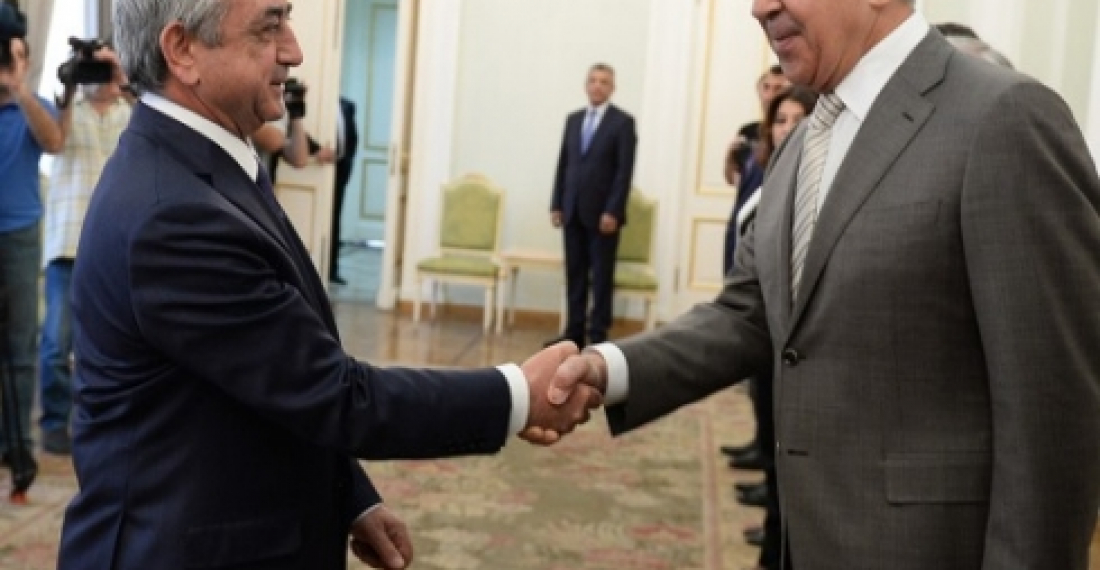
Лавров в Ереване в рамках визита по Южному Кавказу

Министр иностранных дел России Сергей Лавров в понедельник прибыл в Ереван в рамках его визита по Южному Кавказу. На прошлой неделе Лавров побывал в Баку, где провел переговоры с президентом Ильхамом Алиевым и другими правительственными чиновниками. В Ереване сегодня утром г-н Лавров был принят президентом Армении Сержем Саргсяном. Во время своей поездки Лавров также встретился с министрами иностранных дел двух стран. 

Политический редактор Commonspace.eu сообщает, что эти поездки в Баку и Ереван оказались не из легких для главы российской дипломатии. "С  продолжающимся глобальным кризисом, в том числе ситуация вокруг Украины, Сирии, Ирака и другие вопросы, создают огромный спрос на его время, и поэтому визит на Южный Кавказ может рассматриваться как ненужное отвлечение для министра иностранных дел Лаврова.

Тем не менее, в настоящее время для России, отношения с Арменией и Азербайджаном преобретают все более важный характер, поскольку она [Россия] стремится построить новый порядок на постсоветском пространстве. Сложнее места для этого, чем Южный Кавказ, не может быть, где Армения и Азербайджан втянуты в конфликт с момента распада СССР. Россия с большим трудом балансирует свои отношения с этими двумя странами. В то время как Армения официально является союзником - членом ОДКБ, и вскоре станет членом Евразийского таможенного союза, и Россия также заинтересована сохранить Азербайджан в сфере своего влияния. Это становится сделать все сложнее, так как Азербайджан в настоящее время стал гораздо настойчивее выдвигать свои требования и Лавров знает, что Азербайджан также поддерживает тесные отношения с западными странами, такими как США и Великобритания, а также с Европейским Союзом. Попытки пророссийских сторонников в Баку сорвать эти отношения до сих пор срывались.

В то время как тема Карабаха преобладает в ходе обсуждений с правительствами обеих стран, Лавров, скорее всего, проведет большую часть времени, обсуждая двусторонние отношения с правительствами обеих стран. В Ереване Лавров также обсудил вопросы, касающиеся допуска Армении в рамках Таможенного союза и Евразийского экономического союза. Армения пытается извлечь максимально возможную цену за то, что выбрала этот вектор развития в своей внешней политике. В то время как Россия с пониманием относится к этому, и в значительной степени любезна с ней, хоть и у других двух государств-членов, Казахстана и Белоруссии, кажется, есть проблемы. В настоящее время обсуждения проходят в Сочи по нескольким нерешенным вопросам. Лавров заявил в Ереване, что он надеется на хорошие новости из Сочи".

источник: commonspace.eu

фото: Президент Армении Серж Саргсян, приветствует министра иностранных дел России, Сергея Лаврова, в Ереване, 23 июня 2014 года (фото любезно предоставлено пресс-службой президента Армении).


Related articles

Editor's choice
News
Women emerge favourite to lead United Nations from next year, after straw-poll of UN Security Council members

Women emerge favourite to lead United Nations from next year, after straw-poll of UN Security Council members

​ Two women have emerged as favourite to lead the United Nations as Secretary-General from 1 January 2027, when the term of the present incumbent, Antonio Gutteres, expires. A straw poll of the members of the UN Security Council, held on Thursday, 30 July showed that of the seven candidates, Rebecca Grynspan of Costa Rica and Carolyn Rodriguez-Birkett of Guyana received ten and nine positive endorsements respectively, by the 15 members UN Security Council Although the poll and its result are supposed to be secret, the result leaked within minutes, and was carried on world media outlets, such as Reuters. The result was as follows   Michelle Bachelet 6 encourage 5  discourage   4 no opinion María Fernanda Espinosa 5 2 8 Rafael Grossi 7 2 6 Rebeca Grynspan 10 1 4 Olara Otunnu 2 5 8 Carolyn Rodrigues-Birkett 9 2 4 Macky Sall 6 7 2   Article 97 of the UN Charter states that the “Secretary-General shall be appointed by the General Assembly upon the recommendation of the Security Council”. Straw polls are informal ballots used to determine the viability of Secretary-General candidates.  The seven current candidates are: Michelle Bachelet Jeria (Chile), who was nominated by Brazil, Chile, and Mexico on 2 February, with Chile withdrawing its nomination on 24 March; María Fernanda Espinosa Garcés (Ecuador), who was nominated by Antigua and Barbuda on 11 May; Rafael Mariano Grossi (Argentina), who was nominated by Argentina on 26 November 2025; Rebeca Grynspan Mayufis (Costa Rica), who was nominated by Costa Rica on 3 March; Olara Otunnu (Uganda), who was nominated by Uganda on 24 July; Carolyn Rodrigues Birkett (Guyana), who was nominated by Guyana on 15 June; and Macky Sall (Senegal), who was nominated by Burundi on 2 March. At Thursday's straw poll, there was no difference between the ballots presented to the five permanent members (P5) and the ten elected members (E10). Council members received one ballot per candidate, containing the candidate’s name followed by three options: “encouraged”, “discouraged”, and “no opinion expressed”.   It is ofcourse early days, and the straw poll is just an informal indication of the mood of the UN Security Council, but the strong showwing by the two womencandidates may be an indication that for the first time, the head of the UN can be a women. (click image to read more) ​

Popular

Editor's choice
Interview
Thursday Interview: Murad Muradov

Thursday Interview: Murad Muradov

Today, commonspace.eu starts a new regular weekly series. THURSDAY INTERVIEW, conducted by Lauri Nikulainen, will host  persons who are thinkers, opinion shapers, and implementors in their countries and spheres. We start the series with an interview with Murad Muradov, a leading person in Azerbaijan's think tank community. He is also the first co-chair of the Action Committee for a new Armenian-Azerbaijani Dialogue. Last September he made history by being the first Azerbaijani civil society activist to visit Armenia after the 44 day war, and the start of the peace process. Speaking about this visit Murad Muradov said: "My experience was largely positive. My negative expectations luckily didn’t play out. The discussions were respectful, the panel format bringing together experts from Armenia, Azerbaijan, and Turkey was particularly valuable during the NATO Rose-Roth Seminar in Yerevan, and media coverage, while varied in tone, remained largely constructive. Some media outlets though attempted to represent me as more of a government mouthpiece than an independent expert, which was totally misleading.  Overall, I see these initiatives as important steps in rebuilding trust and normalising professional engagement. The fact that soon a larger Azerbaijani civil society visits to Armenia followed, reinforces the sense that this process is moving in the right direction." (click the image to read the interview in full)

