


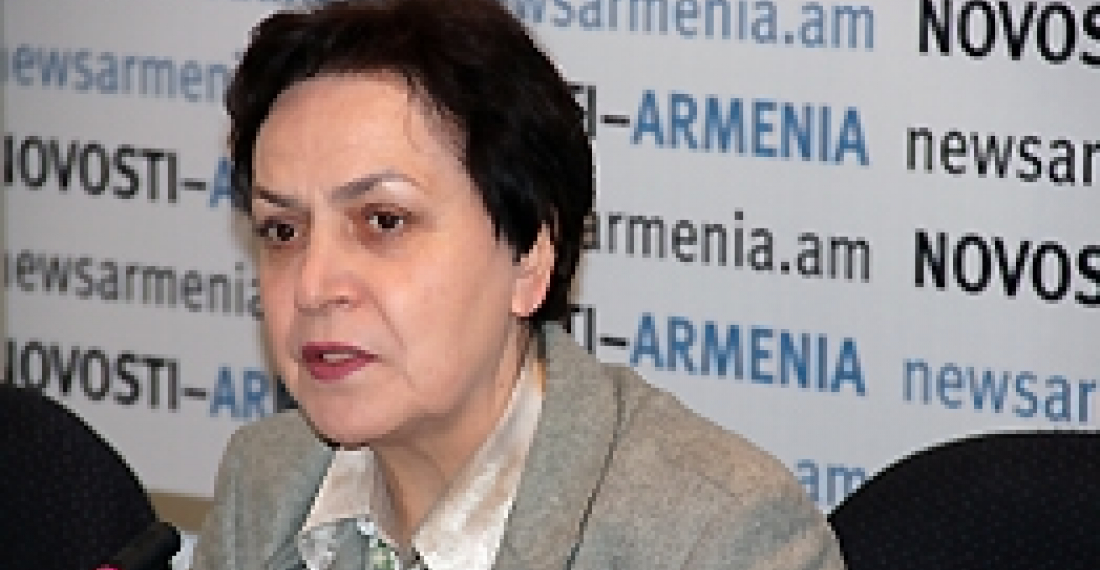
Лариса Алавердян:

Армения бездействует в вопросе Сумгаита, позволив Азербайджану активизироваться в вопросе Ходжалу. С такой критикой в беседе с корреспондентом АрмИнфо выступила депутат от парламентской фракции "Наследие" Лариса Алавердян.

"Армения бездействовала в вопросе признания и осуждения миром Сумгаитской трагедии, и только 2-2,5 года назад были предприняты шаги в направлении признания Сумгаитских событий как Геноцида, который являлся продолжением антиармянской политики со стороны Турции. Меж тем Азербайджан провел весьма убедительную агитационную кампанию, благодаря которой смог убедить несколько стран в том, что в Ходжалу армяне осуществили Геноцид, что не является исторической правдой", - отметила она. Алавердян  также отметила, что государство ведет неправильную политику в отношении родственников пострадавших во время Сумгаитского Геноцида и не выполняет свои обязанности в их отношении.

Депутат также заметила, что Армении удалось, наконец, создать механизмы для противостояния лживой политике Азербайджана, однако по ее словам  Сумгаитский вопрос по-прежнему остается открытым. "Уже три года я борюсь за признание этого Геноцида нашим парламентом и на предстоящей четырехдневке пройдут слушания по этому вопросу. Надеюсь, что наконец, Сумгаитский Геноцид будет признан не только нами но и многими другими странами, так как он является реальным трагическим событием", - отметила Алавердян.

Ровно 24 года назад, 27 - 29 февраля 1988 года в являющемся тогда еще частью Советского Союза промышленном Сумгаите, расположенном в 25 км от Баку, произошли события, которые привели к гибели нескольких сотен мирных ни в чем не повинных армян. Резня армян в азербайджанском Сумгаите тогда стала своеобразным ответом азербайджанцев на мирное требование жителей НКАО, входившей в состав Азербайджанской ССР объединиться с Армянской ССР. Сумгаитские погромы сопровождались массовым насилием в отношении армянского населения, грабежами, убийствами, поджогами и уничтожением имущества. В ходе беспорядков, по официальным данным, было убито 26 армян и более 100 человек тяжело ранено, хотя по экспертным оценкам количество убитых достигало порядка 200 человек. Вся эта средневековая дикость происходила на фоне полной парализации местной власти в Сумгаите и Баку и власти центральной в Москве.


 

Related articles

Editor's choice
News
The British prime minister says Europe must "stand on its own two feet" when it comes to defence

The British prime minister says Europe must "stand on its own two feet" when it comes to defence

The UK will deploy a carrier strike group, led by the aircraft carrier HMS Prince of Wales to the Arctic and the High North as part of efforts to bolster security against Russian threats. British prime minister, Sir Keir Starmer announced the deployment in a speech on Saturday (14 February) at the Munich Security Conference. Europe must be ready to fight to protect its people, values, and way of life,  Sir Keir told the Conference. Starmer also called for deeper links and cooperation, including economic ties, between the UK and EU. The PM stressed the continent must "stand on its own two feet" when it comes to defence commitments. "We must build our hard power, because that is the currency of the age," he told the conference. (Click image to read the full story).

Popular

Editor's choice
Interview
Thursday Interview: Murad Muradov

Thursday Interview: Murad Muradov

Today, commonspace.eu starts a new regular weekly series. THURSDAY INTERVIEW, conducted by Lauri Nikulainen, will host  persons who are thinkers, opinion shapers, and implementors in their countries and spheres. We start the series with an interview with Murad Muradov, a leading person in Azerbaijan's think tank community. He is also the first co-chair of the Action Committee for a new Armenian-Azerbaijani Dialogue. Last September he made history by being the first Azerbaijani civil society activist to visit Armenia after the 44 day war, and the start of the peace process. Speaking about this visit Murad Muradov said: "My experience was largely positive. My negative expectations luckily didn’t play out. The discussions were respectful, the panel format bringing together experts from Armenia, Azerbaijan, and Turkey was particularly valuable during the NATO Rose-Roth Seminar in Yerevan, and media coverage, while varied in tone, remained largely constructive. Some media outlets though attempted to represent me as more of a government mouthpiece than an independent expert, which was totally misleading.  Overall, I see these initiatives as important steps in rebuilding trust and normalising professional engagement. The fact that soon a larger Azerbaijani civil society visits to Armenia followed, reinforces the sense that this process is moving in the right direction." (click the image to read the interview in full)

