


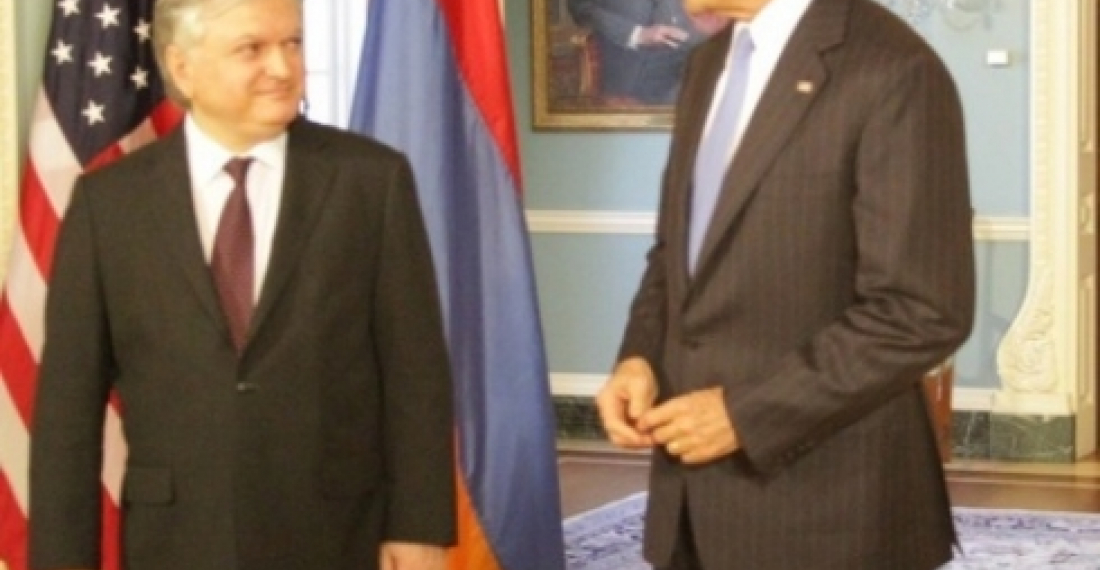
Керри призывает Турцию, Россию и Иран помочь в поисках выхода из сложившегося тупика по Карабаху.

Госсекретарь США Джон Керри продолжил прилагать свои усилия по обеспечению прогресса в переговорах по урегулированию нагорно-карабахского конфликта. Во вторник утром он принял в Государственном департаменте министра иностранных дел Армении Эдварда Налбандяна. Встреча состоялась спустя менее чем двадцать четыре часа после аналогичной встречи между Керри и министром иностранных дел Азербайджана Эльмаром Мамедъяровым.

Помимо того, что Керри указал на новый импульс со стороны администрации Обамы попытаться добиться прорыва в переговорах по разрешению нагорно-карабахского конфликта, он в своем выступлении перед встречей с министром иностранных дел Армении призвал региональные державы Россию, Иран и Турцию, также принять участие в попытке выхода из нынешнего тупика.

Керри заявил:

"Мы все действительно хотим попытаться в один прекрасный день увидеть решенным замороженный конфликт вокруг  Нагорного Карабаха. Очень важно, чтобы все стороны - когда я говорю все стороны, я имею в виду не только Азербайджан, но и Турцию, Россию, Иран, и других - попытались найти способ, который помог бы выйти из тупика, который сохраняет этот конфликт живым и всегда потенциально опасным."

По другим вопросам, Керри сказал, что он собирается обсудить со своим армянским коллегой "экономическое партнерство, развитие экономики и укрепление демократии и безопасность наших друзей, армянского народа".

Со своей стороны министр иностранных дел Эдвард Налбандян сказал:

"важно продолжить усилия по поиску исключительно мирного решения нагорно-карабахского конфликта на основе принципов и норм международного права, в частности, неприменения силы или угрозы применения силы, самоопределения народов и территориальной целостности. Мы также едины во мнении, что армяно-турецкие отношения должны быть нормализованы без предусловий. Мы очень благодарны, что в течение последних двух десятилетий с момента нашей независимости, США оказали очень важную поддержку Армении."

Источник: commonspace.eu по материалам state.gov

Related articles

Editor's choice
News
The British prime minister says Europe must "stand on its own two feet" when it comes to defence

The British prime minister says Europe must "stand on its own two feet" when it comes to defence

The UK will deploy a carrier strike group, led by the aircraft carrier HMS Prince of Wales to the Arctic and the High North as part of efforts to bolster security against Russian threats. British prime minister, Sir Keir Starmer announced the deployment in a speech on Saturday (14 February) at the Munich Security Conference. Europe must be ready to fight to protect its people, values, and way of life,  Sir Keir told the Conference. Starmer also called for deeper links and cooperation, including economic ties, between the UK and EU. The PM stressed the continent must "stand on its own two feet" when it comes to defence commitments. "We must build our hard power, because that is the currency of the age," he told the conference. (Click image to read the full story).

Popular

Editor's choice
Interview
Thursday Interview: Murad Muradov

Thursday Interview: Murad Muradov

Today, commonspace.eu starts a new regular weekly series. THURSDAY INTERVIEW, conducted by Lauri Nikulainen, will host  persons who are thinkers, opinion shapers, and implementors in their countries and spheres. We start the series with an interview with Murad Muradov, a leading person in Azerbaijan's think tank community. He is also the first co-chair of the Action Committee for a new Armenian-Azerbaijani Dialogue. Last September he made history by being the first Azerbaijani civil society activist to visit Armenia after the 44 day war, and the start of the peace process. Speaking about this visit Murad Muradov said: "My experience was largely positive. My negative expectations luckily didn’t play out. The discussions were respectful, the panel format bringing together experts from Armenia, Azerbaijan, and Turkey was particularly valuable during the NATO Rose-Roth Seminar in Yerevan, and media coverage, while varied in tone, remained largely constructive. Some media outlets though attempted to represent me as more of a government mouthpiece than an independent expert, which was totally misleading.  Overall, I see these initiatives as important steps in rebuilding trust and normalising professional engagement. The fact that soon a larger Azerbaijani civil society visits to Armenia followed, reinforces the sense that this process is moving in the right direction." (click the image to read the interview in full)


