


Глава САР: И у армян, и у азербайджанцев, живущих в России, интересы совпадают, и у двух соседних народов не должно быть разногласий

АрмИнфо-Turan.  23 октября в московском Президент-Отеле состоялся "круглый стол" "Азербайджанская и армянская диаспоры России: межнациональный диалог", организованный Федеральной национально-культурной автономией азербайджанцев России (ФНКА АзерРос) и Союзом армян России.

Участниками встречи с азербайджанской стороны стали: президент ФНКА АзерРос Союн Садыков, шеф-редактор газеты "Трибуна" Рафаэль Гусейнов, главный редактор газеты "Всероссийский Азербайджанский Конгресс" Рустам Арифджанов,  вице-президент ФНКА Видади Аббасов, вице-президент ФНКА АзерРос Мехрибан Садыгова, профессор Юсиф Амирасланов, председатель Комитета по работе с гражданами РФ, выходцами из СНГ Тамара Пухова, советник председателя правления Международного банка Азербайджана - Москва Азер Сафаров, журналист-международник Азер Джахангиров и др.

С армянской стороны во встрече приняли участие президент Союза армян России (САР) Ара Абрамян, вице-президент САР Герман Ананянц, Народный артист СССР Армен Джигарханян, бывший  исполнительный директор Межгосударственного Гуманитарного фонда стран СНГ Армен Смбатян, вице-президент Российско-армянского союза Вячеслав Галустян, главный редактор журнала "Армения и мир" Люсик Гукасян, главный редактор газеты "Ноев ковчег" Григорий Анисонян Ара Абрамян отметил, что и у армян, и у азербайджанцев, живущих в России, интересы совпадают, и у двух соседних народов не должно быть разногласий. "Какую национальную политику мы сформируем, таким будет наше будущее. Если мы в России будем жить в согласии, тогда лучше будет обеспечено наше будущее, и мы будем помогать нашей исторической Родине - Армении и Азербайджану", - сказал он. Абрамян назвал встречу "исторической", так как "впервые за 20 лет истории России представители армянской и азербайджанской диаспор встречаются в таком формате". "Сегодняшний диалог необходим. Такие встречи надо проводить регулярно. Мы должны показать, что Россия - это наша родина. Если мы сможем послать сигнал нашим братьям и сестрам в Армении и Азербайджане, это всем пойдет на пользу. Любая война, любой конфликт рано или поздно завершаются за столом переговоров", - сказал Ара Абрамян.

Союн Садыков в свою очередь сказал, что необходимо предпринимать усилия, чтобы доверие между двумя народами было восстановлено. По словам президента ФНКА АзерРос, азербайджанцы и армяне, живущие в России, должны сначала здесь, в России, научиться с уважением относиться друг к другу, не поддаваться на провокации.  "Мы должны сделать так, чтобы доверие между двумя народами было восстановлено. И если между двумя народами есть какие-то конфликты, то это временное явление. Я считаю, что придет время, и эти конфликты будут урегулированы. Опять азербайджанцы будут ездить в Армению, а армяне будут ездить в Азербайджан", - сказал глава ФНКА.

Некоторые выступающие отметили, что не всем понравится, что между представителями азербайджанской и армянской общин состоялась такая встреча, так как есть силы, не заинтересованные в мирном диалоге двух народов,  сказал Рафаэль Гусейнов, шеф-редактор газеты "Трибуна". Он также отметил, что пессимистически оценивает в ближайшей перспективе улучшение отношений между двумя народами. "Мы почему-то говорим о долме и музыке. Но есть геополитика, и определенным кругам в России, США, Великобритании выгодно сохранять напряженность между армянами и азербайджанцами", - заявил Р. Гусейнов.

Встреча стала еще более оживленной и теплой, когда Азер Джахангиров выступил с необычным предложением: то, из-за чего мы иногда ссоримся, должно нас объединить и примирить. "Есть песня "Сары гялин". Это песня раздора. Армяне говорят, что это их песня, а азербайджанцы - это их песня. А давайте проведем праздник-фестиваль этой песни, - предложил он.- И тут упоминалась долма. Так давайте проведем праздник долмы: у армян долма вытянутая, у азербайджанцев она помельче и круглая". Эти предложения Джахангирова были встречены одобрительными аплодисментами участников. Союн Садыков сообщил, что вместе с Ара Абрамяном уже обсуждался вопрос о проведении совместного музыкального армяно- азербайджанского фестиваля.

Наконец, слово дали и молодым ребятам. Член молодежной организации Союза армян России Тигран Манасян рассказал о преподавателе МГУ Исмаиле Агакишиеве, у которого он получил "пятерку" по истории Азербайджана, и этот факт стал для него определяющим в жизни.

Студент юридического факультета МГУ Эльвин Аскеров также поделился своей поучительной историей из вузовской жизни. "Я учусь на кафедре конституционного права юрфака МГУ, писал курсовую работу, а моим руководителем был Сурен Авакян. Когда я выбрал тему, мои русские сокурсники мне сказали, зачем я выбрал в качестве руководителя армянина. А я ответил, что хотел тем самым доказать, что азербайджанцы и армяне должны налаживать взаимопонимание", - сообщил Аскеров.

Подводя итоги встречи, руководители ФНКА и Союза армян России отметили, что будет создана совместная Рабочая группа, которая изучит все предложения. Также было принято решение собраться 16 ноября с.г. Но на этот раз - в расширенном составе. Ара Абрамян сообщил, что совместно с Союном Садыковым уже запланировано проведение масштабного мероприятия в Сочи, которое называется "Диалог цивилизаций". В этом мероприятии, по словам Абрамяна, "азербайджанцы должны будут выступать в поддержку армян, а армяне соответственно в защиту азербайджанцев".
Related articles

Editor's choice
News
COP 17 in Armenia

COP 17 in Armenia

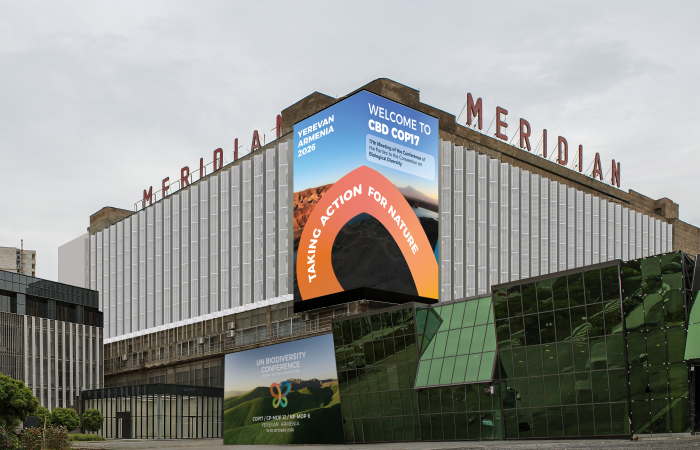
Armenia is currently hosting the COP17 conference of the Convention on Biological Diversity, which began earlier this week (19 October) and will run until 30 October, bringing around 15,000 participants from 196 different countries to Yerevan. At a leaders' summit held as part of COP17, Prime Minister Nikol Pashinyan expressed realistic ambitions: “We are halfway towards achieving these goals (Kunming-Montreal Global Biodiversity Framework), and we must honestly acknowledge that we are not yet moving in the right direction. Our task now is not to make new promises, but to fulfil the commitments we have already made.” Pashinyan pointed towards Armenia's own records, noting that the whitefish stock in Lake Sevan has increased substantially in the last ten years. Iranian President Masoud Pezeshkian and Georgian Prime Minister Irakli Kobakhidze also addressed the summit, with Turkiye sending its agriculture minister. However, there were no reports of Azerbaijani representatives attending. The conference has given Yerevan a valuable international platform, yet the absence of Azerbaijan is likely to be read as a sign that the peace process in the South Caucasus has not yet been translated into wider regional cooperation. The leaders' summit was opened by Armenian Prime Minister Nikol Pashinyan, who stressed that hosting the conference was a great honour for Armenia. He expressed hope that it would 'be productive and contribute to protecting our planet's biodiversity'. 'We – the citizens of Armenia, the government, state authorities and local governments – owe a debt to our nature,' the prime minister said. He noted that the international community had already developed the concept of 'living in harmony with nature’ and adopted the Kunming-Montreal Global Biodiversity Framework in 2022, setting out goals and specific targets to be achieved by 2030. 'We are halfway towards achieving these goals, and we must honestly acknowledge that we are not yet moving in the right direction. Our task now is not to make new promises, but to fulfil the commitments we have already made,' Nikol Pashinyan said. The COP17 conference is expected to adopt a declaration at leaders' level. More than 30 documents are scheduled for discussion. If approved, the commitments set out in them will become legally binding on countries that are parties to the Convention on Biological Diversity.”
Editor's choice
News
Landmines present to the European Union both a contradiction and a dilemma

Landmines present to the European Union both a contradiction and a dilemma

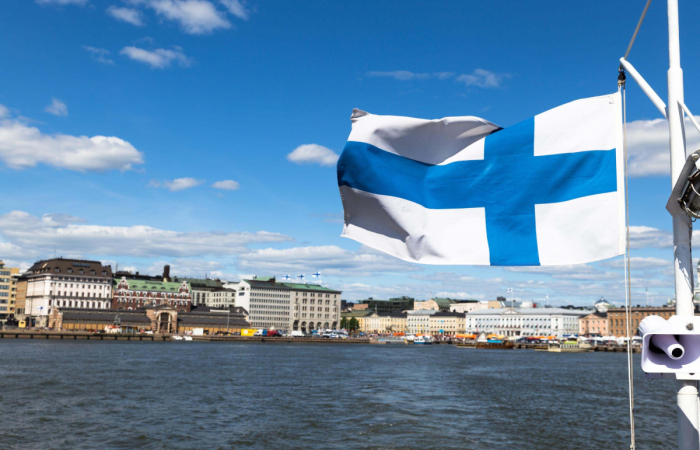
Finland’s decision to buy one million landmines creates a serious contradiction in the policy of the European Union, and is symbolic of a bigger dilemma facing European countries as they get used to the need to acquire “hard” power to face an increasing threat from Russia. Finland is seeking to acquire one million anti-personnel mines at a cost of 100 million euros. Finland, together with Poland, Latvia, Lithuania and Estonia last year abandoned the Ottawa agreement, the international framework that bans the use of anti-personnel mines, which the EU had been instrumental in establishing and supporting. All five countries cite the threat from Moscow as the reason. Colonel Riku Mikkonen of the Army Command told Finland’s national news agency STT that officials are now gathering information from suppliers regarding the deal, the AFP news agency reports. Helsinki would like domestic manufacturers to supply the mines, with contracts signed by the end of 2027 and production up and running by 2028. “It would be useful in many ways if Finnish companies produced the anti-personnel mines in Finland,” Mikkonen said. About half a dozen Finnish firms qualify, he told STT. “However, at this stage, buying the mines from abroad is not totally ruled out,” he added. LANDMINES PROVIDE THE EU WITH BOTH A CONTRADICTION, AND A DILEMMA Eliminating landmine contamination worldwide is one of the EU’s main soft power postures, and it basks in its record as the biggest funder of anti-landmine action in the world. But the fact that 5 of its 27 member states  have now left the Ottawa Treaty dents the EU moral high ground. It is a contradiction that is too big and important to be ignored. It also presents the European Union with a deeper dilemma. The threat from Russia is changing what the EU has stood for decades, namely a force for good able to mobilise its considerable soft power for the greater good of humanity. How the Union will implement this change will define its future. In the meantime landmines have not become any less lethal, benign, or unimportant. They remain in many parts of the world a major threat to life, an impediment to prosperity, and a potential trigger to further conflict. The 22 EU members states that still adhere to the Ottawa treaty must regroup, and be more assertive in their quest against anti-personnel land mines. All the reasons why they supported the Ottawa treaty in the first place still exist. The message must be clear: NO TO LANDMINES!

Popular

Editor's choice
Interview
Thursday Interview: Murad Muradov

Thursday Interview: Murad Muradov

Today, commonspace.eu starts a new regular weekly series. THURSDAY INTERVIEW, conducted by Lauri Nikulainen, will host  persons who are thinkers, opinion shapers, and implementors in their countries and spheres. We start the series with an interview with Murad Muradov, a leading person in Azerbaijan's think tank community. He is also the first co-chair of the Action Committee for a new Armenian-Azerbaijani Dialogue. Last September he made history by being the first Azerbaijani civil society activist to visit Armenia after the 44 day war, and the start of the peace process. Speaking about this visit Murad Muradov said: "My experience was largely positive. My negative expectations luckily didn’t play out. The discussions were respectful, the panel format bringing together experts from Armenia, Azerbaijan, and Turkey was particularly valuable during the NATO Rose-Roth Seminar in Yerevan, and media coverage, while varied in tone, remained largely constructive. Some media outlets though attempted to represent me as more of a government mouthpiece than an independent expert, which was totally misleading.  Overall, I see these initiatives as important steps in rebuilding trust and normalising professional engagement. The fact that soon a larger Azerbaijani civil society visits to Armenia followed, reinforces the sense that this process is moving in the right direction." (click the image to read the interview in full)

