


Глава МИД Армении Эдвард Налбаняд принял 5 марта участие в состоявшемся в Праге заседании руководителей внешнеполитических ведомств стран-членов программы ЕС "Восточное партнерство" и Вышеградской четверки.
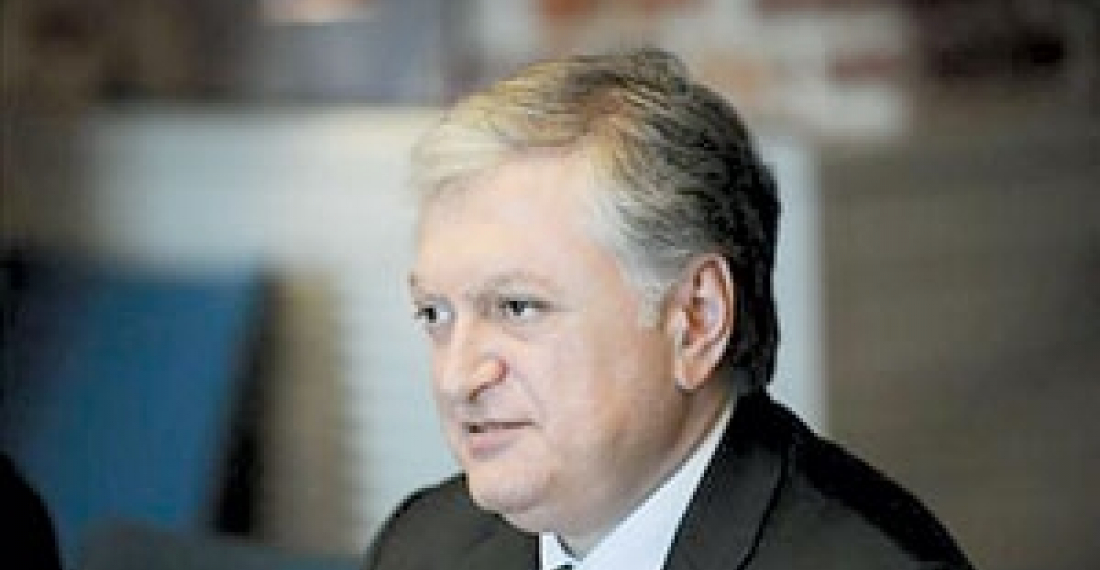

Глава МИД Армении Эдвард Налбаняд принял 5 марта участие в состоявшемся в Праге заседании руководителей внешнеполитических ведомств стран-членов программы ЕС "Восточное партнерство" и Вышеградской четверки. Об этом сообщает пресс-служба МИД РА. На встрече принимали участие верховный представитель по иностранным делам и политике безопасности ЕС Кэтрин Эштон и комиссар по вопросам расширения и европейской политики соседства Штефан Фюле.

В своем выступлении глава МИД РА отметил, что между ЕС и Арменией уже согласованы 24 главы документа Соглашения по Ассоциативному членству, начались переговоры по облегчению визового режима и в ближайшее время начнется переговорный процесс о глубоком и всеобъемлющем соглашении о свободной торговле.

В рамках отдельной беседы Эдварда Налбандяна со Штафаном Фюле были затронуты вопросы повестки дня намеченного на 6 марта визита президента Армении Сержа Саргсяна в Брюссель. Они обменялись мнениями вокруг переговорного процесса по карабахскому урегулированию. Глава МИД РА поблагодарил официальную позицию ЕС, направленную на содействие работы посредников в рамках Минской Группы ОБСЕ, что нашло свое отражение в общем документе ЕС по глубокому и всеобъемлющему соглашению о свободной торговле со странами Южного Кавказа.

Глава МИД Армении провел встречи со своими коллегами Эстонии и Венгрии. Сегодня же Налбандян направился в Брюссель, где глава армянского государства Серж Саргсян примет участие в заседании "Североатлантический альянс + Армения" и выступит с речью в фонде Конрада Аденауэра. Состоятся встречи Саргсяна с генеральным секретарем НАТО Андерсом Фогом Расмуссеном, председателем Европейской Комиссии Жозе Мануэлем Баррозу, президентом Совета ЕС Херманом Ван Ромпей

Related articles

Editor's choice
News
The British prime minister says Europe must "stand on its own two feet" when it comes to defence

The British prime minister says Europe must "stand on its own two feet" when it comes to defence

The UK will deploy a carrier strike group, led by the aircraft carrier HMS Prince of Wales to the Arctic and the High North as part of efforts to bolster security against Russian threats. British prime minister, Sir Keir Starmer announced the deployment in a speech on Saturday (14 February) at the Munich Security Conference. Europe must be ready to fight to protect its people, values, and way of life,  Sir Keir told the Conference. Starmer also called for deeper links and cooperation, including economic ties, between the UK and EU. The PM stressed the continent must "stand on its own two feet" when it comes to defence commitments. "We must build our hard power, because that is the currency of the age," he told the conference. (Click image to read the full story).

Popular

Editor's choice
Interview
Thursday Interview: Murad Muradov

Thursday Interview: Murad Muradov

Today, commonspace.eu starts a new regular weekly series. THURSDAY INTERVIEW, conducted by Lauri Nikulainen, will host  persons who are thinkers, opinion shapers, and implementors in their countries and spheres. We start the series with an interview with Murad Muradov, a leading person in Azerbaijan's think tank community. He is also the first co-chair of the Action Committee for a new Armenian-Azerbaijani Dialogue. Last September he made history by being the first Azerbaijani civil society activist to visit Armenia after the 44 day war, and the start of the peace process. Speaking about this visit Murad Muradov said: "My experience was largely positive. My negative expectations luckily didn’t play out. The discussions were respectful, the panel format bringing together experts from Armenia, Azerbaijan, and Turkey was particularly valuable during the NATO Rose-Roth Seminar in Yerevan, and media coverage, while varied in tone, remained largely constructive. Some media outlets though attempted to represent me as more of a government mouthpiece than an independent expert, which was totally misleading.  Overall, I see these initiatives as important steps in rebuilding trust and normalising professional engagement. The fact that soon a larger Azerbaijani civil society visits to Armenia followed, reinforces the sense that this process is moving in the right direction." (click the image to read the interview in full)

