


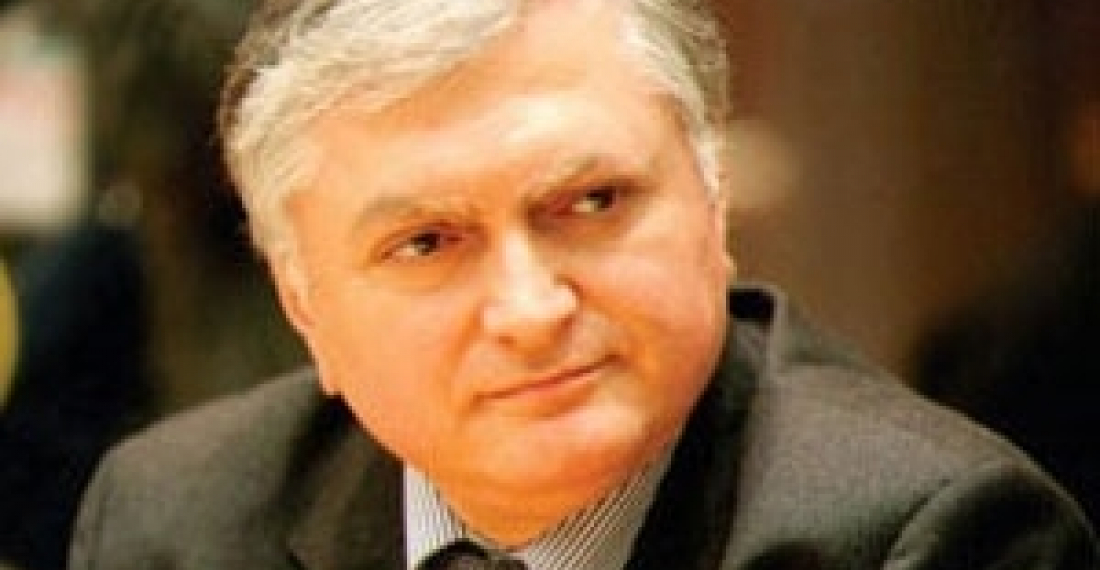
Глава МИД Армении:

Страны сопредседатели Минской Группы ОБСЕ продолжат заниматься урегулированием нагорно-карабахского конфликта в прежнем статусе и формате. Об этом в интервью армянским телеканалам заявил глава МИД Армении Эдвард Налбандян.

"Безусловно, нужно продолжать переговорный процесс относительно достижения соглашения по Базовым принципам и ускорить процесс их согласования, учитывая проведенную до этого работу, для того чтобы стало возможно достичь основного соглашения. Атмосфера создания взаимного доверия позитивно повлияет на согласование базовых принципов, однако и в этом случае для составления документа понадобится огромная работа и  посредничество стран сопредседателей. Очень важно чтобы Азербайджан не препятствовал созданию атмосферы взаимного доверия, как это было в прошлом, иначе процесс провалится", - отметил Налбандян.

В качестве мер по созданию атмосферы доверия, которые ускорят процесс переговоров и станут залогом для их стабильного хода, Налбандян отметил важность создания механизмов исследования инцидентов на линии соприкосновения, на что азербайджанская сторона традиционно реагирует с крайним неудовольствием. "Месяц назад в Вене обсуждался бюджет ОБСЕ, где было предложено выделить средства для создания подобных механизмов, на что Азербайджан пригрозил наложить вето на бюджет ОБСЕ.  Таким образом, Баку помешал процессу создания механизмов доверия. Однако очень важно, что в сочинском заявлении президенты поручили нам продолжить этот процесс", - отметил министр.

Налбандян также заметил, что попытки встреч представителей интеллигенции Армении и Азербайджана провалились вследствие антиармянской пропаганды и постоянных провокационных заявлений в Азербайджане. По его словам, подобная атмосфера внутри этой страны никак не способствуют проведению подобных встреч.

Урегулированием карабахского конфликта с 1992 года занимается Минская группа ОБСЕ, представленная сопредседателями от России, США и Франции. В настоящее время процесс урегулирования карабахского конфликта происходит на основе "Мадридских принципов", выдвинутых сопредседателями МГ ОБСЕ в 2007 году в Мадриде и обновленных в 2009 году.

Related articles

Editor's choice
News
The British prime minister says Europe must "stand on its own two feet" when it comes to defence

The British prime minister says Europe must "stand on its own two feet" when it comes to defence

The UK will deploy a carrier strike group, led by the aircraft carrier HMS Prince of Wales to the Arctic and the High North as part of efforts to bolster security against Russian threats. British prime minister, Sir Keir Starmer announced the deployment in a speech on Saturday (14 February) at the Munich Security Conference. Europe must be ready to fight to protect its people, values, and way of life,  Sir Keir told the Conference. Starmer also called for deeper links and cooperation, including economic ties, between the UK and EU. The PM stressed the continent must "stand on its own two feet" when it comes to defence commitments. "We must build our hard power, because that is the currency of the age," he told the conference. (Click image to read the full story).

Popular

Editor's choice
Interview
Thursday Interview: Murad Muradov

Thursday Interview: Murad Muradov

Today, commonspace.eu starts a new regular weekly series. THURSDAY INTERVIEW, conducted by Lauri Nikulainen, will host  persons who are thinkers, opinion shapers, and implementors in their countries and spheres. We start the series with an interview with Murad Muradov, a leading person in Azerbaijan's think tank community. He is also the first co-chair of the Action Committee for a new Armenian-Azerbaijani Dialogue. Last September he made history by being the first Azerbaijani civil society activist to visit Armenia after the 44 day war, and the start of the peace process. Speaking about this visit Murad Muradov said: "My experience was largely positive. My negative expectations luckily didn’t play out. The discussions were respectful, the panel format bringing together experts from Armenia, Azerbaijan, and Turkey was particularly valuable during the NATO Rose-Roth Seminar in Yerevan, and media coverage, while varied in tone, remained largely constructive. Some media outlets though attempted to represent me as more of a government mouthpiece than an independent expert, which was totally misleading.  Overall, I see these initiatives as important steps in rebuilding trust and normalising professional engagement. The fact that soon a larger Azerbaijani civil society visits to Armenia followed, reinforces the sense that this process is moving in the right direction." (click the image to read the interview in full)

