


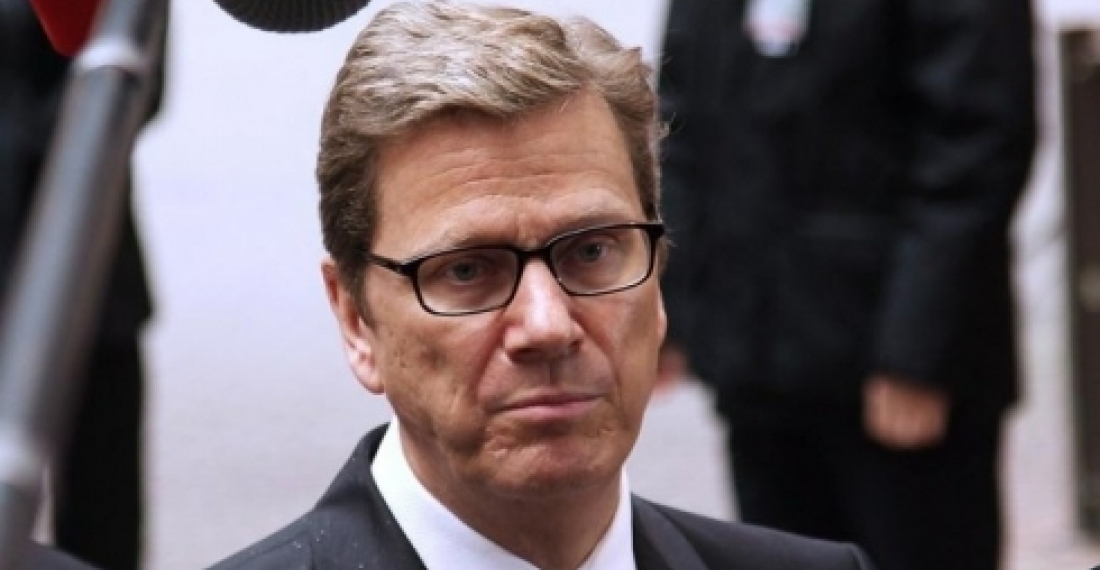
Гидо Вестервелле:

Берлин заинтересован в мирном урегулировании Нагорно- карабахского конфликта. Об этом 16 марта в Ереване на совместной пресс-конференции с главой МИД Армении Эдвардом Налбандяном заявил глава МИД Германии Гидо Вестервелле.

"Германия выступает за равновесие в принципах территориальной целостности и права народов на самоопределение. Однако, статус-кво в НКК не может быть длительным, а мирное решение принесет дивиденды всем в регионе, в том числе Армении. Исходя из этого, компромиссный вариант необходимо искать исключительно в рамках Минской группы ОБСЕ", - отметил Вестервелле.

В свою очередь глава МИД Армении Эдвард Налбандян отметил, что Армения всегда выступала за мирное урегулирование конфликта и никогда не препятствовала подвижкам в урегулировании НКК. "Велик вклад МГ ОБСЕ и в частности президента России Дмитрия Медведева в процессе урегулирования НКК, однако все усилия армянской стороны и сопредседателей приравниваются нулю, так как азербайджанская сторона периодически ставит новые преграды на пути разрешения НКК ", - отметил Налбандян.

Он также заметил, что азербайджанские власти ведут противоречащую политику и часто выступления президента и других высокопоставленных лиц противоречат друг другу. "В ходе последней сочинской встречи президенты Армении и Азербайджана выразили удовлетворенность работой сопредседателей МГ ОБСЕ, однако в Баку был сделан ряд критикующих заявлений в адрес тех же сопредседателей", - отметил Налбандян.

Урегулированием карабахского конфликта с 1992 года занимается Минская группа ОБСЕ, представленная сопредседателями от России, США и Франции. В настоящее время процесс урегулирования карабахского конфликта происходит на основе "Мадридских принципов", выдвинутых сопредседателями МГ ОБСЕ в 2007 году в Мадриде и обновленных в 2009 году.

Related articles

Editor's choice
News
The British prime minister says Europe must "stand on its own two feet" when it comes to defence

The British prime minister says Europe must "stand on its own two feet" when it comes to defence

The UK will deploy a carrier strike group, led by the aircraft carrier HMS Prince of Wales to the Arctic and the High North as part of efforts to bolster security against Russian threats. British prime minister, Sir Keir Starmer announced the deployment in a speech on Saturday (14 February) at the Munich Security Conference. Europe must be ready to fight to protect its people, values, and way of life,  Sir Keir told the Conference. Starmer also called for deeper links and cooperation, including economic ties, between the UK and EU. The PM stressed the continent must "stand on its own two feet" when it comes to defence commitments. "We must build our hard power, because that is the currency of the age," he told the conference. (Click image to read the full story).

Popular

Editor's choice
Interview
Thursday Interview: Murad Muradov

Thursday Interview: Murad Muradov

Today, commonspace.eu starts a new regular weekly series. THURSDAY INTERVIEW, conducted by Lauri Nikulainen, will host  persons who are thinkers, opinion shapers, and implementors in their countries and spheres. We start the series with an interview with Murad Muradov, a leading person in Azerbaijan's think tank community. He is also the first co-chair of the Action Committee for a new Armenian-Azerbaijani Dialogue. Last September he made history by being the first Azerbaijani civil society activist to visit Armenia after the 44 day war, and the start of the peace process. Speaking about this visit Murad Muradov said: "My experience was largely positive. My negative expectations luckily didn’t play out. The discussions were respectful, the panel format bringing together experts from Armenia, Azerbaijan, and Turkey was particularly valuable during the NATO Rose-Roth Seminar in Yerevan, and media coverage, while varied in tone, remained largely constructive. Some media outlets though attempted to represent me as more of a government mouthpiece than an independent expert, which was totally misleading.  Overall, I see these initiatives as important steps in rebuilding trust and normalising professional engagement. The fact that soon a larger Azerbaijani civil society visits to Armenia followed, reinforces the sense that this process is moving in the right direction." (click the image to read the interview in full)


