


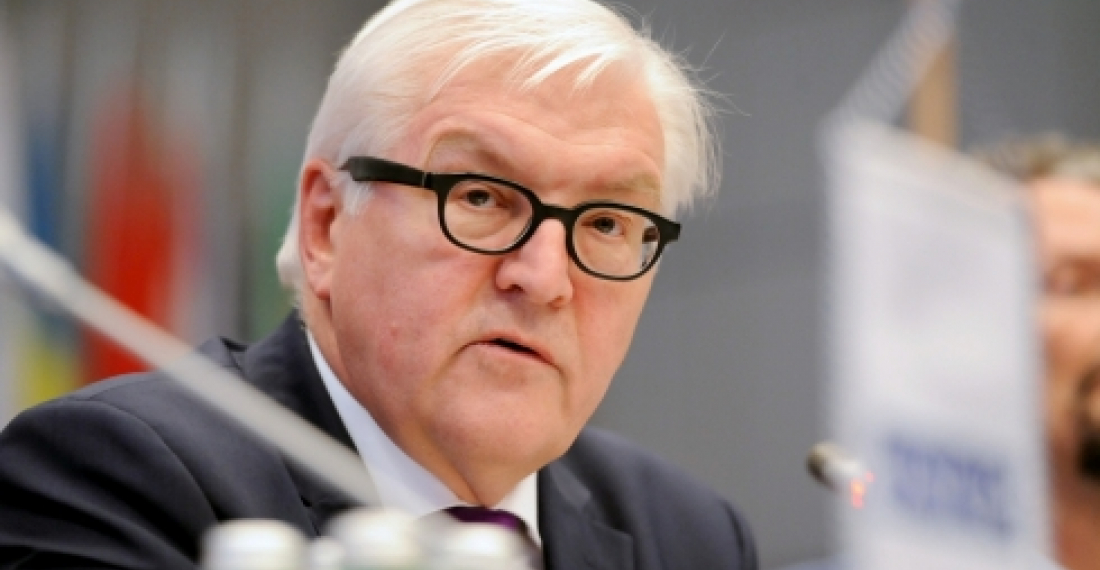
Германия официально приняла на себя председательство в ОБСЕ в 2016 году

Германия, в качестве нынешнего Председателя ОБСЕ, сделает все, чтобы ОБСЕ стала платформой для реального и честного диалога, заявил министр иностранных дел Германии Франк-Вальтер Штайнмайер в своем первом обращении в качестве Председателя ОБСЕ на заседании Постоянного совета в Вене, 14 января.

Представляя программу председательства Германии в ОБСЕ на 2016 представителям государств-участников Организации и партнерам по сотрудничеству, Штайнмайер заявил, что его страна берет на себя председательство в сложные времена - атаки террористов, продолжающиеся конфликты внутри и вокруг Украины, и также кризисы в Средиземноморье и на Ближнем Востоке.

"Именно в эти трудные времена мы нуждаемся в ОБСЕ, которая преследует ясные цели и имеет хороший компас," сказал он. "Этот компас - наш общий компас - это набор принципов и обязательств, которые мы все согласовали. Они образуют основу для мира и безопасности в Европе."

Касаясь темы затяжных конфликтов на регионе ОБСЕ Штайнмайер заявил, что во время своего Председательства Германии активно будет поддерживать существующие форматы переговоров ОБСЕ и механизмы, связанные с Нагорным Карабахом, Приднестровьем и последствиями конфликта 2008 года в Грузии. "Мы будем активно участвовать в поиске решений," сказал он.

Штайнмайер также подчеркнул существующую необходимость в сильных миссиях ОБСЕ на местах и в дальнейшем укреплений потенциала ОБСЕ на всех этапах конфликта. Подчеркивая необходимость мер по построению доверия и безопасности и контролю над вооружениями, Штайнмайер также заявил "мы должны мужественно подойти к модернизации Венского документа."

источник: osce

фото: Председатель ОБСЕ 2016, Министр иностранных дел Германии Франк-Вальтер Штайнмайер во время встречи на Постоянном совете в Вене, 14 января 2016 года (ОБСЕ / Micky Kroell)

 

Related articles

Editor's choice
News
Key European countries back Denmark in the face of Trump's continuing insistence on taking over Greenland

Key European countries back Denmark in the face of Trump's continuing insistence on taking over Greenland

 Six major European countries have declared their support to Denmark following renewed insistence by the US that it must have control over Greenland. "Greenland belongs to its people, and only Denmark and Greenland can decide on matters concerning their relations," said the leaders of the UK, France, Germany, Italy, Poland, and Spain, in a joint statement, issued on Tuesday (6 January), together with Denmark. On Sunday, Donald Trump said the US "needed" Greenland - a semi-autonomous region of fellow Nato member Denmark - for security reasons. He has refused to rule out the use of force to take control of the territory, and Danish Prime Minister Mette Frederiksen warned on Monday that an attack by the US would spell the end of Nato. The issue of Greenland's future resurfaced in the wake of the US military intervention in Venezuela, during which elite troops went in to seize the country's President Nicolás Maduro and take him to face drugs and weapons charges in New York. Following the raid, Trump said the US would "run" Venezuela for an unspecified period of time. He also said the US was returning to an 1823 policy of US supremacy in its sphere of influence in the Western hemisphere - and he warned a number of countries the US could turn its attention to them. The US military raid in Venezuela has reignited fears that the US may consider using force to secure control of Greenland. A day after the raid, Katie Miller - the wife of one of Trump's senior aides - posted on social media a map of Greenland in the colours of the American flag, alongside the word "SOON". On Monday, her husband Stephen Miller said it was "the formal position of the US government that Greenland should be part of the US". In an interview with CNN, he also said the US "is the power of Nato. For the US to secure the Arctic region, to protect and defend Nato and Nato interests, obviously Greenland should be part of the US." Asked repeatedly whether the US would rule out using force to annex it, Miller responded: "Nobody's going to fight the US over the future of Greenland." Stressing they were as keen as the US in Arctic security, the seven European signatories of Tuesday's joint statement said this must be achieved by Nato allies, including the US "collectively" - whilst "upholding the principles of the UN Charter, including sovereignty, territorial integrity and the inviolability of borders". Greenland's Prime Minister Jens-Frederik Nielsen welcomed the statement and called for "respectful dialogue". "The dialogue must take place with respect for the fact that Greenland's status is rooted in international law and the principle of territorial integrity," Nielsen said. Trump has claimed that making Greenland part of the US would serve American security interests due to its strategic location and its abundance of minerals critical to high-tech sectors. Greenland, which has a population of 57,000 people, has had extensive self-government since 1979, though defence and foreign policy remain in Danish hands. While most Greenlanders favour eventual independence from Denmark, opinion polls show overwhelming opposition to becoming part of the US.

Popular

