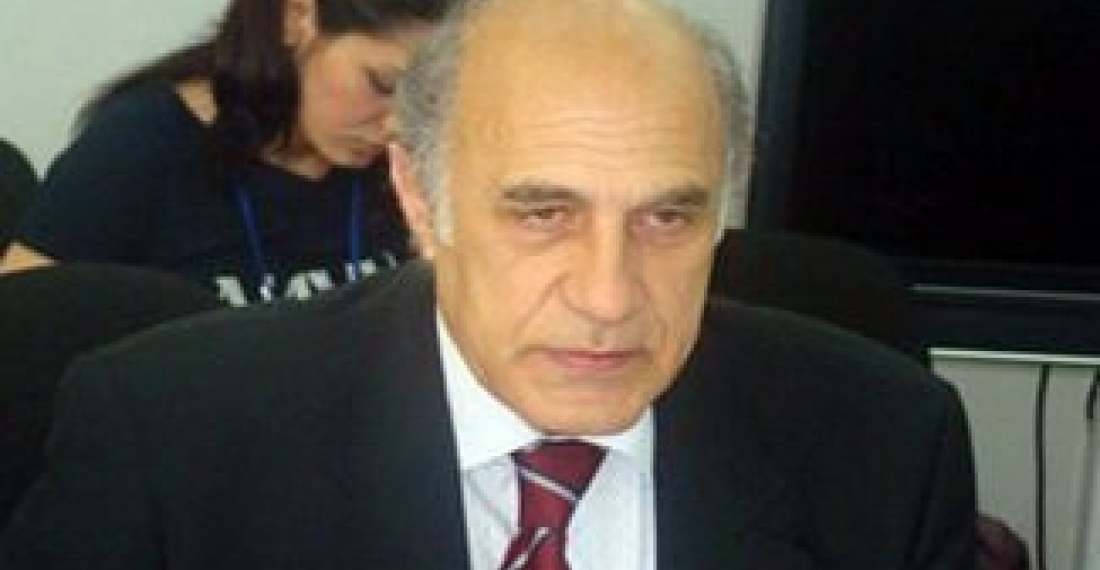
Фикрет Садыхов: «Наша позиция достаточно ясная, твердая и принципиальная»

БАКУ, 7 июл – 1NEWS.AZ

Заявления Лаврова и Брайзы – это, в целом, чисто дипломатические выражения, за которыми, если говорить откровенно, особой конкретики пока не просматривается.

Об этом заявил политолог Фикрет Садыхов, комментируя последние заявления посла США в Азербайджане Мэтью Брайзы и министра иностранных дел России Сергея Лаврова касательно итогов июньской встречи президентов Азербайджана, Армении и Российской Федерации в Казани в рамках переговорного процесса по мирному урегулированию армяно-азербайджанского, нагорно-карабахского конфликта.

Напомним,  что М.Брайза, комментируя ситуацию по разрешению конфликта, подчеркнул, что процесс урегулирования конфликта продолжается. «Я бы не сказал, что встреча в Казани была безрезультатной. Сторонами [конфликта] были предприняты  некоторые шаги [по приближению принятия базовых принципов]. 

Я общался как с государственным секретарем США Хиллари Клинтон, так и с официальными лицами Азербайджана, обсуждая, что последует за встречей в Казани», - отметил американский дипломат.

В свою очередь, глава российского внешнеполитического ведомства во время пресс-конференции в Москве заявил, что работа над урегулированием нагорно-карабахского конфликта будет продолжена в самое ближайшее время.

По словам С.Лаврова, в Казани президенты заявили о согласовании важных вопросов, которые способствуют созданию условий для достижения окончательный договоренности по урегулированию, и что президент РФ Дмитрий Медведев проанализировал ситуацию после встречи в Казани и вскоре примет решение о дальнейших шагах. «Думаем, что сейчас мы подошли к ситуации, когда необходимо принимать решения», - сказал министр.

«Заявления Лаврова и Брайзы – это, в целом, чисто дипломатические выражения, за которыми, если говорить откровенно, особой конкретики пока не просматривается. И тот, и другой являются дипломатами с большим стажем, и естественно, что они озвучивают политическую линию своего руководства, что подчеркивает тот факт, что ведущие державы, конечно же, заинтересованы в установлении мира и стабильности в этом регионе», - отметил Садыхов.

По его словам, особых иллюзий относительно казанской встречи не было, «потому что мы понимали, что пока коренным образом не изменится позиция Армении, радикальных решений, каких-то позитивных подвижек быть не может».

«Что же касается того, что и Лавров, и Брайза делают такие, в общем-то, далеко идущие заявления, говорит, конечно же, о том, что интересы ведущих держав мира к нашему региону сохраняются.

Другим фактом является то, что они хотели бы установления стабильности, и, конечно же, многое будет зависеть от того, что кроется за конкретными предложениями президента Медведева, который направил по этому поводу письмо и собирается обратиться с новых российских позиций к этой проблеме», - сказал политолог.

Тем не менее, он призвал воздержаться от преждевременных выводов, подчеркнув необходимость дождаться окончательной позиции России.

«Но я не думаю, что в позиции Москвы произойдут какие-то радикальные перемены. Понятно и другое. Россия в нынешней ситуации очень заинтересована в партнерских отношениях с Азербайджаном, и ей самой надоел этот груз и бремя, которое она несет по постоянной подпитке и поддержке своего форпоста.

Это факты очевидные, наглядные, и надо будет, конечно же, дождаться действий руководства Кремля. Однако ясно и очевидно одно – пока ведущие государства будут в какой-то степени как бы заигрывать с Арменией и пытаться приравнять обе конфликтующие стороны к какому-то единому знаменателю, то тут, конечно же, особых результатов не будет», - подчеркнул Ф.Садыхов.

Эксперт отметил готовность официального Баку предоставить Нагорному Карабаху самый высокий статус автономии в рамках территориальной целостности Азербайджанской Республики.
«Тут важно понять и уяснить. Наша позиция в этом плане достаточно ясная, твердая и принципиальная.

Она соответствует нормам международного права, которые, к сожалению, очень часто и очевидно нарушаются теми же основными государствами мира. Она основывается на принципах уважения территориальной целостности страны и права народов на самоопределение, которые ни в коей мере не противоречат друг другу, в соответствии с Хельсинкским актом, подписанным еще в 1975 году.

Поэтому мы готовы предоставить Нагорному Карабаху самый высокий статус автономии, самые широкие полномочия в рамках территориальной целостности Азербайджана. Об этом наш президент достаточно ясно и четко заявил в интервью «Euronews».

Мы готовы предоставить им статус, наподобие того, что был предоставлен Аландским островам, или Южному Тиролю, где немецко-говорящее население входит в состав Италии. То есть мировая практика, в том числе европейский континент, имеют такие примеры. И мы ориентируемся на эту практику, на подобные примеры.

И мы готовы, с уважением относясь к армянскому национальному меньшинству, проживающему в Азербайджане, предоставить ему вот эти самые широкие полномочия. Важно, чтобы внешние силы, и в том числе ведущие государства, уяснили это и сделали для себя конкретные и окончательные выводы», - резюмировал Фикрет Садыхов.

Расим Бабаев
 

Related articles

Editor's choice
News
Russia adds pressure on Armenia ahead of key elections; recalls Ambassador in Yerevan for consultations

Russia adds pressure on Armenia ahead of key elections; recalls Ambassador in Yerevan for consultations

Ahead of key parliamentary elections,scheduled to be held in Armenia on Sunday, 7 June, Russia continues to attempt to put pressure on the Armenian Government led by prime minister Nikol Pashinyan. On 30 May, Russia recalled its Ambassador to Yerevan for consultations. A terse statement, published on the website of the Russian Foreign Ministry, said, "The Ambassador of the Russian Federation to the Republic of Armenia , S.P. Kopyrkin, has been summoned to Moscow for consultations in connection with the steps taken by the Armenian leadership to move closer to the European Union, which are detrimental to cooperation within the EAEU." This followed a statement issued the day before, by the leaders of the Eurasian Economic Union (EAEU) that challenges the Armenian trajectory towards approximating to the European Union. Vladimir Putin is undertood to have personally pushed the other four EAEU leaders to issue the statement, which said: "Taking into account the significant risks to the economic security of the member states of the Eurasian Economic Union (hereinafter referred to as the Union) arising in connection with the preparation of the Republic of Armenia for accession to the European Union, as well as the need to prevent the associated damage to the member states of the Union: decided that the members of the Eurasian Intergovernmental Council from the Republic of Belarus, the Republic of Kazakhstan, the Kyrgyz Republic and the Russian Federation will report at the next meeting of the Supreme Eurasian Economic Council in December 2026 on the possible consequences of the suspension of the Treaty on the Eurasian Economic Union with respect to the Republic of Armenia. We share the position on the need to hold a national referendum in the Republic of Armenia as soon as possible on joining the European Union or continuing to be part of the Eurasian Economic Union."
Editor's choice
News
The leaders of the states of the Eurasian Economic Union issued a tough statement warning fellow-member state Armenia of the consequences of its desire to join the European Union.

The leaders of the states of the Eurasian Economic Union issued a tough statement warning fellow-member state Armenia of the consequences of its desire to join the European Union.

The leaders of the states of the Eurasian Economic Union (EEAS) issued a tough statement warning fellow-member state Armenia of the consequences of its desire to join the European Union. The stark, sharply worded,  warning, comes days before crucial parliamentary elections in Armenia, scheduled for 7 June. The full statement said, “We, the Presidents of the Republic of Belarus, the Republic of Kazakhstan, the Kyrgyz Republic and the Russian Federation, Taking into account the actions of the Republic of Armenia aimed at joining the European Union, including the approval in 2025 by the National Assembly of the Republic of Armenia and the signing by the President of the Republic of Armenia of the Law of the Republic of Armenia "On the Start of the Process of Accession of the Republic of Armenia to the European Union", as well as the confirmation by the European Union of the European aspirations of the Government of the Republic of Armenia, expressed in the joint declaration following the first Armenia-European Union summit, adopted on 5 May 2026, Taking into account the significant risks to the economic security of the member states of the Eurasian Economic Union (hereinafter referred to as the Union) arising in connection with the preparation of the Republic of Armenia for accession to the European Union, as well as the need to prevent the associated damage to the member states of the Union: decided that the members of the Eurasian Intergovernmental Council from the Republic of Belarus, the Republic of Kazakhstan, the Kyrgyz Republic and the Russian Federation will report at the next meeting of the Supreme Eurasian Economic Council in December 2026 on the possible consequences of the suspension of the Treaty on the Eurasian Economic Union with respect to the Republic of Armenia. We share the position on the need to hold a national referendum in the Republic of Armenia as soon as possible on joining the European Union or continuing to be part of the Eurasian Economic Union. Astana, May 29, 2026” A meeting of the Supreme Eurasian Economic Council was held in Astana, Kazakhstan, on May 29, 2026. The meeting of the Supreme Eurasian Economic Council in a restricted format was attended by Russian President Vladimir Putin, Belarusian President Alexander Lukashenko , Kazakh President Kassym-Jomart Tokayev , Kyrgyz President Sadyr Japarov , Armenian Deputy Prime Minister Mher Grigoryan, and Chairman of the Board of the Eurasian Economic Commission Bakytzhan Sagintayev. From the Russian side, the meeting was also attended by Deputy Prime Minister and member of the Council of the Eurasian Economic Commission Alexey Overchuk and Presidential Aide Yury Ushakov . The heads of delegations from EAEU observer states, including President of Uzbekistan Shavkat Mirziyoyev , Vice President of Cuba Salvador Valdés Mesa, Minister of Industry, Mines, and Trade of Iran Mohammad Atabak, and CIS Secretary General Sergei Lebedev, joined the expanded meeting . Following the meeting of the Supreme Eurasian Economic Council, a number of documents were signed .

Popular

Editor's choice
Interview
Thursday Interview: Murad Muradov

Thursday Interview: Murad Muradov

Today, commonspace.eu starts a new regular weekly series. THURSDAY INTERVIEW, conducted by Lauri Nikulainen, will host  persons who are thinkers, opinion shapers, and implementors in their countries and spheres. We start the series with an interview with Murad Muradov, a leading person in Azerbaijan's think tank community. He is also the first co-chair of the Action Committee for a new Armenian-Azerbaijani Dialogue. Last September he made history by being the first Azerbaijani civil society activist to visit Armenia after the 44 day war, and the start of the peace process. Speaking about this visit Murad Muradov said: "My experience was largely positive. My negative expectations luckily didn’t play out. The discussions were respectful, the panel format bringing together experts from Armenia, Azerbaijan, and Turkey was particularly valuable during the NATO Rose-Roth Seminar in Yerevan, and media coverage, while varied in tone, remained largely constructive. Some media outlets though attempted to represent me as more of a government mouthpiece than an independent expert, which was totally misleading.  Overall, I see these initiatives as important steps in rebuilding trust and normalising professional engagement. The fact that soon a larger Azerbaijani civil society visits to Armenia followed, reinforces the sense that this process is moving in the right direction." (click the image to read the interview in full)