


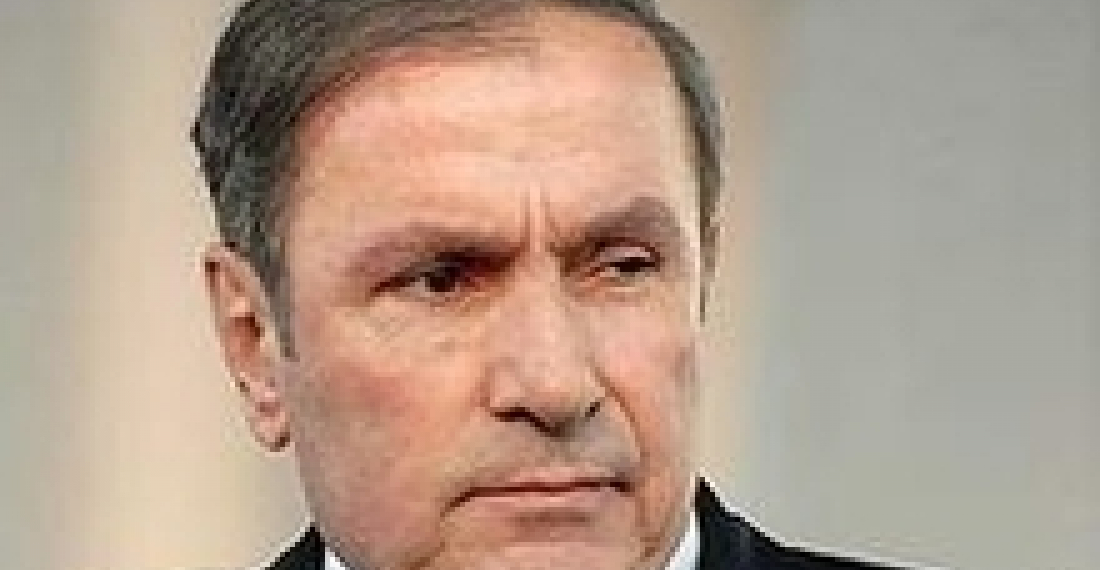
Экс-президент Армении:

У меня есть ощущение, что Запад не прилагает достаточных усилий к решению этой проблемы, это не является приоритетом. У Америки другие огромные проблемы: Ирак, Афганистан, Иран, Северная Корея и т.д. Просто руки не доходят. Подобное мнение "Московским новостям" выразил экс-президент Армении, лидер оппозиционного Армянского национального конгресса Левон Тер-Петросян.

"Это создает возможность для России быть более активной в этом вопросе. Кажется, в последние два года, независимо от международных усилий, Россия ведет если не сказать сепаратную, то более активную политику в этом вопросе. Проходят встречи президентов, подписаны заявления и трехсторонние декларации. Инициатива решения карабахской проблемы переходит в руки России. У России есть шанс. Я уверен, что и Запад не будет очень против", - заметил он.

При этом, по мнению Тер-Петросяна, если и этот процесс не принесет какого-то быстрого успеха, то война все же будет возможна, поскольку у Азербайджана просто не хватит терпения. По его словам, Армения никогда не будет инициировать войну, кто бы ни был ее президентом. Если возникнет война, то только по инициативе Азербайджана. И самое опасное то, что никто не может держать Азербайджан за руку.

"России сложно быть модератором процесса: она все время говорит, что Армения - ее главный и единственный кавказский союзник, но в то же время пытается строить взаимовыгодные отношения с Азербайджаном. Как раз это создает преимущество для России. Если обе стороны с тобой дружат, ты лучший посредник. Это закон. Не может быть посредником тот, кто не пользуется доверием у обеих сторон", - отметил экс­президент.

Говоря о том, почему Армения не признает Карабах, Тер-Петросян отметил, что этот вопрос выходит за рамки субъективного желания. Все три президента Армении не признали - значит, есть объективная причина.

"Они же говорят, что они патриоты, что они за Карабах. Это меня могли бы обвинить, что я не признаю, потому что я предатель. Я рад, что у них тоже хватает мозгов не делать такого неосторожного шага. Это не принесет никакой пользы. Армения будет единственной страной, которая признает, как Северный Кипр. Турция от этого не страдает, а Армения от этого формального демонстративного шага может и пострадать. Это докажет, что Армения - максималист, не идет ни на какой компромисс. Вся политика карабахская до сих пор, хотя бы на словах, была основана на том, что мы ищем компромисс. Признавая Нагорный Карабах, мы отказались бы от этого принципа", - подчеркнул он.

"То, что Карабах сегодня не является стороной в процессе урегулирования - страшно. Это было самое великое достижение армянской дипломатии. И самая глупая, если не преступная ошибка армянской дипломатии это согласие на то, что Карабах больше не будет стороной в переговорах. Это вообще был конец света для меня. Чего стоило этого добиться! Четыре года мы боролись. В 1994 году, как раз с помощью России, мы добились, чтобы Карабах, как третья равноправная сторона, получил международный мандат. Это вопрос принципа. Мы же за самоопределение Карабаха. А где самоопределение Карабаха без Карабаха? Как Армения может представлять Карабах в международных переговорах? Как Армения будет подписывать соглашение с Азербайджаном о судьбе Нагорного Карабаха? А где тогда самоопределение?", - подытожил Тер-Петросян.

Related articles

Editor's choice
News
Russia adds pressure on Armenia ahead of key elections; recalls Ambassador in Yerevan for consultations

Russia adds pressure on Armenia ahead of key elections; recalls Ambassador in Yerevan for consultations

Ahead of key parliamentary elections,scheduled to be held in Armenia on Sunday, 7 June, Russia continues to attempt to put pressure on the Armenian Government led by prime minister Nikol Pashinyan. On 30 May, Russia recalled its Ambassador to Yerevan for consultations. A terse statement, published on the website of the Russian Foreign Ministry, said, "The Ambassador of the Russian Federation to the Republic of Armenia , S.P. Kopyrkin, has been summoned to Moscow for consultations in connection with the steps taken by the Armenian leadership to move closer to the European Union, which are detrimental to cooperation within the EAEU." This followed a statement issued the day before, by the leaders of the Eurasian Economic Union (EAEU) that challenges the Armenian trajectory towards approximating to the European Union. Vladimir Putin is undertood to have personally pushed the other four EAEU leaders to issue the statement, which said: "Taking into account the significant risks to the economic security of the member states of the Eurasian Economic Union (hereinafter referred to as the Union) arising in connection with the preparation of the Republic of Armenia for accession to the European Union, as well as the need to prevent the associated damage to the member states of the Union: decided that the members of the Eurasian Intergovernmental Council from the Republic of Belarus, the Republic of Kazakhstan, the Kyrgyz Republic and the Russian Federation will report at the next meeting of the Supreme Eurasian Economic Council in December 2026 on the possible consequences of the suspension of the Treaty on the Eurasian Economic Union with respect to the Republic of Armenia. We share the position on the need to hold a national referendum in the Republic of Armenia as soon as possible on joining the European Union or continuing to be part of the Eurasian Economic Union."
Editor's choice
News
The leaders of the states of the Eurasian Economic Union issued a tough statement warning fellow-member state Armenia of the consequences of its desire to join the European Union.

The leaders of the states of the Eurasian Economic Union issued a tough statement warning fellow-member state Armenia of the consequences of its desire to join the European Union.

The leaders of the states of the Eurasian Economic Union (EEAS) issued a tough statement warning fellow-member state Armenia of the consequences of its desire to join the European Union. The stark, sharply worded,  warning, comes days before crucial parliamentary elections in Armenia, scheduled for 7 June. The full statement said, “We, the Presidents of the Republic of Belarus, the Republic of Kazakhstan, the Kyrgyz Republic and the Russian Federation, Taking into account the actions of the Republic of Armenia aimed at joining the European Union, including the approval in 2025 by the National Assembly of the Republic of Armenia and the signing by the President of the Republic of Armenia of the Law of the Republic of Armenia "On the Start of the Process of Accession of the Republic of Armenia to the European Union", as well as the confirmation by the European Union of the European aspirations of the Government of the Republic of Armenia, expressed in the joint declaration following the first Armenia-European Union summit, adopted on 5 May 2026, Taking into account the significant risks to the economic security of the member states of the Eurasian Economic Union (hereinafter referred to as the Union) arising in connection with the preparation of the Republic of Armenia for accession to the European Union, as well as the need to prevent the associated damage to the member states of the Union: decided that the members of the Eurasian Intergovernmental Council from the Republic of Belarus, the Republic of Kazakhstan, the Kyrgyz Republic and the Russian Federation will report at the next meeting of the Supreme Eurasian Economic Council in December 2026 on the possible consequences of the suspension of the Treaty on the Eurasian Economic Union with respect to the Republic of Armenia. We share the position on the need to hold a national referendum in the Republic of Armenia as soon as possible on joining the European Union or continuing to be part of the Eurasian Economic Union. Astana, May 29, 2026” A meeting of the Supreme Eurasian Economic Council was held in Astana, Kazakhstan, on May 29, 2026. The meeting of the Supreme Eurasian Economic Council in a restricted format was attended by Russian President Vladimir Putin, Belarusian President Alexander Lukashenko , Kazakh President Kassym-Jomart Tokayev , Kyrgyz President Sadyr Japarov , Armenian Deputy Prime Minister Mher Grigoryan, and Chairman of the Board of the Eurasian Economic Commission Bakytzhan Sagintayev. From the Russian side, the meeting was also attended by Deputy Prime Minister and member of the Council of the Eurasian Economic Commission Alexey Overchuk and Presidential Aide Yury Ushakov . The heads of delegations from EAEU observer states, including President of Uzbekistan Shavkat Mirziyoyev , Vice President of Cuba Salvador Valdés Mesa, Minister of Industry, Mines, and Trade of Iran Mohammad Atabak, and CIS Secretary General Sergei Lebedev, joined the expanded meeting . Following the meeting of the Supreme Eurasian Economic Council, a number of documents were signed .

Popular

Editor's choice
Interview
Thursday Interview: Murad Muradov

Thursday Interview: Murad Muradov

Today, commonspace.eu starts a new regular weekly series. THURSDAY INTERVIEW, conducted by Lauri Nikulainen, will host  persons who are thinkers, opinion shapers, and implementors in their countries and spheres. We start the series with an interview with Murad Muradov, a leading person in Azerbaijan's think tank community. He is also the first co-chair of the Action Committee for a new Armenian-Azerbaijani Dialogue. Last September he made history by being the first Azerbaijani civil society activist to visit Armenia after the 44 day war, and the start of the peace process. Speaking about this visit Murad Muradov said: "My experience was largely positive. My negative expectations luckily didn’t play out. The discussions were respectful, the panel format bringing together experts from Armenia, Azerbaijan, and Turkey was particularly valuable during the NATO Rose-Roth Seminar in Yerevan, and media coverage, while varied in tone, remained largely constructive. Some media outlets though attempted to represent me as more of a government mouthpiece than an independent expert, which was totally misleading.  Overall, I see these initiatives as important steps in rebuilding trust and normalising professional engagement. The fact that soon a larger Azerbaijani civil society visits to Armenia followed, reinforces the sense that this process is moving in the right direction." (click the image to read the interview in full)

