


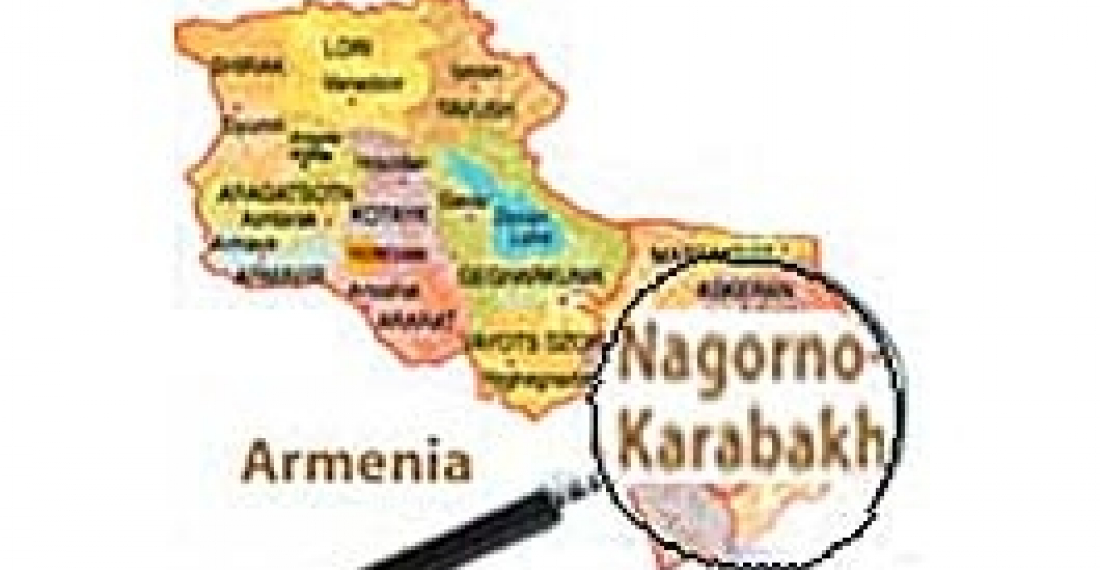
Движение "Сардарапат" призывает власти Арцаха заселить сирийскими армянами освобожденные территории вокруг НКР

 Прошедшие президентские выборы в Нагорно-Карабахской Республике дают основание утверждать, что в Арцахе создаются предпосылки для политического пробуждения народа. Об этом говорится в заявлении, предоставленном АрмИнфо движением "Сардарапат". Движение выражает свою поддержку рождающейся в эти дни политической оппозиции в Арцахе, выражая надежду, что она положит начало формированию новой политической культуры и предложит новые, оригинальные модели решения стоящих перед армянством задач, внесет свою лепту в восстановление и укрепление армянской государственности.


"Сардаарпат" также призывает власти Нагорного Карабаха рассматривать карабахскую проблему исключительно в контексте всеармянских интересов, не руководствоваться сиюминутными и узкогрупповыми интересами и принять самое активное участие в решении наиболее актуальных для всего армянства задач. Одним из этих задач движение "Сардарапат" считает обеспечение условий для возвращения на родину сирийских армян. Движение считает, что освобожденные территории вокруг НКР могут и должны быть заселены вернувшимися на родину сирийскими армянами.


22 июля Центральная избирательная комиссия Нагорно-Карабахской Республики подвела окончательные итоги состоявшихся 19 июля президентских выборов. Согласно данным Центризбиркома, явка избирателей составила 73,43%, а победу одержал действующий президент республики Бако Саакян за которого проголосовали 47095 или 66,70% избирателей.


Анализируя прошедшие в Арцахе выборы, в первую очередь бросается в глаза не то, признали ли эти выборы те или иные страны, а достаточно высокое количество голосов - 32,50%, которым заручился оппозиционный кандидат, Герой Арцаха, бывший заместитель министра обороны Виталий Баласанян. Баласанян заявил о создании политической силы, которая будет отстаивать интересы оппозиционно настроенного электората.


Related articles

Editor's choice
News
The British prime minister says Europe must "stand on its own two feet" when it comes to defence

The British prime minister says Europe must "stand on its own two feet" when it comes to defence

The UK will deploy a carrier strike group, led by the aircraft carrier HMS Prince of Wales to the Arctic and the High North as part of efforts to bolster security against Russian threats. British prime minister, Sir Keir Starmer announced the deployment in a speech on Saturday (14 February) at the Munich Security Conference. Europe must be ready to fight to protect its people, values, and way of life,  Sir Keir told the Conference. Starmer also called for deeper links and cooperation, including economic ties, between the UK and EU. The PM stressed the continent must "stand on its own two feet" when it comes to defence commitments. "We must build our hard power, because that is the currency of the age," he told the conference. (Click image to read the full story).

Popular

Editor's choice
Interview
Thursday Interview: Murad Muradov

Thursday Interview: Murad Muradov

Today, commonspace.eu starts a new regular weekly series. THURSDAY INTERVIEW, conducted by Lauri Nikulainen, will host  persons who are thinkers, opinion shapers, and implementors in their countries and spheres. We start the series with an interview with Murad Muradov, a leading person in Azerbaijan's think tank community. He is also the first co-chair of the Action Committee for a new Armenian-Azerbaijani Dialogue. Last September he made history by being the first Azerbaijani civil society activist to visit Armenia after the 44 day war, and the start of the peace process. Speaking about this visit Murad Muradov said: "My experience was largely positive. My negative expectations luckily didn’t play out. The discussions were respectful, the panel format bringing together experts from Armenia, Azerbaijan, and Turkey was particularly valuable during the NATO Rose-Roth Seminar in Yerevan, and media coverage, while varied in tone, remained largely constructive. Some media outlets though attempted to represent me as more of a government mouthpiece than an independent expert, which was totally misleading.  Overall, I see these initiatives as important steps in rebuilding trust and normalising professional engagement. The fact that soon a larger Azerbaijani civil society visits to Armenia followed, reinforces the sense that this process is moving in the right direction." (click the image to read the interview in full)

