Деннис Саммут: "На данный момент встреча президентов возможно только, если Россия проявит достаточную напористость"

Директор LINKS (Диалог, анализ и исследования), Деннис Саммут, в интервью с азербайджанским информационным агентством 1news.az говорит о шансах на войну и мир в Карабахе. Ниже мы публикуем полный текст интервью.

Что вы ожидаете от встречи в Гамбурге? Станет ли она позитивным или же отрицательным шагом в НК процессе или же очередным соблюдением обязательств?

2016 был довольно насыщенным событиями год в контексте карабахского конфликта и процесса урегулирования конфликта. Вначале была резкая эскалация насилия на линии соприкосновения, что привела к апрельским событиям. За этим последовал интенсивный дипломатический диалог, в том числе две встречи между президентами Армении и Азербайджана в Вене и Санкт-Петербурге. Россия была особенно активна в этом году, продвигая так называемые «идеи Лаврова». С другой стороны, председательствующая в ОБСЕ Германия в 2016 году и германская дипломатия, которая также попыталась попробовать некоторые новые подходы в разрешении конфликта.

Как обычно, министры иностранных дел 57 стран-членов ОБСЕ встретятся в последнем месяце текущего года, на этот раз в Гамбурге, чтобы рассмотреть ситуацию в сфере безопасности в регионе ОБСЕ. Ожидается, что министры иностранных дел трех стран сопредседателей Минской группы встретятся с министрами иностранных дел Армении и Азербайджана на полях СМИД ОБСЕ в формате 3 + 2. Хотя формат и согласован, оптимизма касательно того, что содержание этих обсуждений может привести к прорыву в переговорах пока еще не много. В лучшем случае в Гамбурге мы услышим заявления в поддержку договоренностей тому, что уже было согласовано в Вене и Санкт-Петербурге, и станет ясно, возможно ли очередная встреча президентов двух стран в ближайшем будущем. Как мне кажется, на данный момент встреча президентов возможно только в том случае, если Россия проявит достаточную напористость в этом вопросе".

В недавней аналитической статье на Commonspace.eu вы написали, что есть все условия для очередной насильственной вспышки в Нагорном Карабахе, даже еще большей, чем война в апреле. Пожалуйста, коротко о том, почему вы так считаете, и что может предотвратить такой сценарий?

Линии соприкосновения армянских и азербайджанских войск в зоне нагорно-карабахского конфликта в настоящее время является одной из самых горячих точек в Европе, с высоким риском эскалации насилия. Обе стороны имеют средства для нанесения тяжелого удара по другой с использованием современных вооружений, которые были приобретены за большие деньги в последнее время. С отсутствием значимого прогресса в мирном процессе шансы на всплеск насилия в настоящий момент очень высоки. С обеих сторон наблюдается разочарование нынешним статус-кво, и обе стороны могут видеть некоторое преимущество в проведении молниеносного военного удара, хотя опасность того, что это перерастет в более крупные военные действия очевидна для всех.

Поэтому стороны должны двигаться вперед в переговорах с тем, чтобы попытаться найти прочное и мирное урегулирование. Тем не менее я считаю, что для этого нужен новый подход, как со стороны посредников, так и сторон в конфликте. Это подразумевает изменение в динамике мирного процесса, в том числе его формализация с определенными сроками, расширение круга лиц, участвующих в переговорах для того, чтобы вывести переговоры на более практический уровень, усиление контактов между людьми, с тем чтобы подготовить общественное мнение, а также разумная, с определенным графиком программа мер по построению доверия между военными и гражданскими, проходящая в тандеме с переговорами. В реализации такого подхода есть некоторые риски, но сидеть без дела создает еще больше рисков.

Связываете ли вы какие-либо надежды в НК мирном процессе с новой фигурой на посту президента Соединенных Штатов?

Я не предвижу того, что новая администрация США займет по карабахскому вопросу позицию, которая сильно будет отличаться от текущей. Что пока еще предстоит выяснить - захочет ли Белый Дом под правлением Трампа заняться больше или меньше Кавказским регионом. В любом случае это займет какое-то время - возможно, год или два - пока такая политика вступит в игру, тем временем регион не может позволить себе роскошь ждать.

источник: commonspace.eu. Это полный текст интервью Дениса Саммута с 1 news.az от 1 декабря 2016. Сокращенный вариант интервью на русском языке был опубликован на сайте 1news.az 2 декабря 2016. Читайте его здесь.

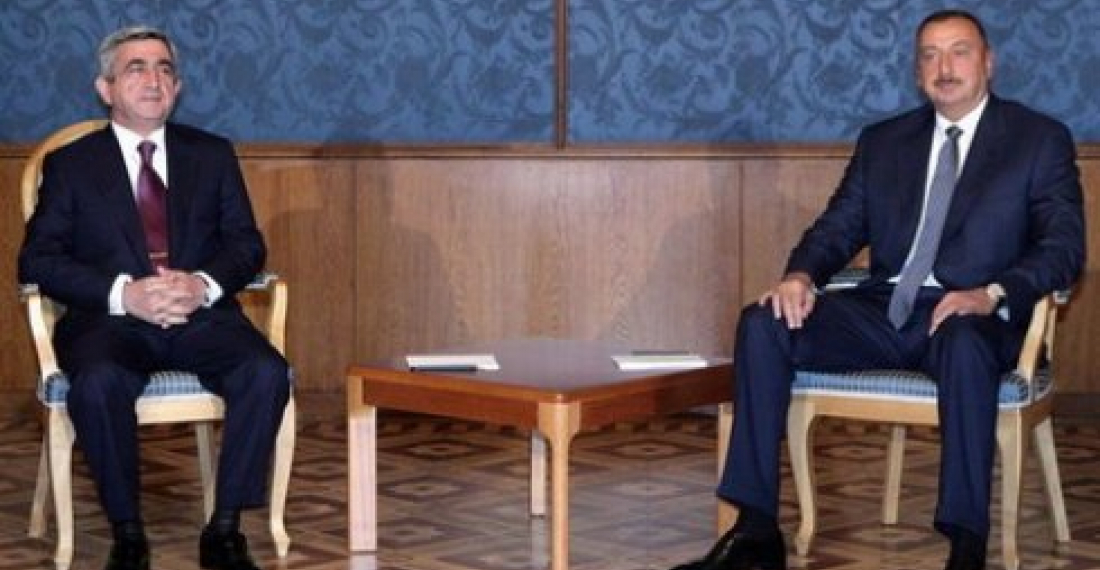
фото: Президенты Армении и Азербайджана в ходе одной из предыдущих встреч (фото из архива)

Related articles

Editor's choice
News
COP 17 in Armenia

COP 17 in Armenia

Armenia is currently hosting the COP17 conference of the Convention on Biological Diversity, which began earlier this week (19 October) and will run until 30 October, bringing around 15,000 participants from 196 different countries to Yerevan. At a leaders' summit held as part of COP17, Prime Minister Nikol Pashinyan expressed realistic ambitions: “We are halfway towards achieving these goals (Kunming-Montreal Global Biodiversity Framework), and we must honestly acknowledge that we are not yet moving in the right direction. Our task now is not to make new promises, but to fulfil the commitments we have already made.” Pashinyan pointed towards Armenia's own records, noting that the whitefish stock in Lake Sevan has increased substantially in the last ten years. Iranian President Masoud Pezeshkian and Georgian Prime Minister Irakli Kobakhidze also addressed the summit, with Turkiye sending its agriculture minister. However, there were no reports of Azerbaijani representatives attending. The conference has given Yerevan a valuable international platform, yet the absence of Azerbaijan is likely to be read as a sign that the peace process in the South Caucasus has not yet been translated into wider regional cooperation. The leaders' summit was opened by Armenian Prime Minister Nikol Pashinyan, who stressed that hosting the conference was a great honour for Armenia. He expressed hope that it would 'be productive and contribute to protecting our planet's biodiversity'. 'We – the citizens of Armenia, the government, state authorities and local governments – owe a debt to our nature,' the prime minister said. He noted that the international community had already developed the concept of 'living in harmony with nature’ and adopted the Kunming-Montreal Global Biodiversity Framework in 2022, setting out goals and specific targets to be achieved by 2030. 'We are halfway towards achieving these goals, and we must honestly acknowledge that we are not yet moving in the right direction. Our task now is not to make new promises, but to fulfil the commitments we have already made,' Nikol Pashinyan said. The COP17 conference is expected to adopt a declaration at leaders' level. More than 30 documents are scheduled for discussion. If approved, the commitments set out in them will become legally binding on countries that are parties to the Convention on Biological Diversity.”
Editor's choice
News
Landmines present to the European Union both a contradiction and a dilemma

Landmines present to the European Union both a contradiction and a dilemma

Finland’s decision to buy one million landmines creates a serious contradiction in the policy of the European Union, and is symbolic of a bigger dilemma facing European countries as they get used to the need to acquire “hard” power to face an increasing threat from Russia. Finland is seeking to acquire one million anti-personnel mines at a cost of 100 million euros. Finland, together with Poland, Latvia, Lithuania and Estonia last year abandoned the Ottawa agreement, the international framework that bans the use of anti-personnel mines, which the EU had been instrumental in establishing and supporting. All five countries cite the threat from Moscow as the reason. Colonel Riku Mikkonen of the Army Command told Finland’s national news agency STT that officials are now gathering information from suppliers regarding the deal, the AFP news agency reports. Helsinki would like domestic manufacturers to supply the mines, with contracts signed by the end of 2027 and production up and running by 2028. “It would be useful in many ways if Finnish companies produced the anti-personnel mines in Finland,” Mikkonen said. About half a dozen Finnish firms qualify, he told STT. “However, at this stage, buying the mines from abroad is not totally ruled out,” he added. LANDMINES PROVIDE THE EU WITH BOTH A CONTRADICTION, AND A DILEMMA Eliminating landmine contamination worldwide is one of the EU’s main soft power postures, and it basks in its record as the biggest funder of anti-landmine action in the world. But the fact that 5 of its 27 member states  have now left the Ottawa Treaty dents the EU moral high ground. It is a contradiction that is too big and important to be ignored. It also presents the European Union with a deeper dilemma. The threat from Russia is changing what the EU has stood for decades, namely a force for good able to mobilise its considerable soft power for the greater good of humanity. How the Union will implement this change will define its future. In the meantime landmines have not become any less lethal, benign, or unimportant. They remain in many parts of the world a major threat to life, an impediment to prosperity, and a potential trigger to further conflict. The 22 EU members states that still adhere to the Ottawa treaty must regroup, and be more assertive in their quest against anti-personnel land mines. All the reasons why they supported the Ottawa treaty in the first place still exist. The message must be clear: NO TO LANDMINES!

Popular

Editor's choice
Interview
Thursday Interview: Murad Muradov

Thursday Interview: Murad Muradov

Today, commonspace.eu starts a new regular weekly series. THURSDAY INTERVIEW, conducted by Lauri Nikulainen, will host  persons who are thinkers, opinion shapers, and implementors in their countries and spheres. We start the series with an interview with Murad Muradov, a leading person in Azerbaijan's think tank community. He is also the first co-chair of the Action Committee for a new Armenian-Azerbaijani Dialogue. Last September he made history by being the first Azerbaijani civil society activist to visit Armenia after the 44 day war, and the start of the peace process. Speaking about this visit Murad Muradov said: "My experience was largely positive. My negative expectations luckily didn’t play out. The discussions were respectful, the panel format bringing together experts from Armenia, Azerbaijan, and Turkey was particularly valuable during the NATO Rose-Roth Seminar in Yerevan, and media coverage, while varied in tone, remained largely constructive. Some media outlets though attempted to represent me as more of a government mouthpiece than an independent expert, which was totally misleading.  Overall, I see these initiatives as important steps in rebuilding trust and normalising professional engagement. The fact that soon a larger Azerbaijani civil society visits to Armenia followed, reinforces the sense that this process is moving in the right direction." (click the image to read the interview in full)