


Взрывы бомб в Дагестане значительно подняли ставки в текущей битве Москвы с исламистскими повстанцами на Северном Кавказе.
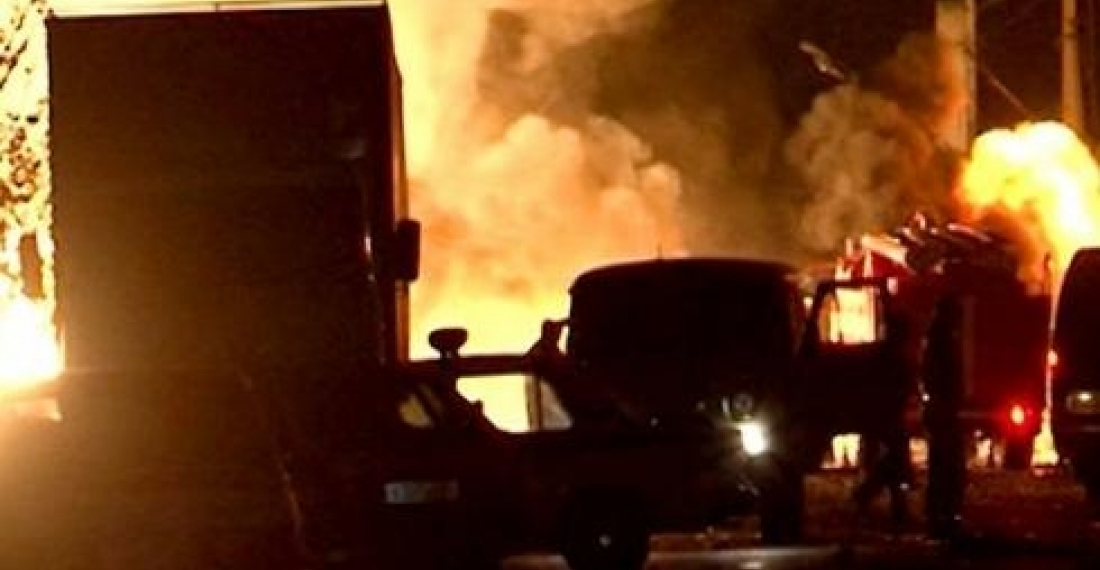

Президент северокавказской республики Дагестан вернулся обратно в столицу Махачкалу, прервав визит в Москву, для того, чтобы на месте разобраться с последствиями двух взрывов, после которых погибли тринадцать человек и более ста получили ранения.

Среди тринадцати погибших семь полицейских, двое пожарных и двое местных жителей. 83 человека были госпитализированы, а 26 на месте была оказана медицинская помощь.

По предварительным данным, террорист-смертник погиб, когда он взорвал свой ​​автомобиль после того, как был остановлен для проверки на полицейском посту на окраине города.

"Как установили эксперты-взрывотехники, в легковом автомобиле Mitsubishi сработало взрывное устройство мощностью 30 килограммов в тротиловом эквиваленте", сказал представитель Национального антитеррористического комитета (НАК) Николай Синцов.

Бомба была настолько мощной, что трудно было определить вид автомобиля, в котором произошел взрыв, сказал он.

Примерно в 22:45 по местному времени, или примерно через полчаса после первого взрыва, вторая 50 кг бомба, взорвалась в припаркованном поблизости фургоне Газель, убив двенадцать человек.

Второй взрыв произошел, когда автомобиль с сотрудниками аварийных служб прибыл на место происшествия. Взрыв унес жизни трех спасателей и шести полицейских, но это непроверенные данные, по сообщениям МВД республики.

Взрывы значительно подняли ставки в текущей битве Москвы с исламистскими повстанцами на Северном Кавказе. Дагестан был объектом нападения боевиков в прошлом, но масштабы и методы этой атаки создают беспокойство среди сотрудников правоохранительных органов о возможной эскалации конфликта.
Источник: commonspace.eu по материалам РИА Новости

Фото: Взрыв в Махачкале 3 мая (фото любезно предоставлено РИА Новости)

Related articles

Editor's choice
News
Russian attacks against Ukrainian civilians continue

Russian attacks against Ukrainian civilians continue

Rescuers in Ukraine are continuing their search for survivors in the wreckage of a big shopping centre hit by Russia on Friday. Sixteen people were killed and 130 injured when two drones hit the busy centre in Kryvyi Rih in quick succession in what is known as a double-tap strike. Four people are still missing. The search and rescue operation could last for another two days. President Volodymyr Zelensky condemned the "cynical and despicable" attack in which the second drone targeted emergency workers. The sides exchanged more fire overnight, with Ukrainian attacks said to have killed at least four people in Russia, including two children, and three people reported dead by Kyiv as a result of Russian strikes. The death toll from Friday's attack reached 16 after another body was retrieved from the rubble overnight, said Dnipropetrovsk regional head Oleksandr Hanzha. "We're doing everything possible to speed up... the search and rescue operation," he told Ukrainian TV on Saturday morning. (click image tio read more)

Popular

Editor's choice
Interview
Thursday Interview: Murad Muradov

Thursday Interview: Murad Muradov

Today, commonspace.eu starts a new regular weekly series. THURSDAY INTERVIEW, conducted by Lauri Nikulainen, will host  persons who are thinkers, opinion shapers, and implementors in their countries and spheres. We start the series with an interview with Murad Muradov, a leading person in Azerbaijan's think tank community. He is also the first co-chair of the Action Committee for a new Armenian-Azerbaijani Dialogue. Last September he made history by being the first Azerbaijani civil society activist to visit Armenia after the 44 day war, and the start of the peace process. Speaking about this visit Murad Muradov said: "My experience was largely positive. My negative expectations luckily didn’t play out. The discussions were respectful, the panel format bringing together experts from Armenia, Azerbaijan, and Turkey was particularly valuable during the NATO Rose-Roth Seminar in Yerevan, and media coverage, while varied in tone, remained largely constructive. Some media outlets though attempted to represent me as more of a government mouthpiece than an independent expert, which was totally misleading.  Overall, I see these initiatives as important steps in rebuilding trust and normalising professional engagement. The fact that soon a larger Azerbaijani civil society visits to Armenia followed, reinforces the sense that this process is moving in the right direction." (click the image to read the interview in full)

