


Встреча ОБСЕ определит будущие перспективы организации.
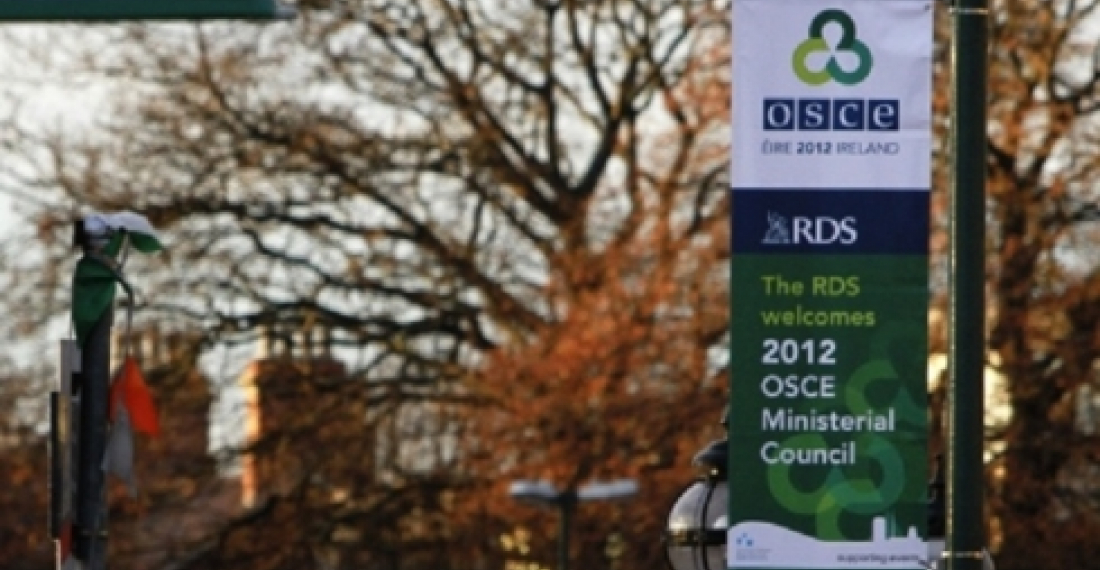
Дипломаты от 57 государств-членов Организации по безопасности и сотрудничеству в Европе соберутся в Дублине на 19-й министериал Организации, который должен начаться в четверг.

Ежегодный министериал является возможностью для государств-членов организации рассмотреть ряд вопросов из регионов ОБСЕ, которые простираются от Ванкувера до Владивостока. В этом году впервые в качестве полноправного члена после того, как в ноябре была принята в качестве члена организации, в министериале примет участие Монголия.

Нагорный Карабах включен в повестку дня встречи, и также ожидается обращение министров иностранных дел стран-членов ОБСЕ к сторонам конфликта к более конструктивному мирному процессу. И Армения, и Азербайджан подтвердили, что их министры иностранных дел примут участие в совещании в Дублине. Однако, пока еще не ясно, проведут ли министры иностранных дел двусторонние встречи во время данного мероприятия. Со стороны стран-сопредседателей Минской группы ОБСЕ существует желание провести такую ​​встречу.

Политический редактор Commonspace.eu сообщает, что "ОБСЕ находится в фазе самоанализа, так как критика об эффективности организации и о том, как она работает только усиливается. С 1994 года после изменении, которые превратили Совещания по безопасности и сотрудничеству в Европе (СБСЕ) в полноценную международную организацию, у нее было несколько крупных успехов. Ее неспособность предотвратить российско-грузинскую войну в 2008 году, учитывая, что она была ведущей международной организацией, работающей по осетинскому вопросу, часто приводится в критику ей. В Дублине участники попытаются направить ОБСЕ на новые перспективы, но разворот этот будет длительный процесс."

Источник: commonspace.eu

Фото: Флаги у места проведения 19-го Министериала ОБСЕ в Дублине (фото любезно предоставлено www.osce.org)

Related articles

Editor's choice
News
Russian attacks against Ukrainian civilians continue

Russian attacks against Ukrainian civilians continue

Rescuers in Ukraine are continuing their search for survivors in the wreckage of a big shopping centre hit by Russia on Friday. Sixteen people were killed and 130 injured when two drones hit the busy centre in Kryvyi Rih in quick succession in what is known as a double-tap strike. Four people are still missing. The search and rescue operation could last for another two days. President Volodymyr Zelensky condemned the "cynical and despicable" attack in which the second drone targeted emergency workers. The sides exchanged more fire overnight, with Ukrainian attacks said to have killed at least four people in Russia, including two children, and three people reported dead by Kyiv as a result of Russian strikes. The death toll from Friday's attack reached 16 after another body was retrieved from the rubble overnight, said Dnipropetrovsk regional head Oleksandr Hanzha. "We're doing everything possible to speed up... the search and rescue operation," he told Ukrainian TV on Saturday morning. (click image tio read more)

Popular

Editor's choice
Interview
Thursday Interview: Murad Muradov

Thursday Interview: Murad Muradov

Today, commonspace.eu starts a new regular weekly series. THURSDAY INTERVIEW, conducted by Lauri Nikulainen, will host  persons who are thinkers, opinion shapers, and implementors in their countries and spheres. We start the series with an interview with Murad Muradov, a leading person in Azerbaijan's think tank community. He is also the first co-chair of the Action Committee for a new Armenian-Azerbaijani Dialogue. Last September he made history by being the first Azerbaijani civil society activist to visit Armenia after the 44 day war, and the start of the peace process. Speaking about this visit Murad Muradov said: "My experience was largely positive. My negative expectations luckily didn’t play out. The discussions were respectful, the panel format bringing together experts from Armenia, Azerbaijan, and Turkey was particularly valuable during the NATO Rose-Roth Seminar in Yerevan, and media coverage, while varied in tone, remained largely constructive. Some media outlets though attempted to represent me as more of a government mouthpiece than an independent expert, which was totally misleading.  Overall, I see these initiatives as important steps in rebuilding trust and normalising professional engagement. The fact that soon a larger Azerbaijani civil society visits to Armenia followed, reinforces the sense that this process is moving in the right direction." (click the image to read the interview in full)



