


Турция оспаривает сопредседателя Минской Группы. Министр иностранных дел призывает к выводу Франции из группы сопредседателей или же сделать Турцию в качестве 4-го сопредседателя.
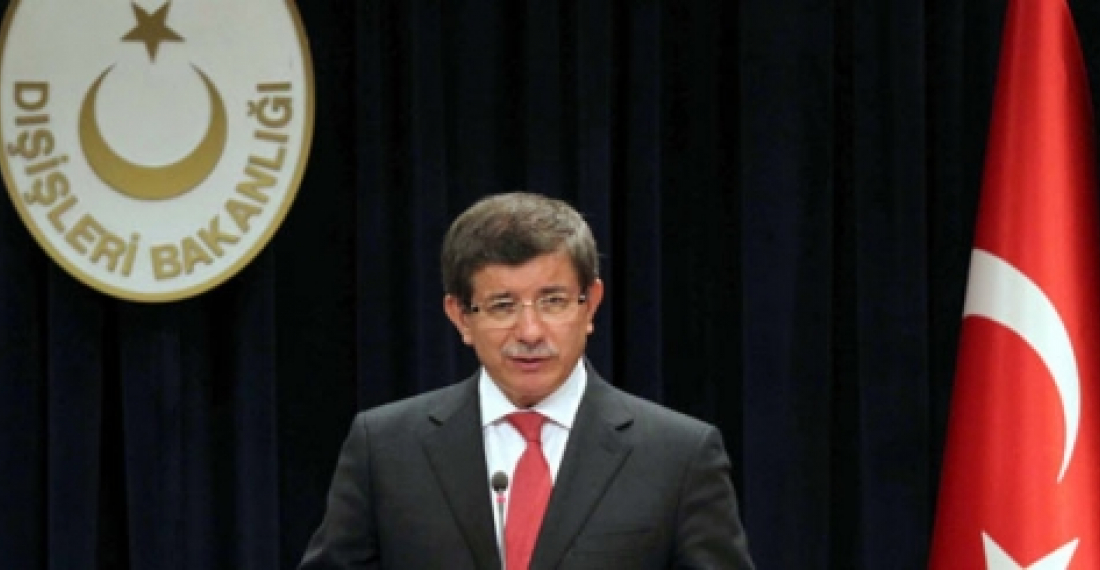

Турция выступает за исключение Франции из Минского процесса ОБСЕ цель которого возглавить усилия международного сообщества по поиску политического решения конфликта в районе Нагорного Карабаха с участием Армении и Азербайджана. Министр иностранных дел Турции Ахмет Давутоглу сказал в интервью "CNN Turk", что Турция будет настаивать на оба варианта, и на исключении Франции из группы сопредседателей и на включении Турции в качестве 4-го сопредседателя. На данный момент группа под совместным председательством Франции, Соединенных Штатов и России, представлена послом Жак Фором (Франция), Игорем Поповым (Россия) и Робертом Брадтке (США).

Другими членами Минской группы являются Беларусь, Германия, Италия, Швеция, Финляндия и Турция, а также Армения и Азербайджан, и, на ротационной основе, тройка ОБСЕ - в настоящее время это Ирландия, Литва и Украина.

Политический редактор Commonspace.eu сказал в своем комментарии, что турецкий запрос приходится на трудный период для Минского процесса ОБСЕ. "В международных кругах существует тревога по поводу того, что этот процесс достигнет каких-либо результатов в процессе урегулирования карабахского конфликта. Вызов сопредседателям процесса внутри группы еще больше подорвёт доверие к нему. Однако изменение формата процесса будет непростым, учитывая, что ОБСЕ работает на принципе консенсуса. Мнения Армении и Азербайджана по этому вопросу будет иметь большое значение, и не удивительно, что их взгляды диаметрально противоположны. Многое будет зависеть от степени поддержки Азербайджаном инициативы Турции".

Источник: commonspace.eu

Фото: Министр иностранных дел Турции Ахмет Давутоглу (фото любезно предоставлено МИД Турции)

Related articles

Editor's choice
News
The British prime minister says Europe must "stand on its own two feet" when it comes to defence

The British prime minister says Europe must "stand on its own two feet" when it comes to defence

The UK will deploy a carrier strike group, led by the aircraft carrier HMS Prince of Wales to the Arctic and the High North as part of efforts to bolster security against Russian threats. British prime minister, Sir Keir Starmer announced the deployment in a speech on Saturday (14 February) at the Munich Security Conference. Europe must be ready to fight to protect its people, values, and way of life,  Sir Keir told the Conference. Starmer also called for deeper links and cooperation, including economic ties, between the UK and EU. The PM stressed the continent must "stand on its own two feet" when it comes to defence commitments. "We must build our hard power, because that is the currency of the age," he told the conference. (Click image to read the full story).

Popular

Editor's choice
Interview
Thursday Interview: Murad Muradov

Thursday Interview: Murad Muradov

Today, commonspace.eu starts a new regular weekly series. THURSDAY INTERVIEW, conducted by Lauri Nikulainen, will host  persons who are thinkers, opinion shapers, and implementors in their countries and spheres. We start the series with an interview with Murad Muradov, a leading person in Azerbaijan's think tank community. He is also the first co-chair of the Action Committee for a new Armenian-Azerbaijani Dialogue. Last September he made history by being the first Azerbaijani civil society activist to visit Armenia after the 44 day war, and the start of the peace process. Speaking about this visit Murad Muradov said: "My experience was largely positive. My negative expectations luckily didn’t play out. The discussions were respectful, the panel format bringing together experts from Armenia, Azerbaijan, and Turkey was particularly valuable during the NATO Rose-Roth Seminar in Yerevan, and media coverage, while varied in tone, remained largely constructive. Some media outlets though attempted to represent me as more of a government mouthpiece than an independent expert, which was totally misleading.  Overall, I see these initiatives as important steps in rebuilding trust and normalising professional engagement. The fact that soon a larger Azerbaijani civil society visits to Armenia followed, reinforces the sense that this process is moving in the right direction." (click the image to read the interview in full)


