Трудные соседи или просто хорошие друзья. Восточные партнеры действовали, как трудные соседи, или они, как хорошие, друзья дали совет?

Когда европейские лидеры встречаются со своими коллегами из соседних восточных стран, они часто говорят, что как хорошие друзья, они чувствуют себя обязанными поднимать сложные вопросы, которые могут не быть по душе их аудитории. На мгновение в Варшаве на прошлой неделе казалось, что стороны поменялись местами. Некоторые восточные партнеры говорили о своих собственных видениях, и страны-члены ЕС были вынуждены с терпением выслушивать их.

Такой темой была Беларусь. ЕС надеялась на единую позицию с восточными соседями в оказании давления на Беларусь по вопросам демократии и прав человека. Беспокойство по Беларуси в ЕС росло в течение некоторого времени. Европейский парламент много раз обсуждал вопрос и был суров в своей критике. Государства-члены также по-разному  выразили обеспокоенность, и в конечном итоге ЕС достигла широкого консенсуса. Была надежда, что с привлечением голосов стран Восточного партнерства, Беларусь почувствует себя более изолированной и предпримет шаги на ожидаемом, длинном пути реформ. Белоруссия участвовала в подготовке Варшавской встречи на высшем уровне. Сначала она заявила, что будет представлена своим министром иностранных дел, но позднее ранг представителя был понижен и им стал их посол в Варшаве. В конце концов она не участвовала вообще. Так появилась возможность у саммита говорить одним голосом.


Резкое заявление по Белоруссии было сделано членами Европейского союза самостоятельно. Они предложили Белоруссии привлекательный пакет из нескольких видов помощи взамен на свободные выборы, освобождение политических заключенных и начала значащего диалога с оппозицией. Заключительная декларация самой встречи на высшем уровне не упоминала Белоруссию вообще.


Таким образом, действительно ли это было случаем трудных, неблагодарных соседей, или восточные партнеры просто действовали как хорошие друзья, и говорили правду, даже если это было трудно?


Главной причиной, странно называемой "некоторой причиной" председателем комиссии Барозо на заключительной пресс-конференции, было беспокойство, выраженное Восточным Партнерством, в котором говорится, что Белоруссия не должна быть изолирована, а наоборот должна быть вовлечена. Это было сказано грузинским президентом Михаилом Саакашвили с его обычным довольством. «Очень важно, чтобы Евросоюз не потерял контроль над этим процессом, чтобы этот процесс не попал в руки второго [имеется ввиду Россия] крупного соседа, который занят этим вопросом», процитировали Саакашвили
грузинские СМИ .

Грузинский президент добавил, «Мы отметили, что плохо, что сегодня не было представителя Беларуси в зале, это было очень плохо и очень важно, чтобы к следующим заседаниям было бы сделано все, в том числе и путем диалога, переговоров, со всеми различными силами. Евросоюз прав, когда говорит с представителями гражданского общества, также должны пройти переговоры с официальным Минском, основанные на принципах для того, чтобы они также заняли место у стола переговоров. Это важно для того, чтобы продолжилось европейское развитие Беларуси и это важно, и мы выразили тут однозначно, для того, чтобы Евросоюз был бы важным игроком в этом процессе.»


Однако, некоторые наблюдатели рассматривают это беспокойство о Белоруссии как лицемерное. Западный дипломат в Варшаве гарантировал, что не было никакой критики Белоруссии в декларации встречи на высшем уровне на сей раз, и лидеров Восточного Партнерства заверили, что в следующий раз не будет никакой критики их собственных стран.


Другие наблюдатели также отметили, что с 2008 Грузия была испугана перспективой, что Белоруссия могла бы признать Абхазию и Южную Осетию и прекратила свою критику Минска по правам человека - проблема, о которой Грузия голосила  после 2003.


Однако, независимо от причин, аргумент необходимости привлечения, а не изолировать является сильным. Эти разногласия выявляют некоторые трудности перед Восточным Партнерством. Политика ЕС "больше за больше" - больше помощи и больше отношений в обмен на больше реформ - не может быть такой простой, как хотелось бы. Помимо Беларуси, еще один вопрос, нависал над саммитом, дальнейшее содержание под стражей в Киеве бывшего премьер-министра Юлии Тимошенко. Никакого упоминания об этом в заключительной декларации не было.


Встреча на высшем уровне наметила пути развития отношений между ЕС и странами-партнерами во многих областях. Эти ощутимые вопросы в случае их осуществления поднимут отношения на более высокий уровень. Но условность - теперь также основная часть подхода ЕС к региону. Твердо настаивая на Белоруссии Европейский союз также сигнализировал другим пяти партнерам, чтобы они к этому теперь относились серьезно.


Источник: Подготовлено редакторской группой commonspace.eu

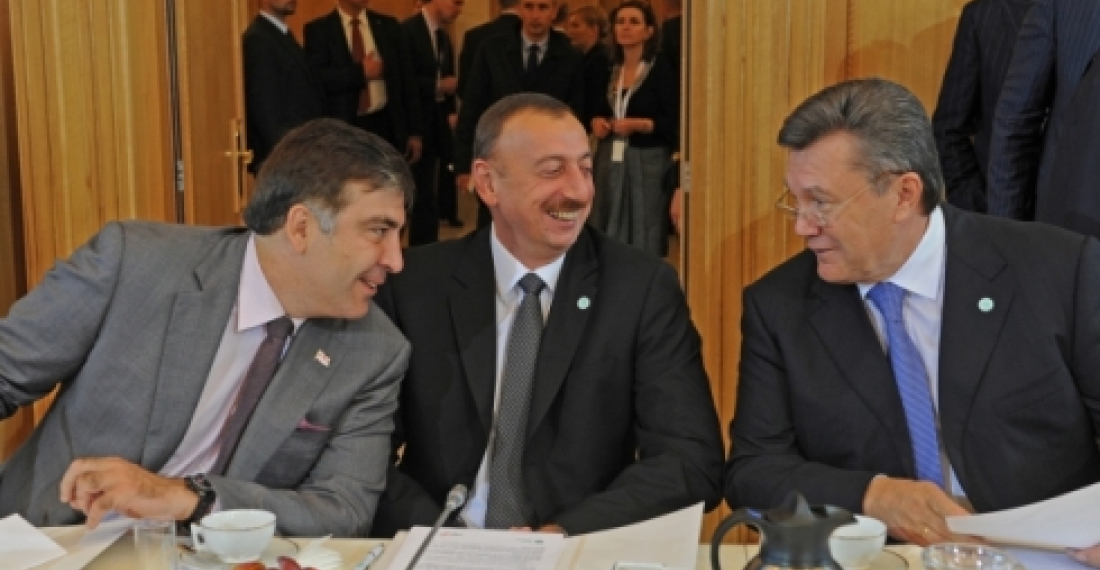
Фото: Президент Грузии, Азербайджана и Украины на саммите стран Восточного Партнерства (фотография предоставлена Правительством Польши)

Related articles

Editor's choice
News
COP 17 in Armenia

COP 17 in Armenia

Armenia is currently hosting the COP17 conference of the Convention on Biological Diversity, which began earlier this week (19 October) and will run until 30 October, bringing around 15,000 participants from 196 different countries to Yerevan. At a leaders' summit held as part of COP17, Prime Minister Nikol Pashinyan expressed realistic ambitions: “We are halfway towards achieving these goals (Kunming-Montreal Global Biodiversity Framework), and we must honestly acknowledge that we are not yet moving in the right direction. Our task now is not to make new promises, but to fulfil the commitments we have already made.” Pashinyan pointed towards Armenia's own records, noting that the whitefish stock in Lake Sevan has increased substantially in the last ten years. Iranian President Masoud Pezeshkian and Georgian Prime Minister Irakli Kobakhidze also addressed the summit, with Turkiye sending its agriculture minister. However, there were no reports of Azerbaijani representatives attending. The conference has given Yerevan a valuable international platform, yet the absence of Azerbaijan is likely to be read as a sign that the peace process in the South Caucasus has not yet been translated into wider regional cooperation. The leaders' summit was opened by Armenian Prime Minister Nikol Pashinyan, who stressed that hosting the conference was a great honour for Armenia. He expressed hope that it would 'be productive and contribute to protecting our planet's biodiversity'. 'We – the citizens of Armenia, the government, state authorities and local governments – owe a debt to our nature,' the prime minister said. He noted that the international community had already developed the concept of 'living in harmony with nature’ and adopted the Kunming-Montreal Global Biodiversity Framework in 2022, setting out goals and specific targets to be achieved by 2030. 'We are halfway towards achieving these goals, and we must honestly acknowledge that we are not yet moving in the right direction. Our task now is not to make new promises, but to fulfil the commitments we have already made,' Nikol Pashinyan said. The COP17 conference is expected to adopt a declaration at leaders' level. More than 30 documents are scheduled for discussion. If approved, the commitments set out in them will become legally binding on countries that are parties to the Convention on Biological Diversity.”
Editor's choice
News
Landmines present to the European Union both a contradiction and a dilemma

Landmines present to the European Union both a contradiction and a dilemma

Finland’s decision to buy one million landmines creates a serious contradiction in the policy of the European Union, and is symbolic of a bigger dilemma facing European countries as they get used to the need to acquire “hard” power to face an increasing threat from Russia. Finland is seeking to acquire one million anti-personnel mines at a cost of 100 million euros. Finland, together with Poland, Latvia, Lithuania and Estonia last year abandoned the Ottawa agreement, the international framework that bans the use of anti-personnel mines, which the EU had been instrumental in establishing and supporting. All five countries cite the threat from Moscow as the reason. Colonel Riku Mikkonen of the Army Command told Finland’s national news agency STT that officials are now gathering information from suppliers regarding the deal, the AFP news agency reports. Helsinki would like domestic manufacturers to supply the mines, with contracts signed by the end of 2027 and production up and running by 2028. “It would be useful in many ways if Finnish companies produced the anti-personnel mines in Finland,” Mikkonen said. About half a dozen Finnish firms qualify, he told STT. “However, at this stage, buying the mines from abroad is not totally ruled out,” he added. LANDMINES PROVIDE THE EU WITH BOTH A CONTRADICTION, AND A DILEMMA Eliminating landmine contamination worldwide is one of the EU’s main soft power postures, and it basks in its record as the biggest funder of anti-landmine action in the world. But the fact that 5 of its 27 member states  have now left the Ottawa Treaty dents the EU moral high ground. It is a contradiction that is too big and important to be ignored. It also presents the European Union with a deeper dilemma. The threat from Russia is changing what the EU has stood for decades, namely a force for good able to mobilise its considerable soft power for the greater good of humanity. How the Union will implement this change will define its future. In the meantime landmines have not become any less lethal, benign, or unimportant. They remain in many parts of the world a major threat to life, an impediment to prosperity, and a potential trigger to further conflict. The 22 EU members states that still adhere to the Ottawa treaty must regroup, and be more assertive in their quest against anti-personnel land mines. All the reasons why they supported the Ottawa treaty in the first place still exist. The message must be clear: NO TO LANDMINES!

Popular

Editor's choice
Interview
Thursday Interview: Murad Muradov

Thursday Interview: Murad Muradov

Today, commonspace.eu starts a new regular weekly series. THURSDAY INTERVIEW, conducted by Lauri Nikulainen, will host  persons who are thinkers, opinion shapers, and implementors in their countries and spheres. We start the series with an interview with Murad Muradov, a leading person in Azerbaijan's think tank community. He is also the first co-chair of the Action Committee for a new Armenian-Azerbaijani Dialogue. Last September he made history by being the first Azerbaijani civil society activist to visit Armenia after the 44 day war, and the start of the peace process. Speaking about this visit Murad Muradov said: "My experience was largely positive. My negative expectations luckily didn’t play out. The discussions were respectful, the panel format bringing together experts from Armenia, Azerbaijan, and Turkey was particularly valuable during the NATO Rose-Roth Seminar in Yerevan, and media coverage, while varied in tone, remained largely constructive. Some media outlets though attempted to represent me as more of a government mouthpiece than an independent expert, which was totally misleading.  Overall, I see these initiatives as important steps in rebuilding trust and normalising professional engagement. The fact that soon a larger Azerbaijani civil society visits to Armenia followed, reinforces the sense that this process is moving in the right direction." (click the image to read the interview in full)