


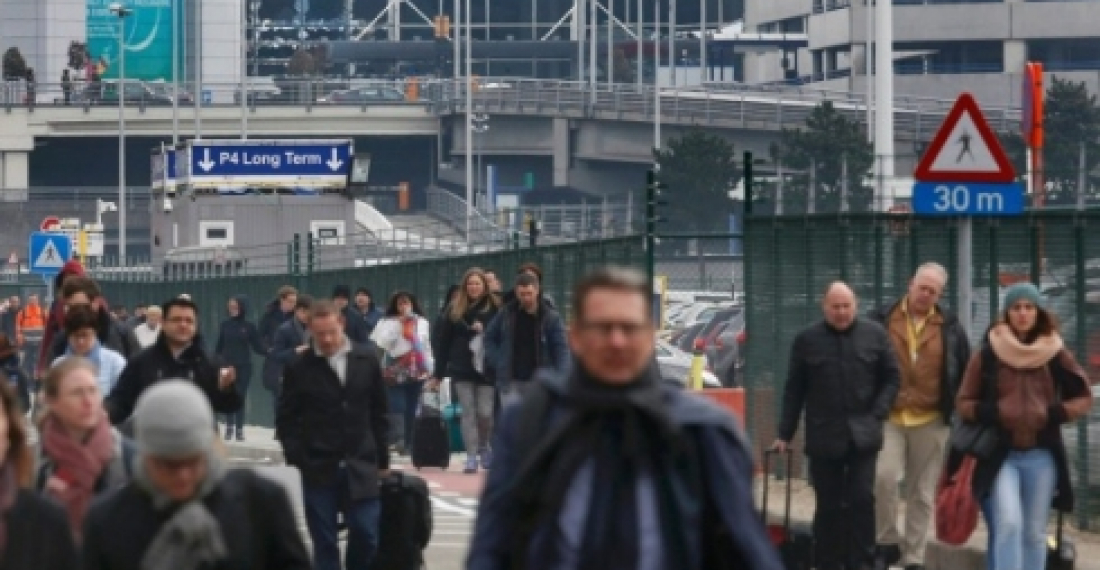
Террористические акты в Брюсселе (обновлено)

В результате взрыва в аэропорту Брюсселя погибли более десяти человек, десятки ранены, сообщили работающие на месте пожарные, которые выполняют в Бельгии функции спасательных служб.

"Два взрыва произошли в зале вылета аэропорта Брюсселя. Есть погибшие. Аэропорт полностью блокирован, прекращено движение самолетов и транспорта в направлении аэропорта. В настоящий момент в воздушную гавань стягиваются силы полиции, движутся пожарные машины и экипажи "скорой помощи", - сообщила газета Laatste Nieuws.

Перед взрывами в аэропорту Брюсселя была слышна стрельба и крики на арабском языке, сообщает агентство Belga. Уровень террористической угрозы в Бельгии поднят до максимального четвертого, передало также бельгийское информационное агентство Belga.

Правительство Бельгии следит за ситуацией в аэропорту Брюсселя, где произошли взрывы, заявил премьер-министр страны Шарль Мишель.

Железнодорожное сообщение с аэропортом прекращено. По данным агентства AFP со ссылкой на европейскую диспетчерскую службу "Евроконтроль", аэропорт будет закрыт до особого распоряжения.


10 человек погибло в результате взрыва в брюссельском метро

По крайней мере 10 человек погибло в результате взрыва бомбы в час пик на станции метро недалеко от зданий ЕС в Брюсселе.

Пассажиры поездов были эвакуированы по туннелям после "сильного взрыва" на станции Maalbeek в самом центре города.

По последним данным из Брюсселя после нескольких взрывов поступают сообщения о десятках погибших и и раненых.


Террористическая группировка "Исламское государство" взяла на себя ответственность за совершенные теракты.

Об этом сообщило информационное агентство, аффилированное с террористической группой.

Агентство AMAQ сообщило:

"Во вторник боевики Исламского государства провели серию взрывов с использованием поясов смертников, целью которых стали аэропорт и центральная станция метро в центре бельгийской столицы Брюссель."



Related articles

Editor's choice
News
The British prime minister says Europe must "stand on its own two feet" when it comes to defence

The British prime minister says Europe must "stand on its own two feet" when it comes to defence

The UK will deploy a carrier strike group, led by the aircraft carrier HMS Prince of Wales to the Arctic and the High North as part of efforts to bolster security against Russian threats. British prime minister, Sir Keir Starmer announced the deployment in a speech on Saturday (14 February) at the Munich Security Conference. Europe must be ready to fight to protect its people, values, and way of life,  Sir Keir told the Conference. Starmer also called for deeper links and cooperation, including economic ties, between the UK and EU. The PM stressed the continent must "stand on its own two feet" when it comes to defence commitments. "We must build our hard power, because that is the currency of the age," he told the conference. (Click image to read the full story).

Popular

Editor's choice
Interview
Thursday Interview: Murad Muradov

Thursday Interview: Murad Muradov

Today, commonspace.eu starts a new regular weekly series. THURSDAY INTERVIEW, conducted by Lauri Nikulainen, will host  persons who are thinkers, opinion shapers, and implementors in their countries and spheres. We start the series with an interview with Murad Muradov, a leading person in Azerbaijan's think tank community. He is also the first co-chair of the Action Committee for a new Armenian-Azerbaijani Dialogue. Last September he made history by being the first Azerbaijani civil society activist to visit Armenia after the 44 day war, and the start of the peace process. Speaking about this visit Murad Muradov said: "My experience was largely positive. My negative expectations luckily didn’t play out. The discussions were respectful, the panel format bringing together experts from Armenia, Azerbaijan, and Turkey was particularly valuable during the NATO Rose-Roth Seminar in Yerevan, and media coverage, while varied in tone, remained largely constructive. Some media outlets though attempted to represent me as more of a government mouthpiece than an independent expert, which was totally misleading.  Overall, I see these initiatives as important steps in rebuilding trust and normalising professional engagement. The fact that soon a larger Azerbaijani civil society visits to Armenia followed, reinforces the sense that this process is moving in the right direction." (click the image to read the interview in full)

