


Танец Турции с соседями. Президент Азербайджана Алиев находится с официальным визитом в Турции, в то же время высокопоставленные турецкие чиновники продолжают сложный танец со своими соседями.

Президент Азербайджана Ильхам Алиев в понедельник с официальным визитом отправился в Анкару, где в ходе своего визита примет участие в заседании Высшей азербайджано-турецкой межправительственной комиссии под председательством руководителей двух стран, комиссия которая курирует отношения между странами.
Встреча состоялась через неделю после встречи высокопоставленных турецких чиновников с другими соседними странами.

Министр иностранных дел Ахмет Давутоглу побывал в Ираке, где встретился с высокопоставленными чиновниками, включая премьер-министра Нури аль-Малики. Давутоглу также совершил поездку в религиозный центр Наджаф, где он встретился со старшим клириком шиитов Ирака, аятоллой Систани. Турецкие СМИ сообщают, что Систани и Давутоглу обсудили вопросы, связанные с водой. "Аль-Систани пожаловался на то, что Турция перекрыла потоки рек в Ирак из-за строительства Турцией плотин на этих реках," - сообщил источник Hurriyet Daily News.

Реки под вопросом, Евфрат и Тигр, оба берут свой исток в Турции и проходят через Сирию и Ирак и впадают в Персидский залив в Басре. Аль-Систани заявил, что Иракцы страдают от нехватки воды и, что вопрос должен быть решен в рамках двусторонних механизмов и, впоследствии, если необходимо, через арбитраж ООН.

Давутоглу объяснил позицию Турции в отношении доступа к воде в соседних странах, но, по словам источника, аль-Систани это не убедило. Давутоглу сказал, что он не будет обсуждать политические вопросы с аль-Систани, но большая часть их разговора, как сообщается, была сосредоточена на политических вопросах. Собеседники также обсудили пути для избежания сектантских столкновении между суннитами и шиитами на Ближнем Востоке.

В то же время премьер-министр Турции Реджеп Тайип Эрдоган собирается встретиться с Масудом Барзани, лидером автономного курдского правительства северного Ирака, в юго-восточном городе Диярбакыр в эту субботу. Источники в канцелярии премьер-министра заявляют, что Эрдоган встретится с лидером Регионального правительства Курдистана (РПК) в субботу в кулуарах его программы визита в юго-восточный турецкий город. Эрдоган, который будет в Диярбакыр в субботу и воскресенье, как ожидается, проведет там митинг.

Есть также сообщения о том, что Турция запросила поддержку у Швейцарии в преодолении конфликта между Арменией и Азербайджаном, и в открытии пути Анкаре для восстановления отношении с Ереваном. Во время визита в Швейцарию в середине октября, министр иностранных дел Турции Ахмет Давутоглу рассказал швейцарским официальным лицам, что Турция готова к нормализации отношений с Арменией, но он дал понять, что Ереван должен сначала освободить оккупированные азербайджанские территорий, сообщает источник Today's Zaman. Министр иностранных дел заявил, что как только Швейцария убедит Армению освободить оккупированные территории, Анкара откроет границу с Арменией.

Швейцария приняла на себя председательство в Организации по безопасности и сотрудничеству в Европе (ОБСЕ) в конце этого года, и активно готовит ряд новых инициатив, направленных на укрепление мира в Кавказском регионе. Швейцарские чиновники побывали в Москве на прошлой неделе для консультации с российскими чиновниками.

По словам политического редактора Commonspace.eu:

"Турция возобновила дипломатическое наступление после событий в Сирии. На мгновение, заявленная Турцией внешняя политика "ноль проблем с соседями", показалась порванной в клочья. Последние события указывают на новый подход, который, скорее всего, включает в себя новое вовлечение с сильными соседями шиитами, Ираном и Ираком. Кавказ является одной из арен турецкой внешней политики среди своих ближайших соседей. Турция добивается прорыва в нынешнем тупике в переговорах по Нагорному Карабаху, в чем она видит предварительные условия для нормализации отношений с Арменией. Согласно одному из источников, Турция уже просила  Армению освободить по крайней мере один из шести районов вокруг Нагорного Карабаха, которые были оккупированы двадцать лет назад. Тот же источник предполагает, что Армения намеревается сделать это, но только частично, а именно освободить район, но не позволить Азербайджану вновь занять его. Неясно, будет ли такой шаг достаточным для Азербайджана или Турции. Этот вопрос, вероятно, будет одним из пунктов в ходе обсуждении между Алиевым и турецким лидером в Анкаре на этой неделе. Алиев также запланировал встречу с главой Армении Сержем Саргсяном в конце этого месяца в Австрии. 

Очевидно, что дипломатия приведена снова в движение и, что Турция продолжает играть важную, если не решающую роль как на Кавказе, так и на всем Ближнем Востоке. Однако, для Турции это сложный танец. Трио Гюль-Эрдоган-Давутоглу, которые танцуют на турецкой стороне иногда не всегда попадают в-шаг. Очевидно, сейчас самое то время, когда они должны работать продуктивнее."

Источник: commonspace.eu по материалам турецких СМИ.  

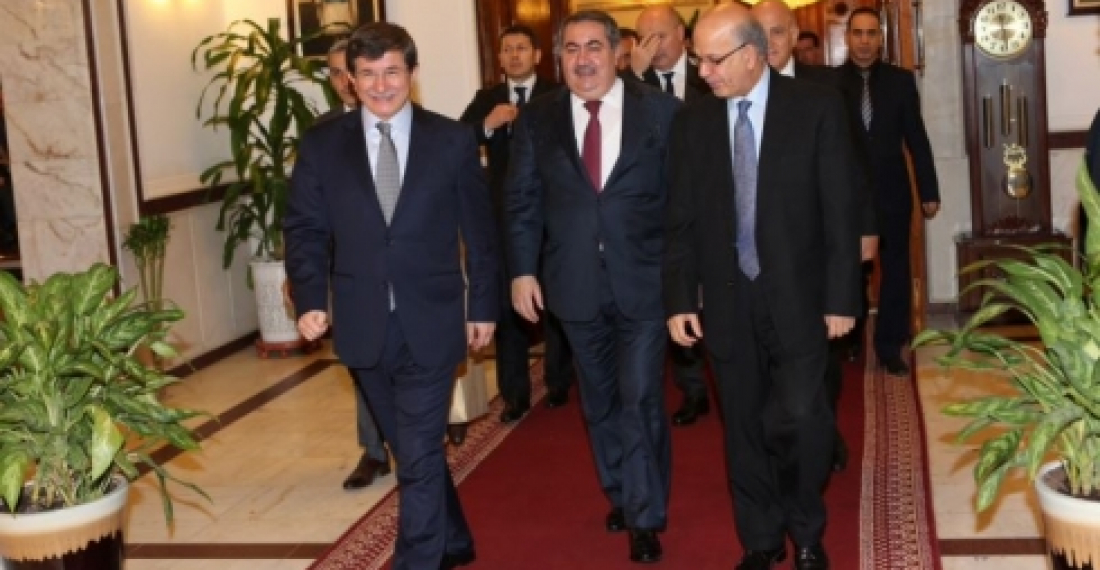
Фото: Министр иностранных дел Турции в Багдаде, 10 ноября 2013 г. (фото любезно предоставлено Министерством иностранных дел Турции).


Related articles

Editor's choice
News
Israeli parliament votes to bring back the death penalty, but only for Palestinians

Israeli parliament votes to bring back the death penalty, but only for Palestinians

srael’s parliament approved a bill on Monday that would allow the execution of Palestinians convicted on terror charges for deadly attacks, a move that has been criticized as discriminatory and immediately drew a court challenge. Sixty-two lawmakers, including Prime Minister Benjamin Netanyahu, voted in favor and 48 against the bill, championed by far-right National Security Minister Itamar Ben Gvir. There was one abstention and the rest of the lawmakers were not present. Ben Gvir in the run-up to the vote had worn a lapel pin in the shape of a noose, symbolising his support for the legislation. “We made history!!! We promised. We delivered,” he posted on X after the vote. The bill would make the death penalty the default punishment for Palestinians in the Israeli-occupied West Bank found guilty of intentionally carrying out deadly attacks deemed “acts of terrorism” by an Israeli military court. The bill says that the sentence may be reduced to life imprisonment under “special circumstances.” Palestinians in the West Bank are automatically tried in Israeli military courts. Meanwhile, under the bill, in Israeli criminal courts anyone “who intentionally causes the death of a person with the aim of harming an Israeli citizen or resident out of an intention to put an end to the existence of the State of Israel shall be sentenced to death or life imprisonment.” Criminal courts try Israeli nationals, including Palestinian citizens and residents of east Jerusalem. The bill sets the execution method as hanging, adding that it should be carried out within 90 days of the sentencing, with a possible postponement of up to 180 days. - ‘Parallel tracks’ - The bill appears to conflict with Israel’s Basic Laws, which prohibit arbitrary discrimination, and shortly after it was passed, a leading human rights group announced that it had filed a petition with the Supreme Court demanding the legislation’s annulment. “The law creates two parallel tracks, both designed to apply to Palestinians,” the Association for Civil Rights in Israel said in a statement. “In military courts — which have jurisdiction over West Bank Palestinians — it establishes a near-mandatory death sentence,” the rights group said. In civilian courts, the law’s stipulation that defendants must have acted “with the aim of negating the existence” of Israel “structurally excludes Jewish perpetrators,” the group added. The association argued the law should be annulled on both jurisdictional and constitutional grounds. During the debate in parliament, opposition lawmaker and former deputy Mossad director, Ram Ben Barak, expressed outrage at the legislation. “Do you understand what it means that there is one law for Arabs in Judea and Samaria, and a different law for the general public for which the State of Israel is responsible?” he asked fellow parliamentarians, using the Israeli name for the West Bank. “It says that Hamas has defeated us. It has defeated us because we have lost all our values.” - ‘Discriminatory application’ - Lawmaker Limor Son Har-Melech from Ben Gvir’s party, who years ago survived an attack by Palestinian militants in which her husband was killed, urged fellow parliamentarians to approve the bill. “For years, we endured a cruel cycle of terror, imprisonment, release in reckless deals, and the return of these human monsters to murder Jews again ... And today, my friends, this cycle has come full circle.” The Palestinian Authority condemned the law’s adoption, saying that “Israel has no sovereignty over Palestinian land.” “This law once again reveals the nature of the Israeli colonial system, which seeks to legitimize extrajudicial killing under legislative cover,” it added. In February, Amnesty International had urged Israeli lawmakers to reject the legislation, citing its “discriminatory application against Palestinians.” On Sunday, Britain, France, Germany and Italy expressed “deep concern” over the bill, which they said risked “undermining Israel’s commitments with regards to democratic principles.” While the death penalty exists for a small number of crimes in Israel, it has become a de facto abolitionist country — the Nazi Holocaust perpetrator Adolf Eichmann was the last person to be executed in 1962. Israel has occupied the West Bank since 1967 and violence there has soared since Hamas’s October 7, 2023 attack on Israel triggered the Gaza war. (read more by clicking the image above).

Popular

Editor's choice
Interview
Thursday Interview: Murad Muradov

Thursday Interview: Murad Muradov

Today, commonspace.eu starts a new regular weekly series. THURSDAY INTERVIEW, conducted by Lauri Nikulainen, will host  persons who are thinkers, opinion shapers, and implementors in their countries and spheres. We start the series with an interview with Murad Muradov, a leading person in Azerbaijan's think tank community. He is also the first co-chair of the Action Committee for a new Armenian-Azerbaijani Dialogue. Last September he made history by being the first Azerbaijani civil society activist to visit Armenia after the 44 day war, and the start of the peace process. Speaking about this visit Murad Muradov said: "My experience was largely positive. My negative expectations luckily didn’t play out. The discussions were respectful, the panel format bringing together experts from Armenia, Azerbaijan, and Turkey was particularly valuable during the NATO Rose-Roth Seminar in Yerevan, and media coverage, while varied in tone, remained largely constructive. Some media outlets though attempted to represent me as more of a government mouthpiece than an independent expert, which was totally misleading.  Overall, I see these initiatives as important steps in rebuilding trust and normalising professional engagement. The fact that soon a larger Azerbaijani civil society visits to Armenia followed, reinforces the sense that this process is moving in the right direction." (click the image to read the interview in full)

