


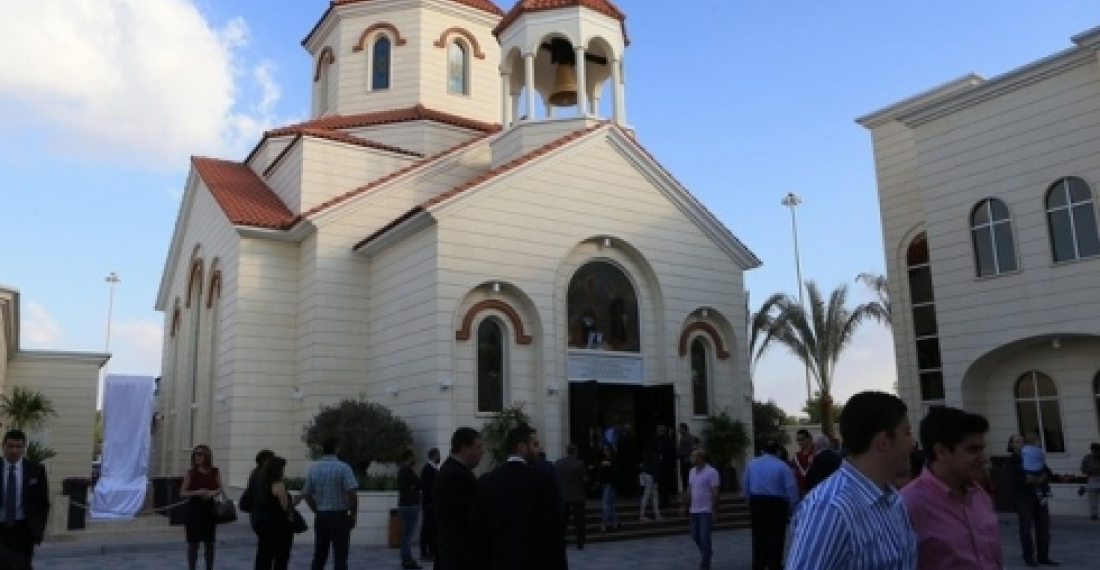
Рождество будет особенным в этом году для армянской общины в Абу-Даби.

В то время как армяне всего мира готовятся праздновать Рождество, в Абу-Даби армянская община также празднует открытие новой церкви.

Долгожданная Армянская церковь в Абу-Даби три недели назад открыла свои двери. Это не первая армянская церковь в Объединенных Арабских Эмиратах (ОАЭ). Процветающая Церковь и армянский культурный центр существуют в Шардже на протяжении многих лет. Шарджа была первым эмиратом, где возникла армянская община в далеком 1968 году. Но это первый армянский храм в столице Объединенных Арабских Эмиратов.

Газета ОАЭ, The National сообщил в воскресенье, что около 1000 армян, проживающих в Абу-Даби очень рады тому, что теперь у них есть их собственная церковь, которая соответствует их традициям и архитектурному стилю.

Здание площадью 2,475 квадратных метров имеет три основные структуры размещенные в U-образной форме. Главное здание церкови стоит справа, а рядом с ним в центре стоит архиепископство. Слева находится здание, частично построенное из

стекла и украшенное армянским алфавитом. Впереди воздвигается статуя Месропа Маштоца, Богослова и лингвиста, который основал армянский алфавит. Газета сообщает, что, когда первые армяне прибыли в столицу в 1976 году, они создали армянскую воскресную школу, чтобы научить молодых людей их родному языку и сохранить общину в единстве.

Раффи Симонян, секретарь совета армянской общины Абу-Даби рассказал The National, что в 1980 году, Армянские смотрители в Ливане создали Совет "и с тех пор до 2005 года, мы пытались выпросить кусок земли у правительства [чтобы построить церковь], но у нас были проблемы. Для церковных мероприятии мы использовали греческую православную церквь через неделю, а греческая православная церковь пользовалась армянской церковью в Шардже. Священники проводили массовые службы через неделю в Шардже и в Абу-Даби. В 2005, шейх Мохаммед бин Зайед, наследный принц Абу-Даби издал специальный указ о пожертвовании  землИ для строительства армянской церкви. "Тогда мы начали собирать пожертвования с армянской общины в ОАЭ и Кувейте. Строительство началось в 2012 году"

В церкви каждую пятницу проходят служения, вместе со всеми святыми праздниками и национальными праздниками. Ожидается, что в самое ближайшее время там обоснуются священники и церковь будет открыта на ежедневной основе.

Анита Шахмирзаян говорит, что она ждет не дождется, когда это произойдет. "Если я чувствую себя нехорошо или у меня есть определенные проблемы, я могу просто пойти и помолиться, мне не нужны ждать службы."

Комплекс слева, где расположен банкетный зал, будет базой для воскресной школы. "Теперь у нас есть наша собственная  церковь, и есть банкетный зал, где мы сможем отметить любой праздник или похороны или любой другой случай, и мы сможем сделать это здесь - не нужно арендовать для этого специально место", говорит г-жа Шахмирзаян. После того, как Арпи Эскениян вошла в ворота церкви она говорит, что чувствует, буд-то возвращается к своей родине. "Когда я вхожу, я чувствую, что я за пределами Абу-Даби, и что я существую в моей собственной ступице," говорит она. "Потому что церковь выполнена в нашем архитектурном стиле." Г-жа Эскениян, 49, планирует принять участие в службе с мужем и 20-летним сыном.

источник: commonspace.eu по материалам the National.

фото: Церковь святых мучеников, недавно открывшаяся в столице ОАЭ, Абу-Даби. (фото любезно предоставлена The National)

Related articles

Editor's choice
News
COP 17 in Armenia

COP 17 in Armenia

Armenia is currently hosting the COP17 conference of the Convention on Biological Diversity, which began earlier this week (19 October) and will run until 30 October, bringing around 15,000 participants from 196 different countries to Yerevan. At a leaders' summit held as part of COP17, Prime Minister Nikol Pashinyan expressed realistic ambitions: “We are halfway towards achieving these goals (Kunming-Montreal Global Biodiversity Framework), and we must honestly acknowledge that we are not yet moving in the right direction. Our task now is not to make new promises, but to fulfil the commitments we have already made.” Pashinyan pointed towards Armenia's own records, noting that the whitefish stock in Lake Sevan has increased substantially in the last ten years. Iranian President Masoud Pezeshkian and Georgian Prime Minister Irakli Kobakhidze also addressed the summit, with Turkiye sending its agriculture minister. However, there were no reports of Azerbaijani representatives attending. The conference has given Yerevan a valuable international platform, yet the absence of Azerbaijan is likely to be read as a sign that the peace process in the South Caucasus has not yet been translated into wider regional cooperation. The leaders' summit was opened by Armenian Prime Minister Nikol Pashinyan, who stressed that hosting the conference was a great honour for Armenia. He expressed hope that it would 'be productive and contribute to protecting our planet's biodiversity'. 'We – the citizens of Armenia, the government, state authorities and local governments – owe a debt to our nature,' the prime minister said. He noted that the international community had already developed the concept of 'living in harmony with nature’ and adopted the Kunming-Montreal Global Biodiversity Framework in 2022, setting out goals and specific targets to be achieved by 2030. 'We are halfway towards achieving these goals, and we must honestly acknowledge that we are not yet moving in the right direction. Our task now is not to make new promises, but to fulfil the commitments we have already made,' Nikol Pashinyan said. The COP17 conference is expected to adopt a declaration at leaders' level. More than 30 documents are scheduled for discussion. If approved, the commitments set out in them will become legally binding on countries that are parties to the Convention on Biological Diversity.”
Editor's choice
News
Landmines present to the European Union both a contradiction and a dilemma

Landmines present to the European Union both a contradiction and a dilemma

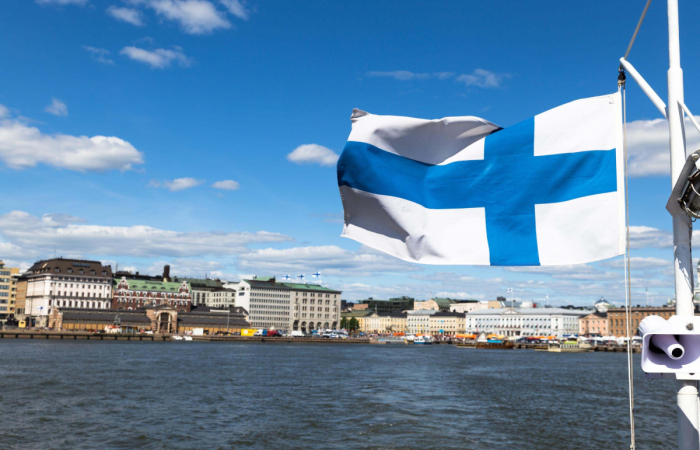
Finland’s decision to buy one million landmines creates a serious contradiction in the policy of the European Union, and is symbolic of a bigger dilemma facing European countries as they get used to the need to acquire “hard” power to face an increasing threat from Russia. Finland is seeking to acquire one million anti-personnel mines at a cost of 100 million euros. Finland, together with Poland, Latvia, Lithuania and Estonia last year abandoned the Ottawa agreement, the international framework that bans the use of anti-personnel mines, which the EU had been instrumental in establishing and supporting. All five countries cite the threat from Moscow as the reason. Colonel Riku Mikkonen of the Army Command told Finland’s national news agency STT that officials are now gathering information from suppliers regarding the deal, the AFP news agency reports. Helsinki would like domestic manufacturers to supply the mines, with contracts signed by the end of 2027 and production up and running by 2028. “It would be useful in many ways if Finnish companies produced the anti-personnel mines in Finland,” Mikkonen said. About half a dozen Finnish firms qualify, he told STT. “However, at this stage, buying the mines from abroad is not totally ruled out,” he added. LANDMINES PROVIDE THE EU WITH BOTH A CONTRADICTION, AND A DILEMMA Eliminating landmine contamination worldwide is one of the EU’s main soft power postures, and it basks in its record as the biggest funder of anti-landmine action in the world. But the fact that 5 of its 27 member states  have now left the Ottawa Treaty dents the EU moral high ground. It is a contradiction that is too big and important to be ignored. It also presents the European Union with a deeper dilemma. The threat from Russia is changing what the EU has stood for decades, namely a force for good able to mobilise its considerable soft power for the greater good of humanity. How the Union will implement this change will define its future. In the meantime landmines have not become any less lethal, benign, or unimportant. They remain in many parts of the world a major threat to life, an impediment to prosperity, and a potential trigger to further conflict. The 22 EU members states that still adhere to the Ottawa treaty must regroup, and be more assertive in their quest against anti-personnel land mines. All the reasons why they supported the Ottawa treaty in the first place still exist. The message must be clear: NO TO LANDMINES!

Popular

Editor's choice
Interview
Thursday Interview: Murad Muradov

Thursday Interview: Murad Muradov

Today, commonspace.eu starts a new regular weekly series. THURSDAY INTERVIEW, conducted by Lauri Nikulainen, will host  persons who are thinkers, opinion shapers, and implementors in their countries and spheres. We start the series with an interview with Murad Muradov, a leading person in Azerbaijan's think tank community. He is also the first co-chair of the Action Committee for a new Armenian-Azerbaijani Dialogue. Last September he made history by being the first Azerbaijani civil society activist to visit Armenia after the 44 day war, and the start of the peace process. Speaking about this visit Murad Muradov said: "My experience was largely positive. My negative expectations luckily didn’t play out. The discussions were respectful, the panel format bringing together experts from Armenia, Azerbaijan, and Turkey was particularly valuable during the NATO Rose-Roth Seminar in Yerevan, and media coverage, while varied in tone, remained largely constructive. Some media outlets though attempted to represent me as more of a government mouthpiece than an independent expert, which was totally misleading.  Overall, I see these initiatives as important steps in rebuilding trust and normalising professional engagement. The fact that soon a larger Azerbaijani civil society visits to Armenia followed, reinforces the sense that this process is moving in the right direction." (click the image to read the interview in full)

