Россия и ЕС сосредоточились в Брюсселе на ключевых вопросах
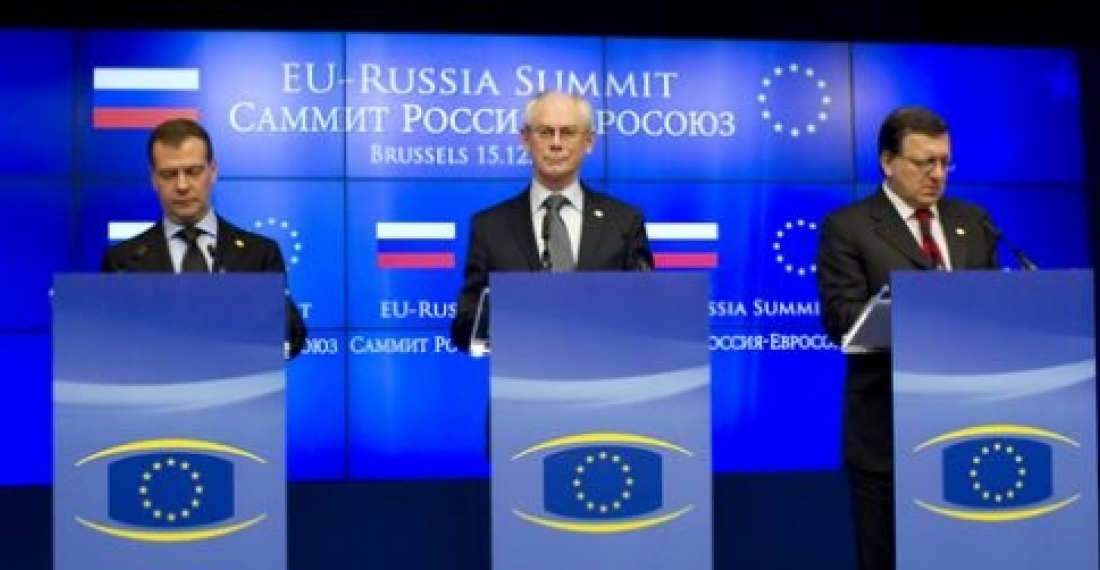
Европейский Союз и Россия провели саммит в Брюсселе 14 и 15 декабря. Россия была представлена в лице президента Дмитрия Медведева, в то время, как ЕС представляли Херман Ван Ромпей, президент Европейского Совета, и Жозе Мануэль Баррозу, президент Европейской комиссии, Кэтрин Эштон, Верховный представитель ЕС по внешней политике и безопасности.

Экономические связи между Россией и ЕС существенно выросли за последние годы. Россия остается третьим по значимости для ЕС торговым партнером (после США и Китая), с 87 млрд. евро экспорта в Россию (6,4% всего экспорта Евросоюза, 4-е место после США, Китай, Великобритания) и 158 млрд. евро импорта в 2010 году (10,5% всего импорта ЕС, 3-е место после Китая и США, главным образом природные ресурсы). ЕС, таким образом, является на сегодняшний день самым большим рынком для российских товаров.

В 2010 году экcпорт и импорт вырос примерно на 32% по сравнению с 2009 г., после глобального экономического кризиса. Положительное сальдо России выросло на 47% по сравнению с 2009 г. и составило $ 79 млрд. в 2010 году.

В частности, Россия является самым важным поставщиком для ЕС энергетических ресурсов, на которые приходится более 23% от потребления в ЕС газа и 30% от общего потребления нефти. В свою очередь, экономика России по-прежнему сильно зависит от экспорта сырьевых ресурсов в ЕС, как наиболее важное направление. В 2010 году 63% экспорта России состояла из сырой нефти, нефтепродуктов и природного газа. На долю ЕС приходится 88% от общего объема экспорта российской нефти, 70% от экспорта газа и 50% от экспорта угля.

Политический редактор Commonspace.eu говорит, что, несмотря на то, что в настоящее время между Россией и Европейским Союзом есть много нерешенных вопросов, несмотря на серьезную обеспокоенность ЕС по поводу недавних выборов в российскую Государственную Думу, обе стороны понимают, что они должны двигаться вперед, развивая отношения между ними, и саммит был использован, чтобы сосредоточить внимание на материальных и многих ключевых вопросах сотрудничества таких как энергетика и мобильность граждан.

Источник: commonspace.eu по материалам Пресс-службы Европейского Союза

Фото: любезно предоставлено Европейским Союзом

Related articles

Editor's choice
News
Aden under curfew, as problem in Yemen's south deepens

Aden under curfew, as problem in Yemen's south deepens

The port city of Aden, in Yemen's south, has been put under curfew, as the rift in the country between  the Saudi led coalition which  backs Yemen's presidential governing council, and the southern forces led by the Southern Transitional Council (STC), deepens. Abdul Rahman al-Mahrami, a member of the Yemeni Presidential Governing Council and commander of the al-Amalik brigades, has ordered a curfew in the temporary capital, Aden, "to maintain security". "A curfew has been imposed throughout Aden Governorate from 9:00 p.m. to 6:00 a.m., in accordance with the instructions of Commander Abdul Rahman al-Mahrami, a member of the Presidential Management Council," the statement said. It states that only security and military personnel, as well as medical and technical teams with approved permits, will be allowed to move in the area during these hours. Yemen's presidential council, which is backed by Saudi Arabia and which already is in a struggle with the Houthi Movement in the north of the country who also occupy the capital Sanaa, two days ago issued an order for the arrest of the head of the Southern Transitional Council (STC),, Aidarous al Zubaidi. The STC have wide support among people in the South, and advocate that South Yemen restores its independence. The coalition warned of further escalation in Aden, long regarded as an STC stronghold, as the Presidential Leadership Council (PLC) chief accused STC leader Aidarous Al Zubaidi of “high treason” and announced the revocation of his membership in the governing body. The moves mark a sharp escalation in tensions within the anti-Houthi camp, despite National Shield Forces, rivals of the STC and former allies, having recently retaken control of Hadhramaut and Mahra from southern fighters. The STC’s takeover of the two regions last month angered Saudi Arabia and contributed to igniting the current internal conflict. (click the picture to read more)

Popular

Editor's choice
Analysis
Analysis: Why what happens in Greenland matters

Analysis: Why what happens in Greenland matters

The snap elections for the parliament of Greenland last Tuesday (6 April 2021) attracted unusual interest from major powers who have been watching the political and economic impact of the election results on their interests in the Arctic region. Among them, the Chinese, who have invested in the Kvanefjeld mine on the island. Maximiliaan van Lange analyses the background to the recent Greenlandic general elections, and the Island's geostrategic position in the Arctic in this article for commonspace.eu.