


ОБСЕ объявило о дорожной карте на будущее. Исходящий ирландский председатель и секретариат сделали это заявление на совместной пресс-конференции в первый день 19-го Совещания министров иностранных дел ОБСЕ в Дублине.
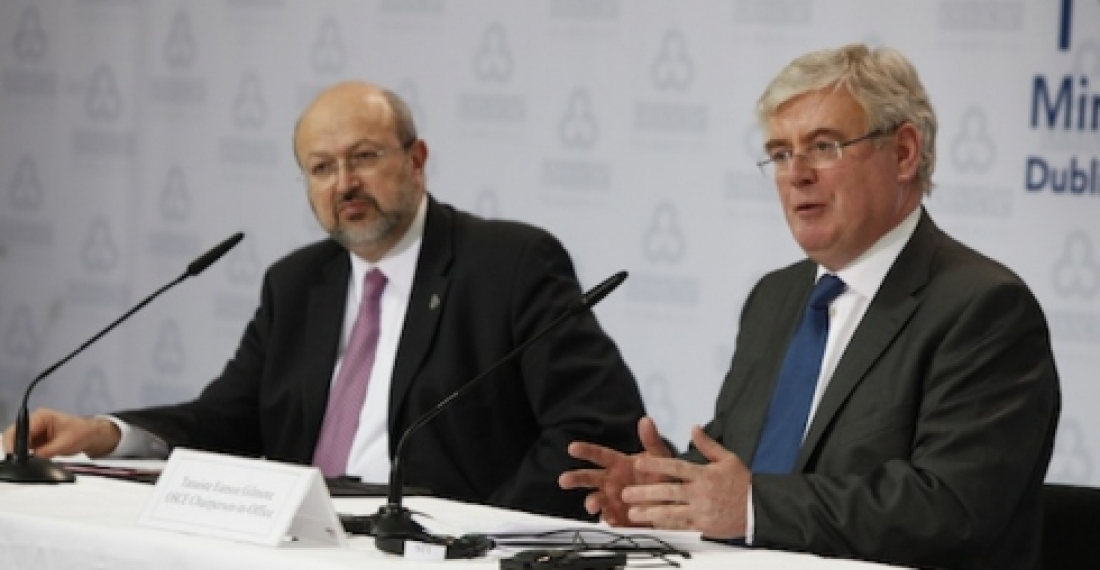

Действующий председатель ОБСЕ, вице-премьер, министр иностранных дел и торговли Ирландии, Имон Гилмор, объявил в четверг, в первый день заседания Совета министров ОБСЕ в Дублине, о достигнутой договоренности министров иностранных дел 57 государств-участников о дорожной карте будущего организации.

"Мы достигли политической договоренности для начала процесса "Хельсинки +40". Это процесс призван укрепить и оживить ОБСЕ в период до 2015 года, в год 40-летия Хельсинкского Заключительного акта", - сказал он. Хельсинкский Заключительный акт от 1975 является основывающим документом организации и одним из ключевых соглашений, который помог закончить холодную войну.

Процесс "Хельсинки +40" следует за Астанинской памятной декларацией, согласованной главами государств ОБСЕ в 2010 году, в котором они подтвердили "видение свободного, демократического, единого и неделимого сообщества Евроатлантической и Евразийской безопасности, простирающегося от Ванкувера до Владивостока, основанного на согласованных принципах, общих обязательствах и общих целях.".

Генеральный секретарь ОБСЕ, Ламберто Заньер, приветствовал соглашение, заявив, что оно обеспечит "твердую почву" для определения видения Организации для следующего этапа и позволит ОБСЕ решать новые проблемы в сфере безопасности.

Процесс "Хельсинки +40" также опирается на соглашение, заключенное в прошлом году, по председательству в ОБСЕ до 2015 года, с Ирландией, и последующими странами-председателями Украиной, Швейцарией и Сербией. Три последующих председателя будут проводить скоординированный процесс обсуждения и стратегический подход к ОБСЕ. Будут открытые обсуждения с участием государств постоянных представителей при ОБСЕ в Вене.

Источник: www.osce.org

Related articles

Editor's choice
News
Thousands join Pope on his last day in Cameroon, his second stop on his African tour

Thousands join Pope on his last day in Cameroon, his second stop on his African tour

More than 120,000 people joined Pope Leo XIV in Cameroon for an open-air Mass on Friday (17 April), the biggest crowd so far during his 11-day Africa tour. Arriving in the economic city of Douala on Friday, the Pope reiterated his message of peace after visiting the country's Anglophone region hit by a decade-long rebellion the day before. He later warned of the dangers of artificial intelligence (AI), which he said was leading to the spread of "polarisation, conflict, fear and violence". Jubliant crowds welcomed the Pope as he arrived at the Japoma Stadium. Standing in his vehicle - known as the Popemobile - the pontiff waved at the droves of people waiting for his entrance. Some worshippers camped outside the premises on Thursday night in a bid to get a prime spot for the pontiff's address, with some having been there for more than 24 hours By Friday, tens of thousands of people of all ages, including several from the priesthood, braved the heat to participate in the occasion. “Do not give in to distrust and discouragement,” he said. “Reject every form of abuse or violence, which deceives by promising easy gains but hardens the heart and makes it insensitive. Do not forget that your people are even richer than this land, for your treasure lies in your values: faith, family, hospitality, and work.” Pope Leo invited African youth to follow the vocation that God sets out for them, so that they may be protagonists of their own future. “Do not let yourselves be corrupted by temptations that waste your energies and do not serve the progress of society,” he said.

Popular

Editor's choice
Interview
Thursday Interview: Murad Muradov

Thursday Interview: Murad Muradov

Today, commonspace.eu starts a new regular weekly series. THURSDAY INTERVIEW, conducted by Lauri Nikulainen, will host  persons who are thinkers, opinion shapers, and implementors in their countries and spheres. We start the series with an interview with Murad Muradov, a leading person in Azerbaijan's think tank community. He is also the first co-chair of the Action Committee for a new Armenian-Azerbaijani Dialogue. Last September he made history by being the first Azerbaijani civil society activist to visit Armenia after the 44 day war, and the start of the peace process. Speaking about this visit Murad Muradov said: "My experience was largely positive. My negative expectations luckily didn’t play out. The discussions were respectful, the panel format bringing together experts from Armenia, Azerbaijan, and Turkey was particularly valuable during the NATO Rose-Roth Seminar in Yerevan, and media coverage, while varied in tone, remained largely constructive. Some media outlets though attempted to represent me as more of a government mouthpiece than an independent expert, which was totally misleading.  Overall, I see these initiatives as important steps in rebuilding trust and normalising professional engagement. The fact that soon a larger Azerbaijani civil society visits to Armenia followed, reinforces the sense that this process is moving in the right direction." (click the image to read the interview in full)


