На встрече в Москве министров иностранных дел СНГ Беларусь после отказа Украины взяла на себя председательство в организации в 2014 году.
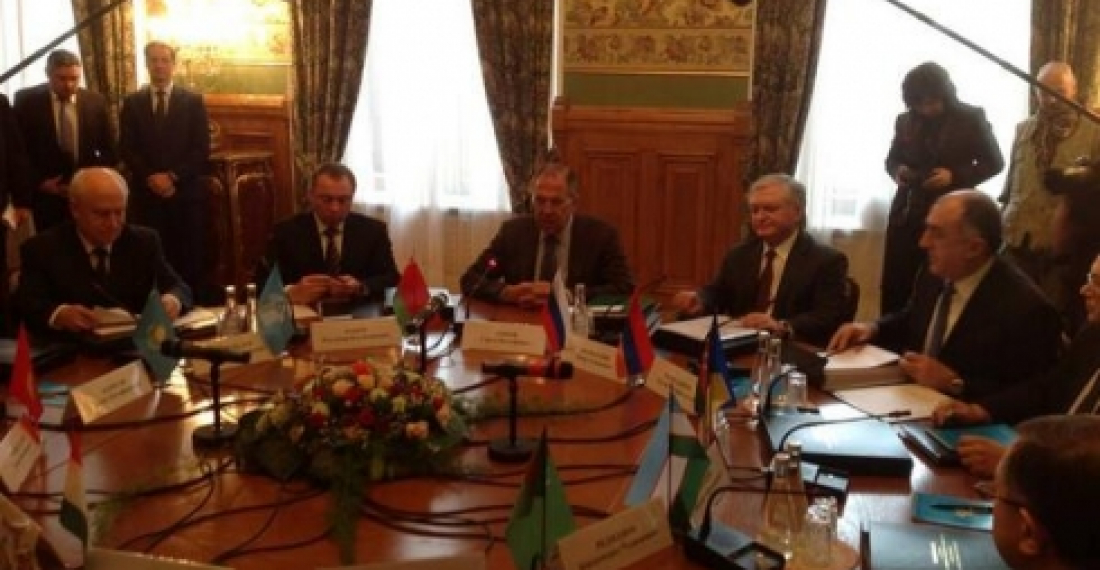

В пятницу в Москве состоялась встреча Министров иностранных дел Содружества Независимых Государств - их первая встреча после кризиса в Украине. В ходе встречи было принято решение, что Беларусь примет на себя председательство в Организации на оставшийся срок в 2014 году после отказа Украины от председательства в результате аннексии Крыма к России. Была также достигнута договоренность, что встреча глав правительств стран СНГ состоится в Минске 30 мая, и саммита глав государств через некоторое время ближе к осени.

По сообщениям СМИ, в ходе встречи обсуждалась ситуация в Украине, но не было принято ни одного заявления по ситуации. Украина была представлена ​​на встрече на уровне дипломатов ее посольства в Москве. Как сообщает информационное агентство БЕЛТА, министр иностранных дел Беларуси Владимир Макей заявил журналистам, что заседание было посвящено вопросам внешнего политического сотрудничества в рамках СНГ, а также документe, предусматривающему консультации по вопросам сотрудничества на различных международных площадках по широкому кругу вопросов, стоящих в текущей повестке дня.

По словам Владимира Макея, министры утвердили проект решения глав государств об объявлении 2016 года Годом образования в СНГ, а также программу по поддержке и развитию национальных видов спорта в странах СНГ.

Совет министров иностранных дел СНГ также принял решение, касающееся сотрудничества и ликвидации последствий стихийных и техногенных чрезвычайных ситуаций, содействие СНГ Таджикистану в укреплении безопасности границ на таджикско-афганской границе.

источник: commonspace.eu

фото: встреча министров иностранных дел стран СНГ в Москве 4 апреля 2014 г. (фото любезно предоставлено МИД России).

Related articles

Editor's choice
News
The British prime minister says Europe must "stand on its own two feet" when it comes to defence

The British prime minister says Europe must "stand on its own two feet" when it comes to defence

The UK will deploy a carrier strike group, led by the aircraft carrier HMS Prince of Wales to the Arctic and the High North as part of efforts to bolster security against Russian threats. British prime minister, Sir Keir Starmer announced the deployment in a speech on Saturday (14 February) at the Munich Security Conference. Europe must be ready to fight to protect its people, values, and way of life,  Sir Keir told the Conference. Starmer also called for deeper links and cooperation, including economic ties, between the UK and EU. The PM stressed the continent must "stand on its own two feet" when it comes to defence commitments. "We must build our hard power, because that is the currency of the age," he told the conference. (Click image to read the full story).

Popular

Editor's choice
Interview
Thursday Interview: Murad Muradov

Thursday Interview: Murad Muradov

Today, commonspace.eu starts a new regular weekly series. THURSDAY INTERVIEW, conducted by Lauri Nikulainen, will host  persons who are thinkers, opinion shapers, and implementors in their countries and spheres. We start the series with an interview with Murad Muradov, a leading person in Azerbaijan's think tank community. He is also the first co-chair of the Action Committee for a new Armenian-Azerbaijani Dialogue. Last September he made history by being the first Azerbaijani civil society activist to visit Armenia after the 44 day war, and the start of the peace process. Speaking about this visit Murad Muradov said: "My experience was largely positive. My negative expectations luckily didn’t play out. The discussions were respectful, the panel format bringing together experts from Armenia, Azerbaijan, and Turkey was particularly valuable during the NATO Rose-Roth Seminar in Yerevan, and media coverage, while varied in tone, remained largely constructive. Some media outlets though attempted to represent me as more of a government mouthpiece than an independent expert, which was totally misleading.  Overall, I see these initiatives as important steps in rebuilding trust and normalising professional engagement. The fact that soon a larger Azerbaijani civil society visits to Armenia followed, reinforces the sense that this process is moving in the right direction." (click the image to read the interview in full)