


Хорошая работа Швейцария! Швейцарское председательство в ОБСЕ в 2014 году было отмечено беспрецедентным вызовом европейской безопасности/

Этот комментарий был подготовлен редакционной командой commonspace.eu

4 и 5 декабря в Базеле состоялся Совет министров Организации по безопасности и сотрудничеству в Европе (ОБСЕ), что совпало с окончанием годового председательства Швейцарии в организации.

Пятьдесят семь государств-членов организации, представляющие страны Европы, Северной Америки и Евразии были единодушны в своих похвалах деятельности Швейцарии для ОБСЕ в прошлом году, который, вероятно, был самым трудным годом для организации с момента ее создания. Год был омрачен кризисом в Украине и разрушением европейского порядка в области безопасности действиями российской стороны, которая оккупировала и аннексировала Крым. Министр иностранных дел Швейцарии Буркхальтер  назвал прошедший год "особенным", что, возможно, является сдержанным высказыванием. Генеральный секретарь Ламберто Дзанньер более реалистично описал в своей итоговой пресс-конференции в Базеле назвав минувший год одним из наиболее сложных в истории организации. Действительно, последние месяцы вполне могли прекратить существование ОБСЕ, но председательствующей Швейцарии удалось решить проблемы таким образом, что ОБСЕ удалось стать сильнее в результате  кризиса.

Результаты встречи министров в Базеле были скромными, и при таких обстоятельствах, это было ожидаемо. По окончанию совещания не было всеобъемлющей итоговой декларации, а в несколько итоговых документах, которые были приняты, не было ничего особенного. Но, как сказал министр иностранных дел Буркхальтер, было необходимо, чтобы все стороны участвовали в диалоге, для выявления областей, где может быть продолжено сотрудничество. Эта цель была достигнута. Однако, это, конечно, только кратковременный успех. Основные проблемы остаются.

В следующем году ОБСЕ отмечает 40-ю годовщину Хельсинкского Заключительного акта. Стратегия "Хельсинки+40" находится в стадии обсуждения, и различия в ее видении между различными сторонами, в частности, между Россией и Западом, по-прежнему огромны. Понятно, что ОБСЕ знает, точку отправления, но еще пока далеко не ясно, куда все это двигается вместе с будущим европейской безопасности. Поэтому организации стоит в течение следующих двух или трех лет активнее работать в этом направлении.

Сербия берет на себя председательство в ОБСЕ в 2015 году, за ней следуют Германия и Австрия в 2016 году и 2017 соответственно. Благодаря председательству Швейцарии будущее ОБСЕ обеспечено по крайней мере в краткосрочной перспективе. Входящим председателям теперь нужно двигать процесс вперед.

Однако, на данный момент дипломаты могут позволить себе момент самодовольства, и подлинно похвалить "за хорошую работу  Швейцарию"!

Источник: Этот комментарий был подготовлен редакционной командой commonspace.eu

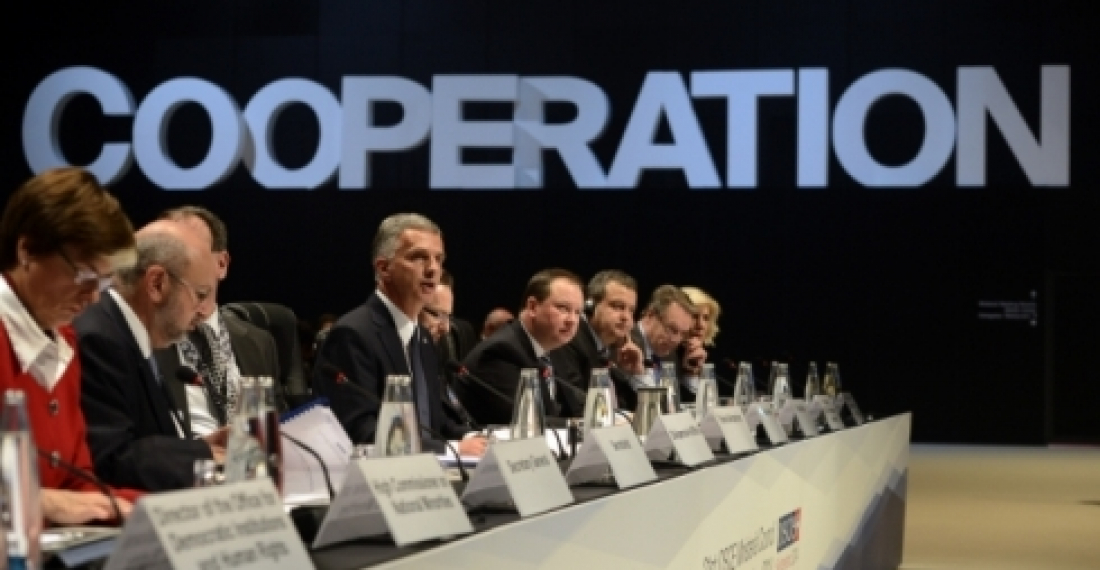
фото: Министр иностранных дел Швейцарии Буркхальтер, выступая на открытии заседания Совета министров иностранных дел ОБСЕ в Базеле, 4 декабря 2014 года (фото любезно ОБСЕ).
Related articles

Editor's choice
News
Key European countries back Denmark in the face of Trump's continuing insistence on taking over Greenland

Key European countries back Denmark in the face of Trump's continuing insistence on taking over Greenland

 Six major European countries have declared their support to Denmark following renewed insistence by the US that it must have control over Greenland. "Greenland belongs to its people, and only Denmark and Greenland can decide on matters concerning their relations," said the leaders of the UK, France, Germany, Italy, Poland, and Spain, in a joint statement, issued on Tuesday (6 January), together with Denmark. On Sunday, Donald Trump said the US "needed" Greenland - a semi-autonomous region of fellow Nato member Denmark - for security reasons. He has refused to rule out the use of force to take control of the territory, and Danish Prime Minister Mette Frederiksen warned on Monday that an attack by the US would spell the end of Nato. The issue of Greenland's future resurfaced in the wake of the US military intervention in Venezuela, during which elite troops went in to seize the country's President Nicolás Maduro and take him to face drugs and weapons charges in New York. Following the raid, Trump said the US would "run" Venezuela for an unspecified period of time. He also said the US was returning to an 1823 policy of US supremacy in its sphere of influence in the Western hemisphere - and he warned a number of countries the US could turn its attention to them. The US military raid in Venezuela has reignited fears that the US may consider using force to secure control of Greenland. A day after the raid, Katie Miller - the wife of one of Trump's senior aides - posted on social media a map of Greenland in the colours of the American flag, alongside the word "SOON". On Monday, her husband Stephen Miller said it was "the formal position of the US government that Greenland should be part of the US". In an interview with CNN, he also said the US "is the power of Nato. For the US to secure the Arctic region, to protect and defend Nato and Nato interests, obviously Greenland should be part of the US." Asked repeatedly whether the US would rule out using force to annex it, Miller responded: "Nobody's going to fight the US over the future of Greenland." Stressing they were as keen as the US in Arctic security, the seven European signatories of Tuesday's joint statement said this must be achieved by Nato allies, including the US "collectively" - whilst "upholding the principles of the UN Charter, including sovereignty, territorial integrity and the inviolability of borders". Greenland's Prime Minister Jens-Frederik Nielsen welcomed the statement and called for "respectful dialogue". "The dialogue must take place with respect for the fact that Greenland's status is rooted in international law and the principle of territorial integrity," Nielsen said. Trump has claimed that making Greenland part of the US would serve American security interests due to its strategic location and its abundance of minerals critical to high-tech sectors. Greenland, which has a population of 57,000 people, has had extensive self-government since 1979, though defence and foreign policy remain in Danish hands. While most Greenlanders favour eventual independence from Denmark, opinion polls show overwhelming opposition to becoming part of the US.

Popular

