


Азербайджан после Евровидения: Как избежать похмелья. Евровидение-2012 была хорошой вечеринкой, но Азербайджан должен остаться с позитивным наследием.

В третьей и последней части обзора по Азербайджану LINKS Анализ рассматривает варианты доступные правительству Азербайджана после того, как занавес Евровидения-2012 опустится.

Первая реакция правительства Азербайджана на резолюцию Европарламента, принятую в четверг (24 мая 2012 года), которая критически отозвалась о ситуации с правами человека в стране, была предсказуема. Он пригрозил прекратить отношения с Европейским Парламентом, а также приостановить переговоры по Соглашению об ассоциации с ЕС. Действительно изоляция себя от Европы является одним из вариантов для страны, которая приложила так много усилий, для проведения Евровидения-2012.

В правительстве Азербайджана возникла целая философская школа, которая выступила против дальнейших отношений с Европой, справедливо подозревая, что это потребует политических уступок у себя дома. Действительно, Европейский Союз не стесняется слов, когда говорит об обусловленности по отношению к тем странам, с которыми он заключает соглашение об ассоциации. Именно поэтому, возможно, переговоры между ЕС и Азербайджаном продвигались гораздо медленнее, чем с другими странами региона. Те, в Азербайджане, которые не хотят платить эту политическую цену иногда указывают на Россию в качестве альтернативной модели, и, иногда на более странный выбор, нефтяные эмираты Персидского залива. Они забывают, что это был Гейдар Алиев, который поставил Азербайджан на европейский курс, реализуя достаточно реформ для того, чтобы страна вступила в Совет Европы в 1997 году, и посылая четкий сигнал о том, какую важность он придаёт этому, отправляя своего сына, нынешнего президента, как главу делегации в Парламентской ассамблеи Совета Европы.

Одной из проблем является то, что важная часть азербайджанского правительства не понимает Европу, не говоря уже о ценностях, которые лежат в ее основе. В этом можно убедиться по оскорблениям, которые накрыли европейские  организаций гражданского общества, которые стали инициаторами кампании против нарушения прав человека в Азербайджане, многих из которых сейчас обвиняют в том, что они часть армянского лобби. Эти должностные лица, к примеру, не могу понять, почему европейские правительства и политики серьезно воспринимают мнения НПО.

Так что по окончанию Евровидения существует возможность того, что Азербайджан пересмотрит свои отношения с Европой, что, вероятно, будет сопровождаться репрессиями против критиков у себя дома. Полный разрыв отношений не представляется возможным, скорее всего репозиционирование, которое заморозит политические отношения. По иронии судьбы это происходит в то время, когда позиция Европы по урегулированию нагорно-карабахского конфликта находится ближе к позиции Азербайджана, чего никогда не было. Тот же Европейский парламент, который в настоящее время высмеивают, всего лишь несколько недель назад хвалил Баку за принятие важной резолюции, которая устанавливает новые стандарты в позиции ЕС по этому вопросу.

Существует конечно же и альтернативный сценарий, один из которых даже не влечет за собой изменения всей политики или дискурса со стороны правительства Азербайджана, только изменение методологии. Азербайджан уже взял на себя обязательства по соблюдению прав человека, свободы слова, свободы СМИ и свободных и справедливых выборов. Он присоединился к каждой европейской конвенции или доктрине, которые существуют. Президент непрерывно подтверждает свою приверженность этим принципам и обязательствам. Все, что Азербайджан должен сделать, чтобы проводить свою собственную политику, это уважать собственную конституцию, выполнять обязательства, к которым он присоединился и перейти со слов к делу.

Перерыв на политические реформы, о котором президент Азербайджана объявил в начале своего президентства длится уже достаточно долго. Теперь они должны стать следующей целью правительства. Правительство должно огласить дорожную карту реформ.

Первым шагом могло бы стать назначение нового омбудсмена. Действующий омбудсмен вполне хорош и сделал хорошую работу, но сейчас важно назначить кого-то, у кого есть доверие общества в целом, и который сможет решительно бороться за права человека внутри правительства.

Вторым шагом должно стать начало национального диалога. Раскол и поляризация в азербайджанском обществе, который  вышел на поверхность из-за махинации вокруг Евровидения, опасен для страны. Как будет развиваться национальный диалог не ясно, так как учреждение, которое может дать стимул для такой деятельности, парламент, является наименее готовым к этому. Президент может создать заслуживающую доверия комиссию старейшин (в том числе, включающую женщин), чтобы помочь подготовиться к этому. Чтобы процесс вызывал доверие у него должны быть определенные временные рамки и конец игры. Учитывая все проблемы, связанные с последними парламентскими выборами в Азербайджане, проведение досрочных парламентских выборов необходимо. Парламент должен быть восстановлен, как можно скорее, в качестве форума, где имеет место политический диалог в стране, и это будет возможно только, если состоятся свободные выборы и в нем будут представлены все законные политические силы.

Евровидение-2012 была хорошей вечеринкой. Важно, чтобы после этой вечеринки Азербайджан не остался с похмельем, а только с позитивным наследием.

Это третья и последняя статья из трех частей обзора по Азербайджану, подготовленный LINKS Анализ для commonspace.eu ©

С первой частью: "Параллельные миры Азербайджана: Часть 1: Успехи" можно ознакомиться здесь.

Вторая часть: "Параллельные миры Азербайджана: Часть 2: Неудачи" доступна здесь.

Источник: LINKS Анализ

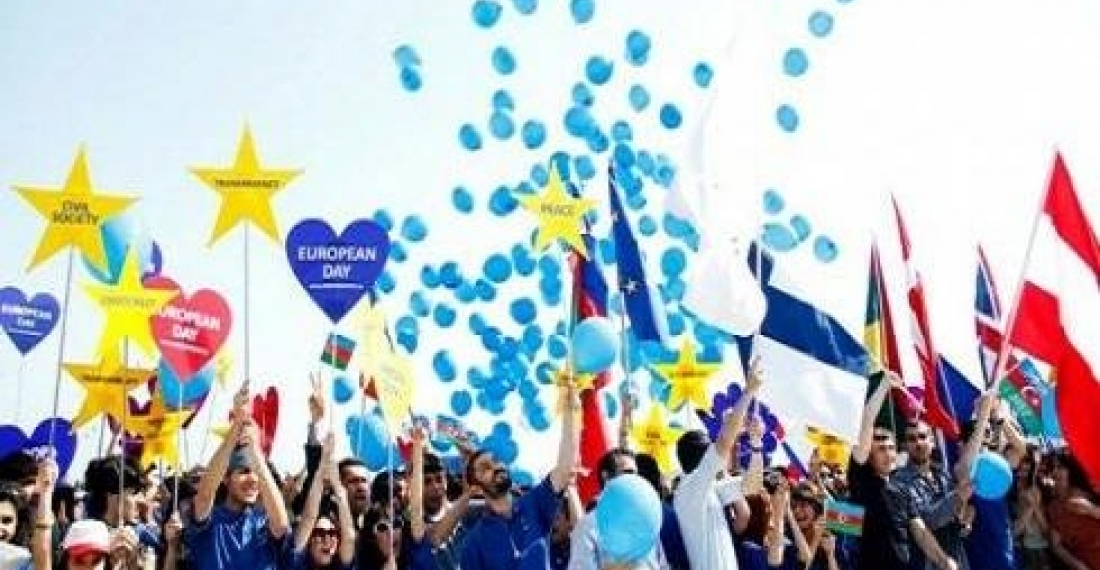
Фото: Молодые азербайджанцы празднуют День Европы в Баку, в начале этого месяца (фото любезно предоставлено Мехманом Гусейновым)

Related articles

Editor's choice
News
Russia adds pressure on Armenia ahead of key elections; recalls Ambassador in Yerevan for consultations

Russia adds pressure on Armenia ahead of key elections; recalls Ambassador in Yerevan for consultations

Ahead of key parliamentary elections,scheduled to be held in Armenia on Sunday, 7 June, Russia continues to attempt to put pressure on the Armenian Government led by prime minister Nikol Pashinyan. On 30 May, Russia recalled its Ambassador to Yerevan for consultations. A terse statement, published on the website of the Russian Foreign Ministry, said, "The Ambassador of the Russian Federation to the Republic of Armenia , S.P. Kopyrkin, has been summoned to Moscow for consultations in connection with the steps taken by the Armenian leadership to move closer to the European Union, which are detrimental to cooperation within the EAEU." This followed a statement issued the day before, by the leaders of the Eurasian Economic Union (EAEU) that challenges the Armenian trajectory towards approximating to the European Union. Vladimir Putin is undertood to have personally pushed the other four EAEU leaders to issue the statement, which said: "Taking into account the significant risks to the economic security of the member states of the Eurasian Economic Union (hereinafter referred to as the Union) arising in connection with the preparation of the Republic of Armenia for accession to the European Union, as well as the need to prevent the associated damage to the member states of the Union: decided that the members of the Eurasian Intergovernmental Council from the Republic of Belarus, the Republic of Kazakhstan, the Kyrgyz Republic and the Russian Federation will report at the next meeting of the Supreme Eurasian Economic Council in December 2026 on the possible consequences of the suspension of the Treaty on the Eurasian Economic Union with respect to the Republic of Armenia. We share the position on the need to hold a national referendum in the Republic of Armenia as soon as possible on joining the European Union or continuing to be part of the Eurasian Economic Union."
Editor's choice
News
The leaders of the states of the Eurasian Economic Union issued a tough statement warning fellow-member state Armenia of the consequences of its desire to join the European Union.

The leaders of the states of the Eurasian Economic Union issued a tough statement warning fellow-member state Armenia of the consequences of its desire to join the European Union.

The leaders of the states of the Eurasian Economic Union (EEAS) issued a tough statement warning fellow-member state Armenia of the consequences of its desire to join the European Union. The stark, sharply worded,  warning, comes days before crucial parliamentary elections in Armenia, scheduled for 7 June. The full statement said, “We, the Presidents of the Republic of Belarus, the Republic of Kazakhstan, the Kyrgyz Republic and the Russian Federation, Taking into account the actions of the Republic of Armenia aimed at joining the European Union, including the approval in 2025 by the National Assembly of the Republic of Armenia and the signing by the President of the Republic of Armenia of the Law of the Republic of Armenia "On the Start of the Process of Accession of the Republic of Armenia to the European Union", as well as the confirmation by the European Union of the European aspirations of the Government of the Republic of Armenia, expressed in the joint declaration following the first Armenia-European Union summit, adopted on 5 May 2026, Taking into account the significant risks to the economic security of the member states of the Eurasian Economic Union (hereinafter referred to as the Union) arising in connection with the preparation of the Republic of Armenia for accession to the European Union, as well as the need to prevent the associated damage to the member states of the Union: decided that the members of the Eurasian Intergovernmental Council from the Republic of Belarus, the Republic of Kazakhstan, the Kyrgyz Republic and the Russian Federation will report at the next meeting of the Supreme Eurasian Economic Council in December 2026 on the possible consequences of the suspension of the Treaty on the Eurasian Economic Union with respect to the Republic of Armenia. We share the position on the need to hold a national referendum in the Republic of Armenia as soon as possible on joining the European Union or continuing to be part of the Eurasian Economic Union. Astana, May 29, 2026” A meeting of the Supreme Eurasian Economic Council was held in Astana, Kazakhstan, on May 29, 2026. The meeting of the Supreme Eurasian Economic Council in a restricted format was attended by Russian President Vladimir Putin, Belarusian President Alexander Lukashenko , Kazakh President Kassym-Jomart Tokayev , Kyrgyz President Sadyr Japarov , Armenian Deputy Prime Minister Mher Grigoryan, and Chairman of the Board of the Eurasian Economic Commission Bakytzhan Sagintayev. From the Russian side, the meeting was also attended by Deputy Prime Minister and member of the Council of the Eurasian Economic Commission Alexey Overchuk and Presidential Aide Yury Ushakov . The heads of delegations from EAEU observer states, including President of Uzbekistan Shavkat Mirziyoyev , Vice President of Cuba Salvador Valdés Mesa, Minister of Industry, Mines, and Trade of Iran Mohammad Atabak, and CIS Secretary General Sergei Lebedev, joined the expanded meeting . Following the meeting of the Supreme Eurasian Economic Council, a number of documents were signed .

Popular

Editor's choice
Interview
Thursday Interview: Murad Muradov

Thursday Interview: Murad Muradov

Today, commonspace.eu starts a new regular weekly series. THURSDAY INTERVIEW, conducted by Lauri Nikulainen, will host  persons who are thinkers, opinion shapers, and implementors in their countries and spheres. We start the series with an interview with Murad Muradov, a leading person in Azerbaijan's think tank community. He is also the first co-chair of the Action Committee for a new Armenian-Azerbaijani Dialogue. Last September he made history by being the first Azerbaijani civil society activist to visit Armenia after the 44 day war, and the start of the peace process. Speaking about this visit Murad Muradov said: "My experience was largely positive. My negative expectations luckily didn’t play out. The discussions were respectful, the panel format bringing together experts from Armenia, Azerbaijan, and Turkey was particularly valuable during the NATO Rose-Roth Seminar in Yerevan, and media coverage, while varied in tone, remained largely constructive. Some media outlets though attempted to represent me as more of a government mouthpiece than an independent expert, which was totally misleading.  Overall, I see these initiatives as important steps in rebuilding trust and normalising professional engagement. The fact that soon a larger Azerbaijani civil society visits to Armenia followed, reinforces the sense that this process is moving in the right direction." (click the image to read the interview in full)


